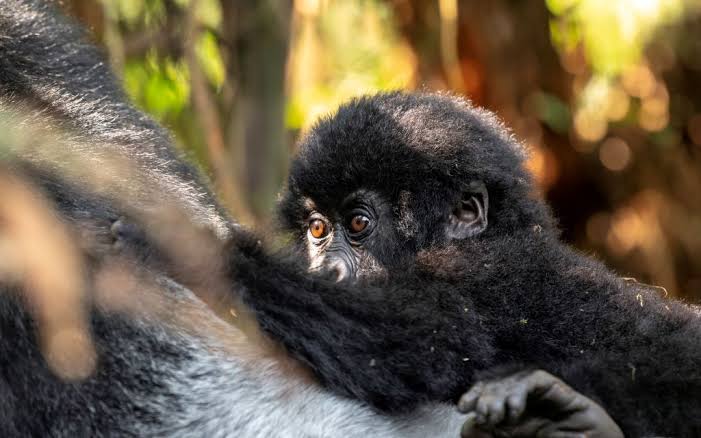
7 Days Uganda Wildlife and Primates Safari
7 Days Uganda Wildlife and Primates Safari The 7 Days Uganda Wildlife and Primates Safari is a complete introduction to
Uganda occupies a unusual position in African safari travel: it delivers half the world’s remaining mountain gorillas, the continent’s finest chimpanzee trekking, a full Big Five circuit with tree-climbing lions, and one of the most thunderous waterfalls on the Nile, all within a country roughly the size of the United Kingdom, at a price point considerably below its East African neighbours. No other country lets you trek gorillas and chimpanzees, then close the same trip with a classic savanna game drive and a boat safari, without ever boarding an internal flight if you don’t want to.
This guide covers everything a first-time visitor needs before booking: the ten national parks and what each one actually offers, the different types of safari on offer, realistic 2026 costs across every budget tier, when to go, and how to put a trip together with confidence.
7 Days Uganda Wildlife and Primates Safari The 7 Days Uganda Wildlife and Primates Safari is a complete introduction to

6 Days Uganda Wildlife Safari The 6 Days Uganda Wildlife Safari brings together three of Uganda’s best-loved parks in one

5 Days Uganda Primates Safari | Gorilla and Chimpanzee Trekking The 5 Days Uganda Primates Safari is built for travelers
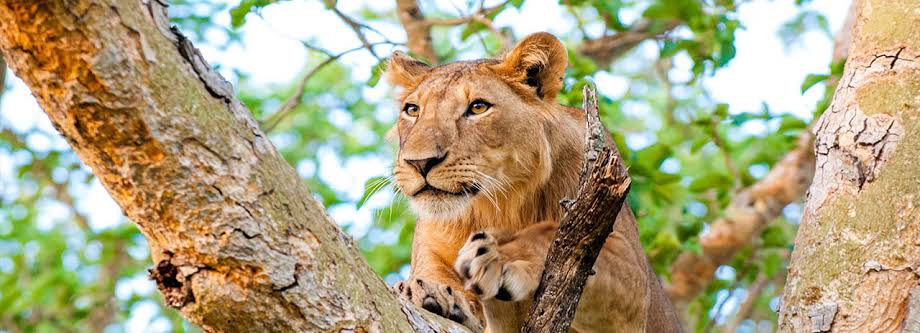
4 Days Queen Elizabeth Wildlife Safari The 4 Days Queen Elizabeth Wildlife Safari takes you to Queen Elizabeth National Park,
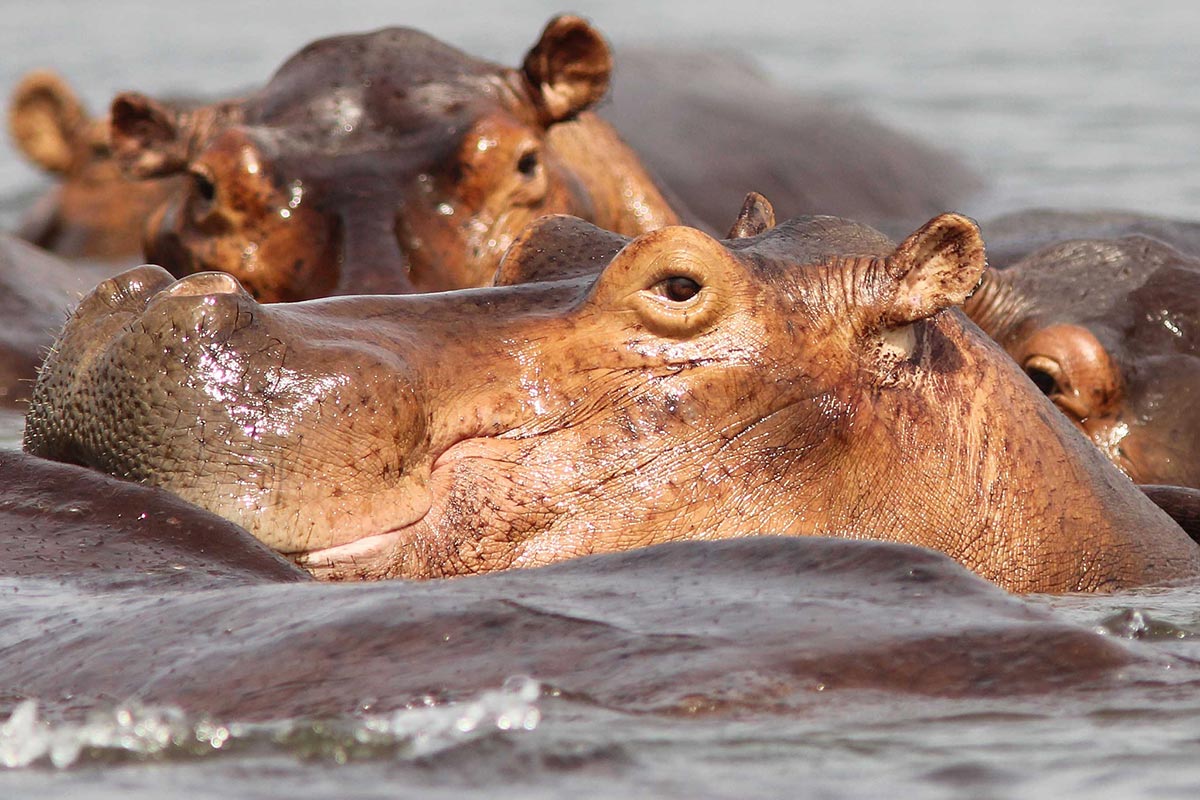
3 Days Murchison Falls Safari A short, action-packed escape to Uganda’s largest national park, featuring rhino tracking, game drives and
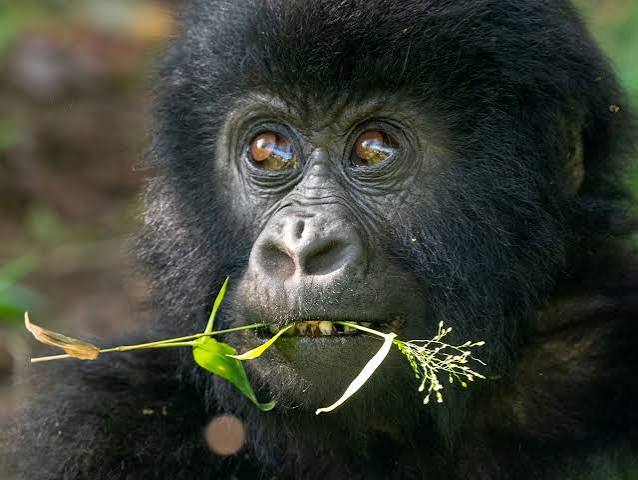
3 Days Bwindi Gorilla Safari The 3 Days Bwindi Gorilla Safari takes you straight to the heart of Uganda’s most
Uganda’s Ten National Parks, By Character
The Uganda Wildlife Authority manages ten national parks, and understanding their distinct characters, rather than treating them interchangeably, is the single most useful thing a first-time planner can do. Bwindi Impenetrable National Park and Mgahinga Gorilla National Park, both in the southwest, are the only two places in the country to trek mountain gorillas, Bwindi alone holds over 460 of Uganda’s mountain gorilla population. Kibale Forest National Park, the primate capital of Africa with 13 recorded species, delivers the country’s finest chimpanzee trekking. Queen Elizabeth National Park is Uganda’s most biodiverse single park, famous for the tree-climbing lions of its Ishasha sector and boat cruises along the Kazinga Channel, while Murchison Falls National Park, the country’s largest, centres on the Nile’s most powerful stretch, where the entire river is forced through a gap just a few metres wide.
Beyond these headline five, Lake Mburo National Park offers a relaxed, compact savanna experience with zebra and impala close to Kampala, Kidepo Valley National Park in the far northeast delivers Uganda’s true wilderness, fewer than 5,000 visitors annually against Bwindi’s nearly 30,000 permits, with game drives that can run 30 kilometres without another vehicle in sight. Semuliki National Park protects lowland rainforest holding Congo-Guinea biome bird species found nowhere else in East Africa, while Mount Elgon National Park and Rwenzori Mountains National Park, a UNESCO World Heritage Site nicknamed the “Mountains of the Moon” for its snow-capped peaks, serve Uganda’s mountain-hiking safaris rather than classic game viewing.
The Different Types of Uganda Safari
Uganda safaris fall into several distinct categories rather than one universal template. Gorilla trekking safaris, built around Bwindi or Mgahinga, remain the country’s headline draw, and past trekkers consistently describe the encounter as life-changing, people cry, that’s the intensity involved in an hour spent with a habituated family. Chimpanzee safaris centre on Kibale, with Kyambura Gorge and Budongo Forest offering quieter, more affordable alternatives. Wildlife safaris cover classic savanna game drives across Queen Elizabeth, Murchison Falls, Kidepo, and Lake Mburo, chasing lion, elephant, buffalo, and leopard, three of Africa’s traditional Big Five alongside a reintroduced rhino population at Ziwa Sanctuary.
Beyond primates and big game, birding safaris take advantage of Uganda’s extraordinary bird list, over 1,000 recorded species including the famously elusive shoebill stork, while cultural tours pair community visits, traditional dance, and storytelling with a wildlife-focused itinerary. Adventure sports tours, white-water rafting and bungee jumping at Jinja on the Nile, are commonly added onto a longer trip, and family safaris, camping safaris, and stripped-down budget safaris all exist as distinct trip structures rather than variations on a single fixed format.
What a Uganda Safari Actually Costs
Cost estimates vary across sources, reflecting real differences in trip length, accommodation tier, and how many permits are included, but the broad shape is consistent. Budget travelers should expect roughly $150 to $350 per person per day, mid-range travelers $350 to $700, and luxury travelers $700 to $1,500 or more, with these figures covering accommodation, a private 4×4 with driver-guide, park fees, and meals. A short budget trip without gorilla trekking can run as little as $1,200 to $2,000 for a full week, while a mid-range 7-to-8-day gorilla-and-wildlife combination typically lands between $2,800 and $4,500 per person, and a 10-day luxury itinerary combining gorillas, chimps, and wider wildlife viewing can reach $6,000 to $12,000 or more per person.
The single biggest fixed cost is the gorilla trekking permit, $800 per person in Bwindi or Mgahinga as of 2026, though the Uganda Wildlife Authority’s February 2026 tariff announcement confirmed a discounted low-season rate of $600 during April, May, and November. A new, considerably more expensive gorilla habituation experience, an extended, more immersive encounter with a semi-habituated family, took effect on 1 July 2026 at $1,800 per person. Chimpanzee trekking in Kibale costs $250 for standard tracking, with the full-day habituation experience priced at $300.
Where the Rest of Your Money Goes
Beyond permits, accommodation drives most of the remaining budget variation: budget lodges run $50 to $150 per night, mid-range properties $150 to $400, and luxury lodges and tented camps $400 to $1,000 or more, with flagship properties like Clouds Mountain Gorilla Lodge near Bwindi or Apoka Safari Lodge in Kidepo anchoring the top tier. A private 4×4 with driver-guide costs $150 to $250 per day regardless of how many people are travelling, meaning per-person transport costs drop sharply for groups of four or more, a important consideration when comparing solo versus group pricing.
Further costs to budget for include Uganda’s visa ($50, or $100 for the East Africa Tourist Visa covering Uganda, Kenya, and Rwanda together), porter fees during treks (roughly $20 per trek), meals not included in your accommodation package ($10 to $40 each), and tips for guides and porters. Domestic flights between parks, useful for reaching Bwindi or Kidepo without a long overland drive, add roughly $540 round trip but meaningfully compress a tight itinerary.
A Practical Cost Comparison by Tier
Tier | Per Day (excl. permits) | 7-Day Trip w/ Gorilla Permit | Typical Accommodation |
Budget | $150-350 | ~$1,550-2,800 | Community lodges, bandas, shared transport |
Mid-range | $350-700 | ~$2,800-4,500 | Comfortable ensuite lodges, private 4×4 |
Luxury | $700-1,500+ | $7,500-12,000+ | Premium camps, fly-in transfers, private guiding |
Uganda vs. Its Neighbours : A Value Case
Uganda’s $800 gorilla permit runs considerably below Rwanda’s $1,500 equivalent, and this gap compounds across an entire trip given Rwanda’s generally more premium accommodation and service positioning. A comparable 5-day gorilla trekking safari costs $2,400 to $4,500 per person in Uganda against $3,500 to $7,000 or more in Rwanda, making Uganda the best-value gorilla trekking destination of the two, without any meaningful compromise on the quality of the actual encounter, since the gorillas themselves and the trekking experience are broadly comparable across both countries.
When to Go
Uganda’s dry seasons, June through September and December through February, deliver the most reliable wildlife viewing and the firmest trekking conditions, as animals concentrate around permanent water sources and forest trails stay considerably more manageable underfoot. These months also represent peak demand, meaning premium pricing and permits that sell out furthest in advance. April, May, and November bring wetter conditions and a real risk of muddier trails, but also the confirmed low-season gorilla permit discount and generally softer accommodation rates, a trade-off worth weighing rather than automatically defaulting to peak season.
Practical Planning Essentials
Uganda has moved fully to an e-visa system, and applying online at least two weeks before arrival is now standard practice, with the East Africa Tourist Visa, $100, remaining the better-value option for anyone also visiting Kenya or Rwanda within the same trip. A yellow fever vaccination certificate is a mandatory entry requirement regardless of where you’re travelling from, and checking current malaria prophylaxis guidance with a travel clinic before departure is worthwhile given the country’s year-round transmission risk.
Gorilla and chimpanzee permits must be booked through a licensed tour operator rather than directly with the Uganda Wildlife Authority as an independent traveller, and given how far in advance popular dates sell out, particularly during peak season, booking permits several months ahead is standard, sensible practice rather than an overly cautious recommendation.
Is Uganda Safe to Visit?
Yes, . Uganda’s national parks maintain a strong, consistently reported security record, and the Uganda Tourism Board has specifically reaffirmed that all tourism corridors remain open, secure, and unaffected by domestic political developments, backed by substantial government investment in tourism infrastructure and security. Uganda also continues to see considerably lighter crowds than its more heavily trafficked neighbours, a advantage for travellers who value a rawer, less commercialised safari experience.
Building Your Own Uganda Itinerary
For a first Uganda trip, six to eight days allows you to combine gorilla trekking with a proper wildlife circuit without feeling rushed: Bwindi or Mgahinga for gorillas, Queen Elizabeth or Murchison Falls for classic game viewing and a boat cruise, and Kibale if chimpanzee trekking is a priority. Travellers with more time can extend into Kidepo for wilderness solitude, add Jinja for white-water rafting, or continue on into Rwanda or Kenya using the East Africa Tourist Visa to build a comprehensive multi-country journey.
Frequently Asked Questions
How much does a Uganda safari cost in 2026?
Roughly $150-350 per person per day for a budget trip, $350-700 for mid-range, and $700-1,500 or more for luxury, with a full 7-day gorilla-and-wildlife itinerary typically running $2,800-4,500 per person at mid-range level.
How much is the Uganda gorilla trekking permit?
$800 per person for standard trekking in 2026, dropping to $600 during the low-season months of April, May, and November. A new extended habituation experience costs $1,800 per person as of July 2026.
What are Uganda’s ten national parks?
Bwindi Impenetrable, Mgahinga Gorilla, Kibale, Queen Elizabeth, Murchison Falls, Lake Mburo, Kidepo Valley, Semuliki, Mount Elgon, and Rwenzori Mountains National Parks.
Is Uganda cheaper than Rwanda for gorilla trekking?
Yes, considerably. Uganda’s $800 permit runs nearly half Rwanda’s $1,500 rate, and a comparable 5-day trip costs $2,400-4,500 in Uganda versus $3,500-7,000 or more in Rwanda.
When is the best time to visit Uganda for a safari?
The dry seasons, June through September and December through February, offer the most reliable wildlife viewing and firmest trekking conditions, though April, May, and November bring a gorilla permit discount worth weighing against wetter conditions.