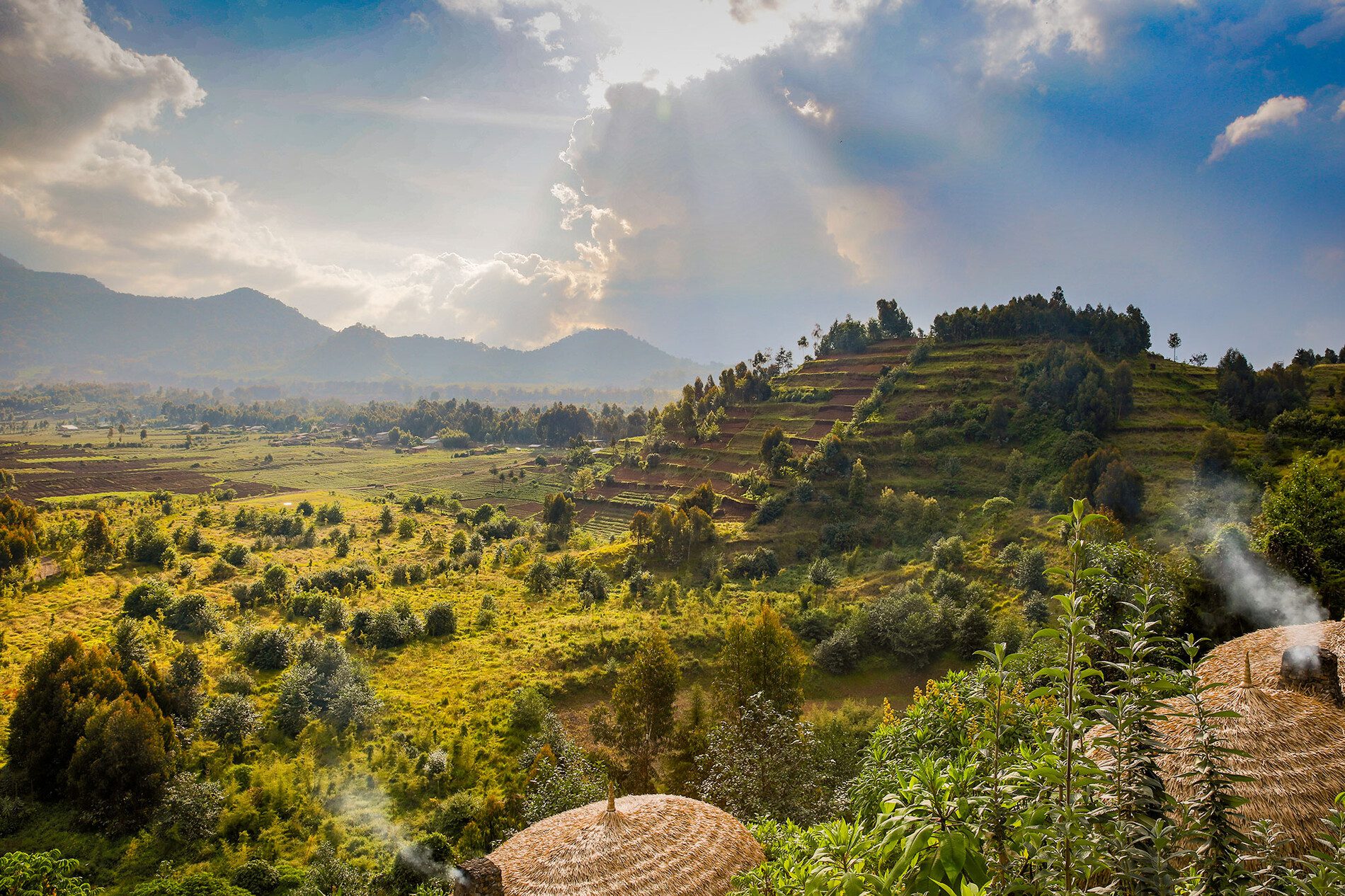
Volcanoes National Park
Volcanoes National Park is an extraordinary amount of just 160 square kilometers: eleven habituated mountain gorilla families, a golden monkey
Rwanda manages just four national parks, a deliberately compact portfolio compared with neighbouring Uganda’s ten, but each protects a distinct ecosystem and tells its own story of conservation recovery. Volcanoes National Park is Africa’s oldest, gazetted in 1925 specifically to protect mountain gorillas from poaching. Akagera, once nearly emptied of wildlife after the 1994 genocide, was named among National Geographic’s top 25 destinations. Nyungwe protects rainforest older than the last Ice Age, and Gishwati-Mukura, created from two forest fragments in 2015, represents Rwanda’s newest and smallest experiment in ecological restoration.
Volcanoes National Park is an extraordinary amount of just 160 square kilometers: eleven habituated mountain gorilla families, a golden monkey

Nyungwe protects one of Africa’s oldest surviving rainforests, a montane ecosystem predating the last Ice Age, and it holds a

Gishwati-Mukura National Park is different from every other national park covered in this guide, not because of a single headline
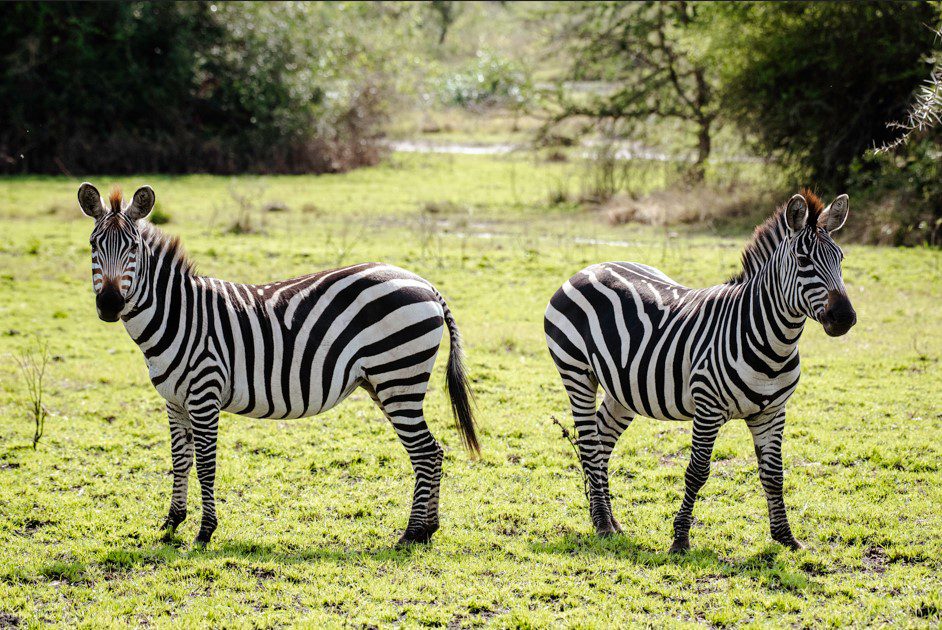
Akagera National Park is Rwanda’s only savanna national park and the sole place in the country to see the Big
This guide works through all four parks individually, covering exact size, location, history, wildlife, and what a visit involves, so you can understand not just what each park offers but why it looks the way it does today.
Volcanoes National Park
Covering roughly 160 square kilometres in Rwanda’s far northwest, Volcanoes National Park protects the Rwandan portion of the Virunga Massif, five of its eight volcanoes: Karisimbi (4,507 metres, Rwanda’s highest point), Bisoke, Muhabura, Gahinga, and Sabyinyo. Gazetted in 1925 by Belgian colonial authorities as part of the larger Albert National Park, it holds the distinction of being Africa’s first and oldest national park, established specifically to protect mountain gorillas from poaching, decades before conservation tourism existed as a concept.
The park is currently home to 12 to 14 habituated gorilla families depending on the specific count cited, among them Susa, Kwitonda, Agashya, and Amahoro, with roughly 96 to 112 permits issued daily across the full network. Beyond gorillas, Volcanoes holds golden monkeys, found only within the Virunga ecosystem and estimated at fewer than 5,000 individuals worldwide, alongside the historic Karisoke Research Centre site and Dian Fossey’s grave, volcano hikes up Bisoke or the considerably more demanding Karisimbi, and the scenic Twin Lakes of Burera and Ruhondo nearby. Its location roughly two to three hours from Kigali International Airport makes it, , the most accessible mountain gorilla trekking destination anywhere in the world.
Akagera National Park
At its founding in 1934, Akagera covered roughly 2,500 square kilometres, over 10 percent of Rwanda’s entire land area, and stood as a complete Big Five park. Following the 1994 genocide and the resettlement of returning refugees onto park land, Akagera lost half its territory and its entire lion population, shrinking to its current 1,122 square kilometres along the Tanzanian border in Rwanda’s east. What happened next is one of Africa’s more remarkable conservation turnarounds: in 2010, African Parks entered a joint management partnership with the Rwanda Development Board, and lions were reintroduced in 2015, followed by black rhino in 2017 and 2019, and white rhino in 2021, with a further 70 individuals added through the 2025 Rhino Rewild Initiative, the largest such translocation ever undertaken.
Today, Akagera holds 72 lions, 183 rhinos, 176 elephants, and nearly 500 recorded bird species across a landscape of rolling savanna, papyrus swamp, and a dozen lakes, and in October 2025, National Geographic named it among the world’s top 25 destinations for 2026. In 2025, Akagera also became the first African Parks-managed park to achieve full financial self-sustainability, a significant milestone reflecting how completely the park’s fortunes have reversed. It remains Rwanda’s only savanna park and its sole location for the full Big Five, and one of the least crowded major safari destinations in East Africa.
Nyungwe National Park
Spanning roughly 1,015 to 1,019 square kilometres in Rwanda’s southwest, near the Burundian border and Lake Kivu, Nyungwe protects one of Africa’s oldest rainforests, an Afromontane ecosystem predating the last Ice Age and now managed under a 20-year agreement between African Parks and the Rwandan government signed in 2020. The forest holds over 1,100 recorded plant species, 345 bird species including Albertine Rift endemics, and 13 primate species, chimpanzees, Rwenzori black-and-white colobus, L’Hoest’s monkeys, and grey-cheeked mangabeys among them, and supplies much of Rwanda’s fresh water to both the Nile and Congo river systems.
Nyungwe’s single most distinctive feature is East Africa’s only suspended canopy walkway, a roughly 160-metre bridge system reaching 70 metres above the forest floor, accessed via the Igishigishigi Trail from the Uwinka Visitor Centre. Chimpanzee trekking here is different from Volcanoes’ gorilla encounters, denser canopy, steeper terrain, and chimps that announce themselves through loud, chaotic calls well before they come into view, with roughly 500 individuals inhabiting the forest, though sightings aren’t guaranteed given how widely the animals range. A network of 15 marked trails, from short loops to full-day ridge walks, rounds out a park suited to two to three nights minimum.
Gishwati-Mukura National Park
Rwanda’s fourth and newest national park, gazetted in 2015, Gishwati-Mukura covers just 34 square kilometres, making it currently the country’s smallest, formed by combining two previously separate, badly degraded forest fragments, Gishwati and Mukura, following a $9.5 million conservation agreement between the Rwandan government and the World Bank in 2014. Much of the original forest here had been lost across the twentieth century to logging, agricultural expansion, and post-genocide resettlement, and the park’s creation represents a , deliberate reforestation effort rather than protection of an already-intact ecosystem.
Since opening to tourism in 2019, Gishwati-Mukura has developed a small, habituated chimpanzee community of around 20 individuals, alongside golden monkeys, L’Hoest’s monkeys, blue monkeys, and black-and-white colobus, and roughly 232 recorded bird species in the Gishwati section against 163 in the smaller Mukura forest. Sitting roughly 157 kilometres, three to four hours by road, or a 30-minute charter flight from Kigali, and just 30 minutes from Volcanoes National Park, Gishwati-Mukura functions as a quieter, considerably less-visited alternative for primate trekking, a park still actively being rebuilt rather than one that survived history intact.
Rwanda’s Parks at a Glance
Park | Size | Established | Signature Wildlife |
Volcanoes National Park | ~160 km² | 1925 | Mountain gorillas, golden monkeys |
Akagera National Park | 1,122 km² | 1934 | Big Five (lion, leopard, elephant, buffalo, rhino) |
Nyungwe National Park | 1,015-1,019 km² | 2004 (gazetted) | Chimpanzees, 13 primate species, canopy walkway |
Gishwati-Mukura National Park | 34 km² | 2015 | Chimpanzees, golden monkeys, reforestation |
How the Four Parks Compare in Distance from Kigali
Volcanoes National Park sits closest to the capital, roughly two to three hours by road, making it feasible to fly into Kigali and be trekking gorillas the same or following day. Gishwati-Mukura, at three to four hours or a short charter flight, ranks second in accessibility, while Akagera sits a comparable distance east. Nyungwe, in the far southwest, requires the longest transfer, typically four to six hours by road or a domestic flight, reflecting its more remote position near the Burundian border.
Choosing Which Parks to Combine
The classic Rwanda itinerary combines Volcanoes for gorilla trekking with either Akagera for Big Five game drives or Nyungwe for chimpanzees and forest birding, and travelers with a full week or more can comfortably include all three. Gishwati-Mukura suits travelers who’ve already experienced Volcanoes’ more crowded trekking circuit and want a quieter, second primate encounter, or those specifically drawn to witnessing a conservation restoration project in progress rather than a long-established ecosystem.
Rwanda’s own low-season gorilla permit discount, 30 percent off between November and May, specifically requires spending at least two nights combined at Akagera and Nyungwe, a incentive built directly into the pricing structure to encourage exactly this kind of multi-park itinerary rather than a single-park gorilla-only visit.
Wildlife Corridors and Cross-Border Connections
None of Rwanda’s parks exist in true isolation. Volcanoes forms one section of the wider Virunga Massif shared with Uganda’s Mgahinga Gorilla National Park and DR Congo’s Virunga National Park, meaning gorilla and golden monkey populations move across international borders as part of the same shared ecosystem. Gishwati-Mukura sits along a planned forest corridor intended to eventually connect it to Nyungwe and onward to Burundi’s Kibira National Park, part of a , long-term regional restoration vision extending well beyond Rwanda’s own borders.
Management and Conservation Partnerships
All four parks fall under the Rwanda Development Board, but day-to-day management increasingly involves dedicated conservation partners: African Parks co-manages both Akagera (since 2010) and Nyungwe (since 2020), while Gishwati-Mukura’s two forest concessions are split between Wilderness Safaris and the Forest of Hope Association, reflecting Rwanda’s broader, deliberate strategy of bringing in specialized conservation and tourism expertise rather than managing every park through a single centralized model.
Frequently Asked Questions
How many national parks does Rwanda have?
Four: Volcanoes National Park, Akagera National Park, Nyungwe National Park, and Gishwati-Mukura National Park, all managed by the Rwanda Development Board.
Which is Rwanda’s oldest national park?
Volcanoes National Park, gazetted in 1925 by Belgian colonial authorities, making it not just Rwanda’s oldest but Africa’s first national park.
Which Rwanda park has the Big Five?
Akagera National Park, the country’s only savanna park, following the reintroduction of lions in 2015 and black and white rhino between 2017 and 2025.
Which is Rwanda’s smallest national park?
Gishwati-Mukura National Park, at just 34 square kilometres, formed in 2015 by combining two previously degraded forest fragments.
How far is Volcanoes National Park from Kigali?
Roughly two to three hours by road, making it the most accessible of Rwanda’s parks and one of the most convenient mountain gorilla trekking destinations anywhere in the world.