Volcanoes National Park is an extraordinary amount of just 160 square kilometers: eleven habituated mountain gorilla families, a golden monkey population found nowhere else on the planet, two major volcano hikes, and the historic site where Dian Fossey conducted the research that changed global attitudes toward great ape conservation. This guide focuses on the practical detail that actually shapes a visit, current permit numbers, named gorilla families, and how the park’s various activities compare.
Positioned in Rwanda’s Northern Province roughly two to two-and-a-half hours from Kigali International Airport, Volcanoes National Park protects the Rwandan section of the Virunga Massif, a chain of eight volcanoes shared with Uganda and the Democratic Republic of Congo, five of which fall within the park’s own boundaries.
The Eleven Gorilla Families, By Name
Volcanoes National Park is currently home to eleven habituated gorilla families available for tourism: Susa, Karisimbi, Sabyinyo, Amahoro, Umubano, Hirwa, Agashya, Kwitonda, Bwenge, Ugenda, and Muhoza. Each family ranges from roughly ten to over thirty individuals led by a dominant silverback, and with eight permits issued per family per day, the park’s total daily tourism capacity was raised to 96 permits in 2024, a genuine increase reflecting the population’s continued recovery under Rwanda’s conservation model.
A small number of additional habituated research families exist but are rarely allocated to tourists, and are occasionally substituted only if a tourist-designated group happens to cross the international border overnight into neighboring Uganda or Congo. Rangers assign specific families to trekking groups each morning based on fitness level and the family’s current location, meaning fitter travelers are often, though not always, assigned to families requiring longer, steeper hikes.
Gorilla Permit Cost and the Low-Season Discount
A standard gorilla trekking permit costs $1,500 per person, issued directly by the Rwanda Development Board, funding conservation, ranger protection, and community development programs. Between November and May, Rwanda offers a genuine 30 percent discount on gorilla permits, though eligibility requires spending a minimum of two nights at either Akagera or Nyungwe National Park before your gorilla trek, a deliberate incentive designed to encourage visitors to explore Rwanda’s broader park network rather than treating gorilla trekking as an isolated activity.
The minimum age for gorilla trekking is strictly 15, applied consistently across Rwanda, Uganda, and the DRC under IUCN Best Practice Guidelines for Great Ape Tourism, with no upper age limit but genuine consideration given to fitness and mobility when assigning trekking groups.
Golden Monkey Trekking
Golden monkeys (Cercopithecus kandti) are found only within the Virunga volcanoes, and Volcanoes National Park offers reliable, well-established trekking to habituated troops within the bamboo zone on the lower slopes of Mount Sabyinyo. Permits cost $100 for foreign nationals and just $20 for Rwandans, delivering a genuine one-hour encounter with these highly social, energetic primates, considerably less physically demanding than gorilla trekking and well suited to families, older travelers, or anyone wanting a shorter forest excursion.
Given the shorter overall tracking time golden monkey trekking requires, it pairs particularly well with an afternoon cultural visit or a shorter volcanic hike on the same day, a combination worth discussing directly with your operator when planning a multi-activity itinerary.
Mount Bisoke:
Mount Bisoke, reaching either 2,620 or 3,711 meters depending on which specific elevation point is cited, offers the park’s most popular volcano hike: a full-day trek through rainforest and alpine vegetation, culminating in a spectacular crater lake at the summit. This hike suits fit, reasonably prepared hikers and does not require the multi-day commitment or extreme altitude demands of Karisimbi.
Mount Karisimbi:
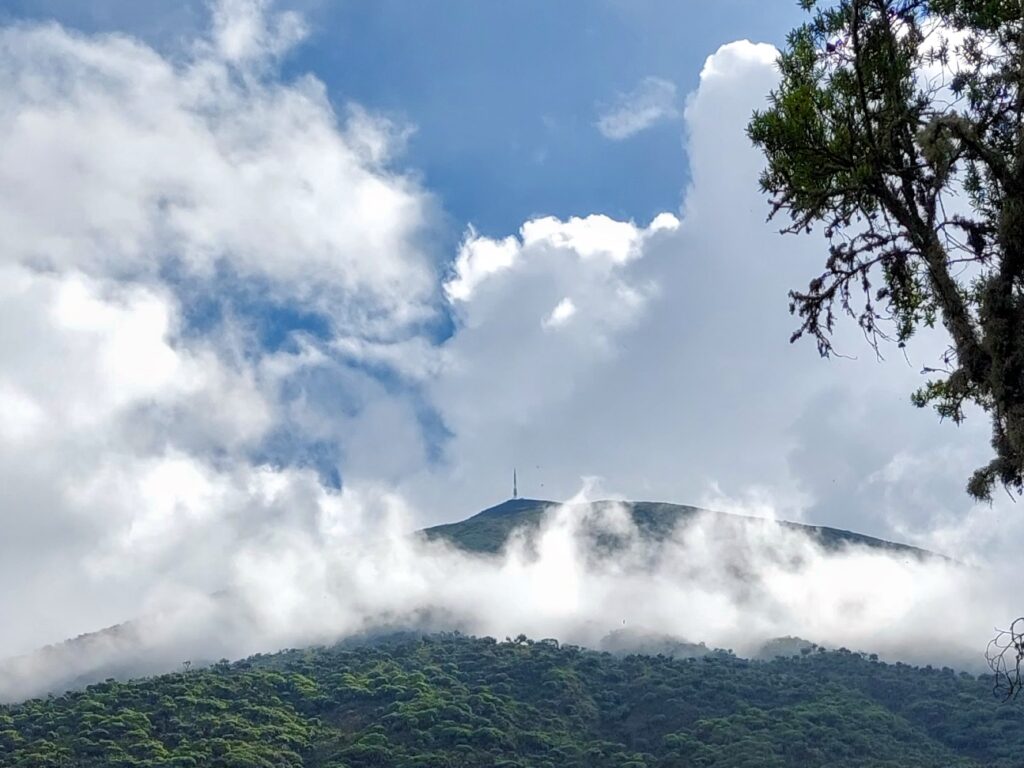
Mount Karisimbi, at 4,507 meters, stands as Rwanda’s highest peak and demands a serious two-day expedition, considerably more demanding than the Bisoke hike given both the elevation and overnight camping requirement. This climb suits experienced, well-prepared hikers specifically, and successful summiteers are rewarded with sweeping views across the entire Virunga range and, on clear days, deep into neighboring Uganda and the Democratic Republic of Congo.
The Dian Fossey Tomb and Karisoke Research Centre
A dedicated hike leads to the historic site of the Karisoke Research Centre, established by primatologist Dian Fossey in 1967, and her grave, positioned within the park’s gorilla cemetery beside Digit, her favorite silverback. This hike offers genuine historical and emotional depth beyond the park’s wildlife-focused activities, and it’s often combined with a Bisoke ascent given the routes’ geographic proximity.
Birdwatching
Volcanoes National Park holds over 200 recorded bird species, including the elusive Rwenzori turaco, and birders should specifically request bamboo-zone walks, since this habitat hosts Albertine Rift endemics rarely encountered elsewhere in the region.
Twin Lakes Burera and Ruhondo
Beyond the park’s core trekking and hiking activities, nearby Lakes Burera and Ruhondo offer a scenic boat trip option, a relaxed, lower-exertion addition well suited to a rest day between more demanding treks or as a closing activity before departure.
Porters:
Hiring a porter for any Volcanoes National Park trek is strongly recommended, not purely for practical carrying assistance but because porters are local community members whose income directly and meaningfully supports families living alongside the park, making this one of the most tangible, direct ways a visit here contributes to the surrounding community’s economic well-being.
Quick-Reference Activity Comparison
| Activity | Cost | Duration | Difficulty |
| Gorilla trekking | $1,500 | 1-6 hours + 1 hr with gorillas | Moderate-challenging |
| Golden monkey trekking | $100 | ~1 hour with troop | Easy-moderate |
| Mount Bisoke hike | Separate permit | Full day | Moderate |
| Mount Karisimbi summit | Separate permit | 2 days | Challenging |
| Dian Fossey tomb hike | Separate permit | Half-day | Moderate |
Getting There and Where to Stay
Musanze (also known as Ruhengeri) serves as the standard base town, roughly 2.5 hours from Kigali by road, with accommodation spanning budget guesthouses through to some of Africa’s most celebrated luxury lodges positioned directly on the park’s edge. All trekking activities begin with an early-morning briefing at Kinigi Park headquarters, making accommodation proximity to Kinigi a worthwhile consideration when booking.
Best Time to Visit
The dry seasons, June through September and December through February, offer the clearest trails and easiest hiking conditions across every activity in the park. September specifically combines excellent trekking conditions with Rwanda’s Kwita Izina gorilla naming ceremony, a worthwhile cultural event to time a visit around if your schedule allows.
Cultural Visits Near the Park
Beyond wildlife activities, several genuine cultural experiences complement a Volcanoes National Park stay. The Iby’iwacu Cultural Village, close to Kinigi, offers immersive interaction with local Rwandan traditions, including Intore dance performances, traditional healing demonstrations, and, for travelers with a genuine interest, the chance to try archery using traditional bows once used by royal guards. This kind of community-based tourism directly supports the same local population whose cooperation and goodwill underpin the park’s broader conservation success.
What’s Included in Your Gorilla Permit Fee
Understanding exactly what your $1,500 gorilla permit covers helps set realistic expectations. The fee includes park entrance for the day, the services of an experienced ranger guide and trackers, armed security escort throughout the trek, and a certificate of participation presented afterward. It does not include porter fees, tips for your guide and trackers, accommodation, or transport to and from the park, all of which should be budgeted separately when planning your overall trip cost.
Health and Safety Preparation
Because trekking at altitude is physically demanding, it is important to arrive with a reasonable baseline of cardiovascular fitness, and a travel clinic consultation four to six weeks before departure allows time to address any destination-specific vaccination or malaria prophylaxis guidance for your broader Rwanda itinerary. Comprehensive travel insurance covering trekking activities and medical evacuation is essential given the park’s remote setting relative to hospital-level care.
Combining Volcanoes National Park With the Rest of Rwanda
Given the park’s position in Rwanda’s Northern Province, most itineraries combine gorilla trekking here with at least one further park elsewhere in the country, particularly given the genuine incentive Rwanda’s low-season permit discount creates for pre-trip stays at Akagera or Nyungwe. A well-paced ten-to-twelve-day Rwanda circuit might open with two or three nights around Volcanoes National Park for trekking and volcano hiking, continue with a stop at Lake Kivu for genuine restful decompression, and close with either Nyungwe’s rainforest activities or a Big Five safari at Akagera, delivering a comprehensive cross-section of everything the country offers within a single well-sequenced trip.
Frequently Asked Questions
How many gorilla families can be trekked at Volcanoes National Park?
Eleven habituated families are currently available for tourism: Susa, Karisimbi, Sabyinyo, Amahoro, Umubano, Hirwa, Agashya, Kwitonda, Bwenge, Ugenda, and Muhoza, with a total daily permit capacity of 96.
Is there a discount on gorilla permits?
Yes, a 30 percent discount applies between November and May, provided you spend a minimum of two nights at Akagera or Nyungwe National Park before your gorilla trek.
What is the difference between Mount Bisoke and Mount Karisimbi?
Bisoke is a full-day hike to a crater lake summit, considerably more accessible than Karisimbi, Rwanda’s highest peak at 4,507 meters, which requires a demanding two-day expedition.
Can children do golden monkey trekking if they’re too young for gorillas?
Golden monkey trekking generally carries a more flexible age policy than gorilla trekking’s strict 15-year minimum, making it a rewarding alternative for younger family members, though this should be confirmed directly with your operator.
How far is Volcanoes National Park from Kigali?
Roughly two to two-and-a-half hours by road, making it Rwanda’s most accessible major gorilla trekking destination and feasible as a long day trip, though most visitors stay at least one night near the park.