Akagera National Park is Rwanda’s only savanna national park and the sole place in the country to see the Big Five, but understanding what a visit here actually costs and involves matters more than at almost any other Rwandan destination, given the park’s tiered, activity-by-activity fee structure. This guide covers exactly what you’ll pay, when the Lake Ihema boat trips run, and how Akagera clawed its way back from a period of genuine devastation to become one of Africa’s more compelling conservation comeback stories.
Covering roughly 1,200 square kilometres in eastern Rwanda, close to the Tanzanian border, Akagera sits around three hours by road from Kigali, making it feasible as a long day trip, though a minimum of two days is recommended to properly cover both the park’s southern and northern sectors.
A Genuine Recovery Story
Akagera’s modern history is inseparable from Rwanda’s own. During the 1994 genocide, the park served as a route for people fleeing the country, and subsequent resettlement within its boundaries led to significant habitat loss, with lion, rhino, and other wildlife populations collapsing or disappearing entirely in the years that followed. Rwanda’s government subsequently entered a management partnership with African Parks, working alongside the Rwanda Development Board, and this partnership has driven a remarkable recovery, culminating in the reintroduction of lions in 2015 and both black and white rhinos in the years since, restoring Akagera’s full Big Five status after decades without it.
Entrance Fees
International visitors pay $100 per adult for one day or night, $150 for two nights, and $200 for three nights, with the daily rate reducing for longer stays, before dropping away entirely for visitors staying up to a week. Foreign residents of Rwanda or the wider East African Community pay $50 per day, and Rwandan or EAC citizens pay 15,000 Rwandan francs. Children aged six to twelve pay half the adult rate, children five and under enter free, and anyone thirteen or older pays the full adult rate regardless of nationality.
Vehicle fees apply separately: $10 for Rwandan or EAC-registered vehicles and $40 for foreign-registered ones. Entrance fees include self-drive game viewing, and guests staying at select partner lodges outside the park, including Akagera Safari Camp and Rhino Lodge, receive a 50 percent discount on subsequent daily entries, a detail worth confirming directly with your accommodation before booking, since choosing a lodge outside the park purely to save on room rates can sometimes end up costing more overall once cumulative entrance fees are factored in.
The Lake Ihema Boat Safari
Boat trips on Lake Ihema, Rwanda’s second-largest lake after Lake Kivu, run on a fixed daily schedule: 7:30-8:30am, 9:00-10:00am, 3:00-4:00pm, and a 4:30-6:00pm sunset departure, each lasting roughly one hour except the sunset trip, which runs 90 minutes. Standard scheduled trips cost $35 per adult, or $45 for the sunset departure, with private, non-scheduled boats available between 10:30am and 1:30pm charged per boat rather than per person, typically around $100 to $180 depending on the specific operator.
The boat safari delivers reliable sightings that game drives simply can’t match: hippo, crocodile, and a strong concentration of aquatic and shoreline birdlife, including a real chance of spotting the shoebill stork, with sunrise generally considered the strongest window for this specific species. Given how consistently the sunset departure sells out, particularly the 4:30pm slot, booking ahead is worthwhile for this specific trip, though other departures typically retain last-minute availability.
Game Drives
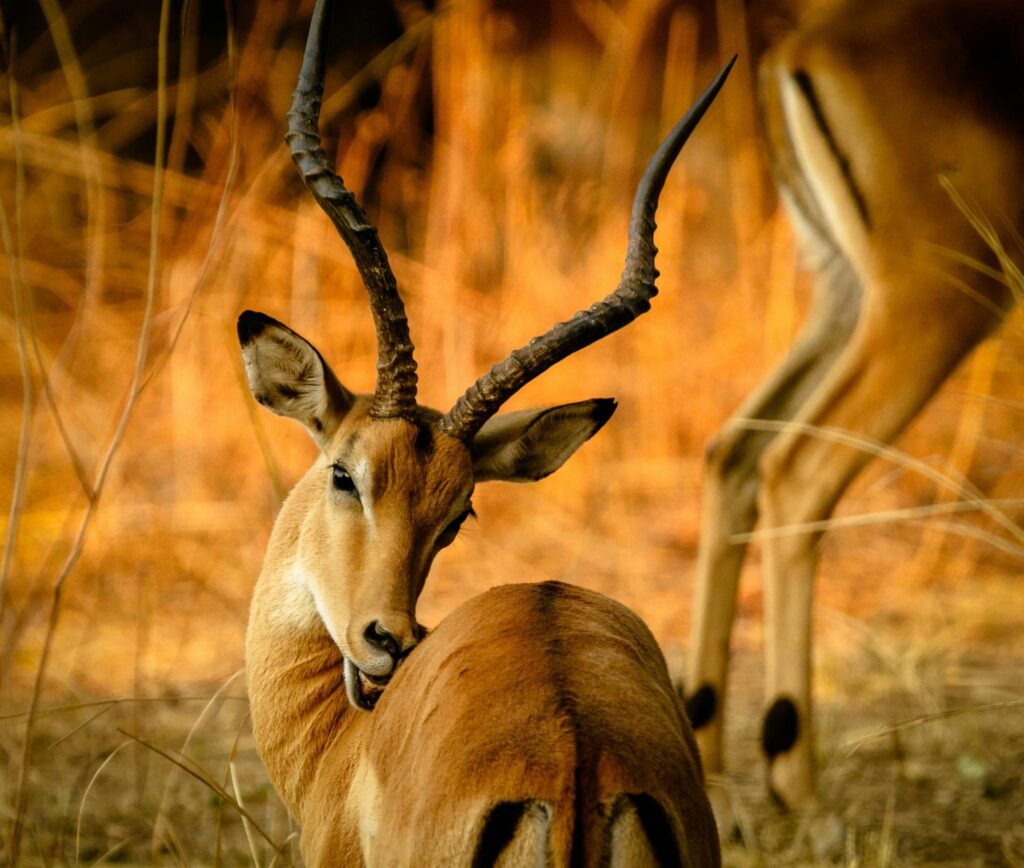
Standard day game drives explore Akagera’s varied terrain, savanna, woodland, and wetland, in search of lion, elephant, buffalo, leopard, and giraffe, alongside zebra and a wide range of plains game. Night drives, run by the operator AMC, begin at 5:30pm and continue until roughly 8:00-8:30pm, revealing an entirely different set of nocturnal species rarely seen during standard daytime activities.
Self-drive game viewing is permitted and included in the standard entrance fee, but hiring a park or community freelance guide, typically around $40 for a full day, transforms the experience given their detailed, current knowledge of exactly where specific prides denned last week or which section of Lake Ihema currently holds the largest hippo pod, knowledge no amount of independent driving can replicate.
Walk the Line
Getting out of your vehicle is strictly forbidden throughout Akagera except at campsites, designated picnic spots, and reception, reflecting the genuine presence of dangerous wildlife throughout the park. The one dedicated walking option is the seven-kilometre Walk the Line route, tracing the outside of the park’s boundary fence, offering genuine insight into the park’s conservation and anti-poaching efforts. Some lodges also run guided bush walks for their own guests within private concessions, worth asking about directly when booking accommodation.
Sport Fishing
Sport fishing on Lake Ihema costs $25 for adults and $15 for children, though participants must bring their own fishing equipment, since the park itself doesn’t provide gear for this specific activity.
Payment
Akagera operates on a fully cashless payment system, accepting MTN Mobile Money, bank transfer, and credit cards (Visa or Mastercard), a important detail to plan around given how different this is from many other East African parks where cash remains standard. Confirming your specific payment method works ahead of arrival avoids any awkward logistics at the gate.
How Long to Stay
A single-day trip from Kigali is achievable, covering a morning game drive around the southern lakes paired with a Lake Ihema boat trip, delivering plains game, hippo, crocodile, and strong birdlife without committing to the longer drive north. For travelers wanting to properly explore the wilder northern plains and experience the park’s full range of activities, camping, birding, fishing, and both day and night drives, a minimum of two days is recommended.
Sample Boat Trip Schedule
| Departure | Time | Cost (Adult) |
| Morning scheduled | 7:30-8:30am | $35 |
| Mid-morning scheduled | 9:00-10:00am | $35 |
| Afternoon scheduled | 3:00-4:00pm | $35 |
| Sunset scheduled | 4:30-6:00pm | $45 |
| Private (non-scheduled) | 10:30am-1:30pm | ~$100-180/boat |
Best Time to Visit
Akagera rewards visits year-round given its resident, non-migratory Big Five population, though the dry seasons offer the firmest roads and clearest overall game viewing. Given the park’s strong hippo and crocodile density along its lake system, the boat safari specifically remains rewarding regardless of season.
Where to Stay
Akagera’s accommodation spans a genuine range of tiers. Magashi Camp, overlooking Lake Rwanyakazinga, remains the park’s flagship luxury property, delivering spacious tented suites and exceptional guiding. Ruzizi Tented Lodge, on the shores of Lake Ihema, offers a strong mid-to-luxury tier option with classic safari atmosphere, while Akagera Game Lodge and Karenge Bush Camp cover more accessible mid-range and budget tiers respectively, giving travelers real flexibility regardless of budget.
Combining Akagera With the Rest of Rwanda
Given Akagera’s position in Rwanda’s east, roughly three hours from Kigali, it pairs naturally with a Kigali city stay on either end of a trip, and the park’s status as a qualifying pre-stay destination for the November-through-May gorilla permit discount makes it a strategic addition to a Volcanoes National Park itinerary specifically. Many travelers open their Rwanda trip with two days at Akagera before continuing north to Musanze for gorilla trekking, a logical, efficient sequencing given the road route between the two.
Practical Preparation for an Akagera Visit
Given the park’s malaria-risk status, standard prophylaxis and mosquito precautions remain important, and sun protection matters considerably during long daytime game drives given the park’s open savanna terrain and limited shade. Confirming your mobile payment method works before arrival, given the park’s fully cashless system, avoids any awkward logistics at the gate, and travelers self-driving should download offline maps in advance given the patchy mobile connectivity across much of the park’s interior.
Frequently Asked Questions
How much does it cost to enter Akagera National Park?
$100 per adult for international visitors for one day or night, dropping to $150 for two nights and $200 for three, with the daily rate reducing further for longer stays.
What time do the Lake Ihema boat safaris run?
Four scheduled daily departures: 7:30-8:30am, 9:00-10:00am, 3:00-4:00pm, and a 90-minute sunset trip from 4:30-6:00pm, with private boats available between 10:30am and 1:30pm.
Can I get out of my vehicle to walk in Akagera?
Only at campsites, designated picnic spots, reception, and along the dedicated seven-kilometer Walk the Line boundary trail. You must stay in your vehicle elsewhere in the park because dangerous wildlife is present.
Does Akagera have all of the Big Five?
Yes, Akagera now has full Big Five status, following the reintroduction of lions in 2015 and both black and white rhinos in subsequent years, after these species had been lost or severely depleted following the 1994 genocide.
Can I pay in cash at Akagera National Park?
No, the park operates on a fully cashless system, accepting MTN Mobile Money, bank transfer, and Visa or Mastercard credit/debit cards.