Uganda is an increasingly popular choice for family safaris, and for good reason: its parks are compact, its distances manageable, and its mix of primates, savanna wildlife and gentle activities like canoeing and birding gives children plenty to stay engaged with beyond long hours in a vehicle. Many lodges across the country have also developed genuinely thoughtful family programs, from junior ranger activities to family-sized cottages and child-friendly menus.
Planning a family safari does require a little more forethought than a standard couples’ or solo trip, mainly around pacing, age restrictions on flagship activities, and health precautions, but none of these present a serious obstacle for a well-organized itinerary. Uganda’s tourism industry has matured considerably in recent years, and most established operators now have real, practical experience tailoring itineraries for families rather than treating children as an afterthought bolted onto a standard adult safari.
Multi-generational travel, grandparents, parents and children traveling together, has also become increasingly common in Uganda, aided by the relatively short flight times from Europe compared with destinations further south, and by a safari style built around shorter, varied activities rather than long, physically demanding days. A thoughtfully planned Uganda itinerary can genuinely satisfy a curious eight-year-old, an adventurous teenager, and grandparents looking for comfort and a slower pace, all on the same trip.
This guide walks through how to plan a family trip to Uganda, including age restrictions for key activities, the best parks and regions for children, health and safety considerations, and how to structure an itinerary that keeps every generation happy.
Quick Facts
| Gorilla trekking minimum age | 15 years |
| Chimpanzee trekking minimum age | 12 to 15 years, depending on site |
| Best parks for younger children | Lake Mburo NP, Ziwa Rhino Sanctuary, Entebbe (Wildlife Education Centre, Botanical Gardens) |
| Best parks for teens | Queen Elizabeth NP, Murchison Falls NP, Kibale (chimps), Bwindi (gorillas, 15+) |
| Recommended trip length | 10 to 14 days for a well-paced multi-region family itinerary |
| Malaria risk | Present in most of Uganda; prophylaxis and repellent recommended, consult a travel clinic |
| Family-friendly accommodation | Widely available; look for family cottages/interconnecting rooms and lodges with private guides |
Why Uganda Works Well for Families
Compared with some larger safari destinations, Uganda’s parks sit relatively close together, which means less time spent on long transfer days and more time actually engaged in activities, an important consideration when traveling with children who have a limited tolerance for hours in a vehicle. The country’s mix of experiences also helps: game drives can be broken up with boat cruises, guided nature walks, canoeing on crater lakes, and visits to community and conservation projects, giving children a variety of shorter, more dynamic activities rather than a single repeated format day after day.
Uganda’s flagship activities, gorilla and chimpanzee trekking, do carry age minimums (15 and generally 12 to 15 respectively), so families traveling with younger children will naturally build their itinerary around savanna parks, boat trips, and interactive conservation centers rather than primate trekking, while families with teenagers can realistically include the full primate experience.
Best Regions and Parks for Family Travel
Entebbe and Lake Victoria
A gentle, low-key start or end to a Uganda family trip, Entebbe offers the Uganda Wildlife Education Centre (a rescue and rehabilitation zoo with resident lions, chimps and rhinos, ideal for younger children), the Botanical Gardens, and relaxed lakeside resorts, all close to the international airport.
Lake Mburo National Park
With no resident lions, Lake Mburo is one of Uganda’s safest and most relaxed parks for family game drives and guided walks among zebra, giraffe and antelope, plus boat trips on the lake itself to see hippo and a wide range of birdlife.
Ziwa Rhino Sanctuary
En route to Murchison Falls, Ziwa offers guided walking encounters with southern white rhinos at a safe, controlled distance, a memorable and genuinely educational stop for children learning about conservation and anti-poaching work.
Queen Elizabeth and Murchison Falls National Parks
Both parks combine game drives with boat cruises, an easy win for families since a cruise offers close wildlife viewing without the physical demands of a long walk or the concentration required on a bumpy game drive.
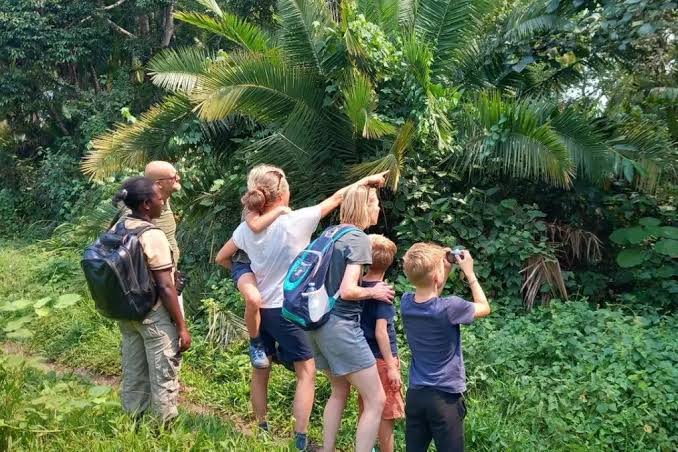
Bwindi and Kibale (for teens and older children)
Families with children aged 15 and older can include gorilla trekking in Bwindi, while chimpanzee trekking in Kibale, generally open from around age 12 to 15 depending on the site, is a strong option for slightly younger teens still too young for gorillas.
Jinja and the Nile
For families with older, adventurous teenagers, Jinja offers a change of pace from wildlife-focused activities, with gentler grade rafting options, kayaking, quad biking and a scenic boat trip to the source of the Nile, giving energetic teens an outlet beyond game drives and forest walks.
Health and Safety Considerations
Malaria risk is present across most of Uganda, so consult a travel clinic well ahead of departure about appropriate prophylaxis for each family member, and pack effective insect repellent for use from dusk onward. Routine travel vaccinations should be reviewed with a doctor, and Uganda requires proof of yellow fever vaccination for entry from many countries, so confirm current requirements before booking flights.
Reputable lodges and operators are generally well practiced at accommodating families, including flexible activity schedules, private vehicles so nap times or younger children’s shorter attention spans don’t affect other guests, and staff experienced in engaging children through informal ‘junior ranger’ style activities.
- Choose lodges with family cottages, interconnecting rooms, or private guides for flexibility
- Build in rest days between activity-heavy days, especially with younger children
- Pack a basic travel first-aid kit and any regular medications in carry-on luggage
- Ask your operator about child rates for park entry and permits where applicable
Sample Family Itinerary Structure
A well-paced family itinerary might begin with a day or two in Entebbe to ease into the trip and visit the Wildlife Education Centre, followed by a drive to Lake Mburo for gentle game drives and a boat trip, then on to Queen Elizabeth National Park for a full safari experience including the Kazinga Channel cruise. Families with teenagers can extend the trip toward Bwindi for gorilla trekking or Kibale for chimpanzee trekking, while those traveling with younger children might instead add extra time at a family-oriented lodge with a swimming pool and structured children’s activities.
Choosing Family-Friendly Lodges
Look specifically for lodges that advertise family cottages or interconnecting rooms rather than standard double rooms, since these give parents and children separate sleeping space within a shared unit. Many mid-range and upscale lodges across Uganda’s main parks also offer swimming pools, a valuable way to help children burn energy and cool off between activities, along with flexible meal times that accommodate earlier children’s dinners. Asking your operator directly about family policies, rather than assuming, is the most reliable way to confirm a lodge is genuinely set up for younger guests.
Engaging Children Throughout the Trip
Many Uganda lodges and operators have developed genuinely creative ways to keep children engaged beyond simply riding along on adult-paced game drives. Junior ranger programs, offered at several properties, let children track animal signs, learn basic bush skills, and earn a small certificate at the end of their stay, turning passive observation into something more participatory. Community visits, such as a stop at a local school or craft cooperative near Bwindi or Kibale, can also be a meaningful way for children to connect with Uganda beyond its wildlife, provided these are arranged respectfully through an established community tourism program rather than an informal drop-in visit.
For families traveling with a mix of ages, splitting into two smaller activity groups on certain days, for example, older children and adults joining a full game drive while younger children and a parent enjoy a shorter, closer-to-camp nature walk, can keep everyone engaged at an appropriate pace without anyone feeling either bored or overwhelmed.
Budgeting for a Family Safari
Family safaris in Uganda can be planned across a range of budgets, from midrange lodges with simple family rooms to high-end properties with dedicated family suites and private guiding throughout. The most significant cost variable is usually whether older children or teenagers will participate in gorilla or chimpanzee trekking, since permits are priced per person with no child discount, meaningfully affecting the total trip cost for larger families. Younger children who cannot yet trek generally reduce overall costs, since park entry and most activities carry lower or no fees below a certain age, typically five or six years old, though policies vary by park and operator and are worth confirming directly.
Frequently Asked Questions
What is the minimum age for a Uganda safari?
There is no general minimum age for game drives, but gorilla trekking requires a minimum age of 15, and chimpanzee trekking typically requires ages 12 to 15 depending on the site. Younger children can enjoy game drives, boat cruises and wildlife centers without restriction.
Is Uganda safe for family travel?
Yes, Uganda is a popular and generally safe family safari destination, with well-established tourism infrastructure. As with any international trip, sensible precautions around malaria prevention, sun protection and routine travel health advice apply.
Which Uganda park is best for young children?
Lake Mburo National Park and Ziwa Rhino Sanctuary are both well suited to younger children, offering engaging wildlife encounters without the age restrictions or physical demands of gorilla or chimpanzee trekking.
How long should a Uganda family safari be?
Most well-paced family itineraries run 10 to 14 days, allowing time to combine two or three regions without excessive travel fatigue, though shorter 7-day trips focused on one or two parks are also possible.
Do children need a yellow fever vaccination for Uganda?
Uganda generally requires proof of yellow fever vaccination for entry, particularly for travelers arriving from certain countries. Requirements can change, so confirm current entry rules with your airline or a travel clinic before departure.
What activities are good for younger children who cannot trek gorillas?
The Uganda Wildlife Education Centre in Entebbe, guided walks at Lake Mburo national park, and rhino tracking at Ziwa Rhino Sanctuary are all engaging, age-appropriate options for children too young for gorilla or chimpanzee permits.
Are private vehicles recommended for family safaris?
Yes, a private vehicle is generally recommended for families, since it allows flexibility around nap times, shorter attention spans, and unplanned stops, without affecting the pace of other travelers in a shared vehicle.
Plan Your Uganda Family Safari
Uganda’s compact geography, varied activities and family-experienced lodges make it one of Africa’s more approachable safari destinations for multi-generational travel. With thoughtful planning around age restrictions and pacing, families can combine gentle wildlife encounters for younger children with the full primate-trekking experience for older kids and teens, all within a single, well-connected itinerary.
Work with a Uganda-based family safari specialist to match your children’s ages and interests to the right parks, lodges and activity pace.