Long before most travelers ever hear the phrase ‘gorilla trekking,’ Uganda quietly built a reputation as the best place on Earth to track wild chimpanzees. With an estimated 5,000 chimpanzees living within its borders and several fully habituated communities open to visitors, Uganda offers something few other countries can: a genuine chance to walk into the forest, hear the rising chorus of a chimpanzee pant-hoot, and spend an hour watching our closest living relatives groom, forage, and squabble just meters away.
Chimpanzees share around 98 percent of human DNA, making the encounter feel strikingly familiar in a way that few other wildlife experiences can match; watching a mother chimp cradle her infant or two adults reconcile after a dispute often produces an odd, powerful sense of recognition. Unlike gorilla trekking, which usually requires a single dedicated day and a significant permit outlay, chimpanzee trekking is comparatively affordable, physically accessible, and can often be arranged with less advance notice, making it one of the most rewarding activities to add to almost any Uganda itinerary.
This guide walks through everything you need to plan a chimpanzee trekking experience in Uganda in 2026, from choosing between Kibale, Budongo and Kyambura Gorge, to current permit prices, best travel timing, and what an actual trekking day involves.
Quick Facts
| Top destination | Kibale Forest National Park, western Uganda (‘the primate capital of the world’) |
| Other locations | Budongo Forest (Murchison Falls area), Kyambura Gorge (Queen Elizabeth NP), Kalinzu Forest, Semuliki |
| Permit cost (2026) | Kibale: ~USD 250 foreign non-resident. Budongo: ~USD 130. Kyambura Gorge: ~USD 100 |
| Habituation experience | Kibale Chimpanzee Habituation Experience (CHEX): ~USD 300, full morning with researchers |
| Time with chimps | One hour, standard permit; several hours for CHEX |
| Minimum age | 12 to 15 years, depending on site |
| Sighting success rate | Above 90 percent in Kibale, thanks to daily habituation and dense chimp population |
| Best time to go | December to February and June to September for drier trails |
Where to Track Chimpanzees in Uganda
Kibale Forest National Park is Uganda’s flagship chimpanzee destination and one of the most reliable places in Africa to see wild chimps at close range. The park holds an estimated 1,500 chimpanzees across multiple communities, several of which are fully habituated to human presence, giving Kibale a sighting success rate that regularly tops 90 percent. Treks depart from the Kanyanchu Visitor Centre and wind through lush, mid-altitude rainforest that also shelters twelve other primate species, from red colobus monkeys to elusive nocturnal pottos.
For travelers looking to combine primates with savanna wildlife, Kyambura Gorge in Queen Elizabeth National Park, nicknamed the ‘Valley of Apes,’ offers chimpanzee tracking inside a dramatic sunken riverine forest carved into the open plains, meaning a chimp trek here can be paired with a game drive on the same day. Budongo Forest, within the Murchison Falls conservation area, is Uganda’s largest natural mahogany forest and a quieter, less-visited alternative with excellent birding alongside its chimpanzee community. Kalinzu Forest and Semuliki National Park round out Uganda’s chimpanzee circuit for travelers seeking an off-the-beaten-path forest experience.
Chimpanzee Permit Prices in 2026
Permit prices vary noticeably by location, reflecting each forest’s chimpanzee density and habituation level. In Kibale, the most popular and most reliable site, a standard trekking permit for foreign non-residents costs around USD 250 per person, with foreign residents paying roughly USD 200 and East African citizens paying a heavily subsidized local rate. Budongo Forest permits run around USD 130, while Kyambura Gorge and Kalinzu Forest are priced closer to USD 100, making them attractive lower-cost alternatives, particularly when bundled with a Queen Elizabeth National Park safari.
Travelers wanting a deeper experience can book the Chimpanzee Habituation Experience (CHEX) in Kibale, which costs around USD 300 and allows guests to join researchers and rangers from dawn until the chimps settle for the evening, offering several hours of observation rather than the standard one hour. As with gorilla permits, chimpanzee tariffs are reviewed periodically by the Uganda Wildlife Authority, so confirm current pricing with a licensed operator before booking.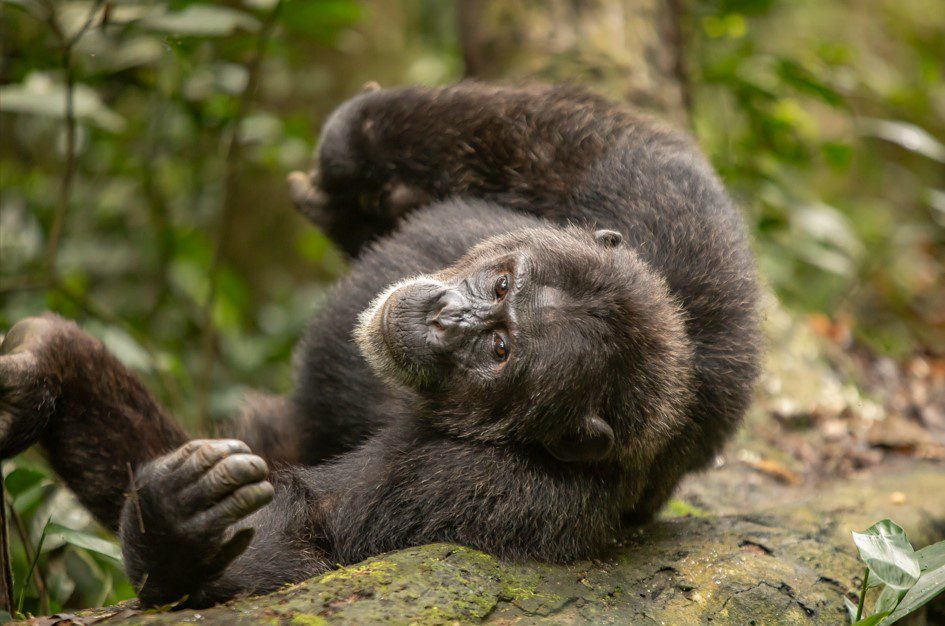
- Permits include park entrance fees and a ranger-guide for the full trek
- Group sizes are capped, typically at around six to eight visitors per chimpanzee community
- Booking 2 to 3 months ahead is generally sufficient outside of the busiest July to September and December to February windows
- Combine a Kibale permit with a walk through the neighboring Bigodi Wetland Sanctuary for excellent birdlife
Best Time of Year for Chimpanzee Trekking
Chimpanzee trekking is possible year-round because chimp communities are tracked daily regardless of weather, but the driest months, December to February and June to September, make for easier underfoot conditions and more comfortable hiking. The wetter months bring fewer crowds, greener forest, and often better fruiting trees, which can mean chimpanzees are easier to locate because they are not ranging as widely in search of food.
What to Expect on a Chimp Trekking Day
Trekking days begin with an early morning briefing, usually around 7:00 or 8:00 a.m., where a ranger-guide outlines forest etiquette and assigns your group to a specific community based on where trackers last located them. From there, the walk itself is generally shorter and less strenuous than gorilla trekking; most Kibale treks take between one and three hours round trip on established forest trails, though chimpanzees move quickly through the canopy and can require some brisk walking to keep pace with.
Once located, visitors are permitted to observe the community from a respectful distance for one hour, watching behaviors that feel startlingly familiar: grooming, tool use, playful wrestling among juveniles, and the sudden, electrifying pant-hoot calls that ripple through the group and echo across the forest canopy.
Fitness Level and Packing List
Chimpanzee trekking is generally rated easy to moderate, making it accessible to a wider range of travelers than gorilla trekking, including families with older children. Trails in Kibale are well maintained, though still muddy after rain, and chimps can occasionally range further into the forest, extending trek time.
Pack comfortable, closed-toe walking shoes, long trousers, a light rain jacket, insect repellent, drinking water, and a hat. Binoculars are a worthwhile addition given the number of other primate and bird species visible along the trail.
Combining Chimp Trekking with Other Activities
Kibale pairs naturally with Queen Elizabeth National Park for game drives and a boat cruise on the Kazinga Channel, or with the Rwenzori Mountains for travelers seeking a hiking-focused itinerary. Many visitors also combine chimpanzee trekking in Kibale with gorilla trekking in Bwindi to complete a full great-ape circuit, since the two parks are connected by a scenic drive through the Ishasha sector of Queen Elizabeth National Park, known for its tree-climbing lions.
Travelers based around Murchison Falls can pair a Budongo Forest chimp trek with the park’s boat cruise to the base of the falls and a game drive on the northern savanna, while those visiting Queen Elizabeth National Park can add a Kyambura Gorge trek onto the same day as a Kasenyi plains game drive, making efficient use of a single park entry.
Chimpanzee Behavior and What Makes the Encounter Special
Chimpanzees are Uganda’s most socially complex primate to observe, living in fission-fusion communities of up to 100 individuals that split into smaller foraging parties throughout the day. Trekkers frequently witness tool use, such as chimps stripping twigs to fish for termites, cooperative hunting of smaller monkeys, and the dramatic, far-carrying pant-hoot calls that communities use to stay in contact across the forest canopy. Because chimpanzee communities are less strictly regulated in terms of viewing distance than gorilla families, encounters can occasionally feel more dynamic and less predictable, with individuals sometimes passing close to the trail as they move between fruiting trees.
Guides in Kibale and Budongo typically have years of experience with their specific community and can often identify individual chimpanzees by name, sharing details of family relationships and personalities that add real depth to the encounter beyond simple observation.
Booking and Getting There
Chimpanzee permits can be booked directly through the Uganda Wildlife Authority or, more commonly for international travelers, through a licensed Ugandan tour operator who will handle the paperwork and combine the permit with transport and accommodation. Kibale Forest National Park is most easily reached by road from Queen Elizabeth National Park, roughly a two-hour drive, or from Fort Portal town, making it a natural link between the southwestern gorilla-trekking circuit and the rest of a Uganda itinerary. Budongo Forest is accessed from Masindi or directly from within the Murchison Falls conservation area, while Kyambura Gorge sits inside Queen Elizabeth National Park itself, requiring no separate journey for travelers already staying there.
Frequently Asked Questions
How much does a chimpanzee permit cost in Uganda?
In 2026, Kibale permits cost around USD 250 for foreign non-residents, Budongo around USD 130, and Kyambura Gorge around USD 100. The Kibale Chimpanzee Habituation Experience costs around USD 300. Confirm current rates with UWA or a licensed operator before booking.
Where is the best place to trek chimpanzees in Uganda?
Kibale Forest National Park offers the highest sighting success rate, generally above 90 percent, thanks to its dense chimpanzee population and multiple fully habituated communities.
How long does chimpanzee trekking take?
Most treks in Kibale last one to three hours round trip, considerably shorter on average than gorilla trekking, plus one hour observing the community once located.
Is chimpanzee trekking suitable for children?
Yes, with age minimums typically set between 12 and 15 depending on the site. The terrain is generally easier than gorilla trekking, making it a good option for families with older children.
What is the difference between chimp trekking and the habituation experience?
Standard trekking permits one hour with the chimpanzee community once located. The Chimpanzee Habituation Experience allows visitors to join researchers for several hours, from early morning until the chimps nest for the evening, for a deeper, more research-oriented encounter.
Can I see chimpanzees and gorillas on the same trip?
Yes. Many itineraries combine Kibale chimpanzee trekking with Bwindi gorilla trekking, connected via Queen Elizabeth National Park, for a complete great-ape safari.
What is the best time of year to trek chimpanzees?
December to February and June to September offer the driest trails, though chimpanzee tracking is possible and rewarding throughout the year.
How many chimpanzees are there in Uganda?
Uganda is home to an estimated 5,000 wild chimpanzees, with the largest and most accessible habituated population found in Kibale Forest National Park.
Do I need a permit for both chimp trekking and the habituation experience?
No, they are two separate, alternative products. You choose either the standard one-hour trekking permit or the longer Chimpanzee Habituation Experience for a given day; you would not typically book both on the same day.
What other wildlife might I see while chimp trekking?
Kibale alone hosts twelve other primate species, including red colobus and L’Hoest’s monkeys, plus forest birds, butterflies and the occasional forest elephant, making the walk rewarding even between chimpanzee sightings.
Start Planning Your Chimp Trek
Chimpanzee trekking offers a rare, humbling closeness to a species that shares roughly 98 percent of our DNA, without the extended physical demands of gorilla trekking. Whether it becomes the centerpiece of your Uganda trip or a natural add-on to a wider safari, an hour spent with a wild chimpanzee community is an experience that stays with travelers long after they leave the forest.
Choose your forest, book your permit through a licensed operator, and get ready to meet Uganda’s chimpanzees on their own terms.