Traveling in a group is one of the most practical ways to experience Uganda, especially given the country’s premium-priced permits for gorilla and chimpanzee trekking. Sharing a vehicle, guide and accommodation across a group of six to eight travelers can meaningfully reduce the per-person cost of a safari, while adding the shared energy of exploring Uganda’s forests, lakes and savanna alongside other people rather than alone.
Group travel also simplifies logistics considerably. A single guide handles permit paperwork, park entries, route planning and daily timing for the whole party, freeing individual travelers from having to research and coordinate every detail themselves. For many first-time visitors to East Africa, this combination of lower cost and reduced planning burden makes a group tour the most approachable way to experience Uganda’s headline wildlife encounters.
This guide covers how group tours work in Uganda, the cost advantages of traveling together, ideal group sizes for different activities, and what to look for when choosing between a scheduled group departure and a custom private group booking.
Quick Facts
| Ideal group size for gorilla trekking | Groups are naturally capped at 8 people per gorilla family by UWA regulation |
| Ideal group size for game drives | 4 to 7 people per safari vehicle for comfortable window access |
| Cost advantage | Shared vehicle, guide and fuel costs typically lower per-person land costs by 20-40% versus solo private touring |
| Types of group tours | Scheduled join-in group departures, or custom private groups (family, friends, colleagues) |
| Popular group tour length | 7 to 12 days |
| Best group tour route | Kampala/Entebbe – Lake Mburo – Bwindi – Queen Elizabeth NP – Kibale |
Why Choose a Group Tour in Uganda
Uganda’s cost structure makes group travel particularly appealing. Gorilla and chimpanzee permits are priced per person regardless of group size, but the vehicle, fuel, driver-guide and, in many cases, accommodation costs behind a safari can be shared across a group, meaningfully lowering the total per-person cost compared with a solo private tour. A well-organized group of six to eight travelers, whether friends, colleagues, or strangers joining a scheduled departure, can access the same 4×4 vehicles, professional guides and lodges as a private tour, at a noticeably lower individual price.
Beyond cost, many travelers simply enjoy the social dimension: shared excitement after a gorilla trek, conversations around the campfire, and the built-in camaraderie of navigating a new country together. For solo travelers in particular, joining a scheduled group departure is one of the most straightforward ways to visit Uganda without either traveling entirely alone or paying full solo-private pricing.
Types of Group Tours in Uganda
Scheduled Join-In Departures
Many Uganda tour operators run fixed-date group departures throughout the year, pooling individual travelers and small groups into a single itinerary with a set vehicle, guide and route. These are typically the most budget-friendly option and a good fit for solo travelers or couples who want the social element of a group without organizing it themselves.
Custom Private Groups
Families, friend groups, university reunions and corporate teams often book a custom private group tour, where the itinerary, pace, and even accommodation level can be tailored to the group’s preferences while still enjoying the per-person cost savings of traveling together. This option offers more flexibility than a fixed scheduled departure while retaining the cost efficiency of shared vehicles and guides.
How Group Size Affects the Uganda Safari Experience
Group size matters differently depending on the activity. For gorilla trekking, UWA regulation caps each gorilla family visit at eight visitors regardless of how the group arrived, so this is naturally a shared experience even for private bookings, often alongside other travelers who booked independently. For game drives, most operators cap vehicle groups at around six to seven people to ensure everyone has a window seat and a clear line of sight, which affects both comfort and photography opportunities.
Larger groups of ten or more sometimes require two vehicles traveling in convoy, which can work well for extended families or corporate retreats but slightly reduces the flexibility to adjust plans spontaneously compared with a single smaller vehicle.
- Groups of 4-7 generally offer the best balance of cost savings and comfort in a single vehicle
- Larger groups (10+) typically split across two vehicles, useful for extended families and corporate groups
- Ask whether accommodation is on a twin/double-share or single-supplement basis when budgeting
- Confirm whether gorilla and chimp permits are purchased as a block for the group or individually
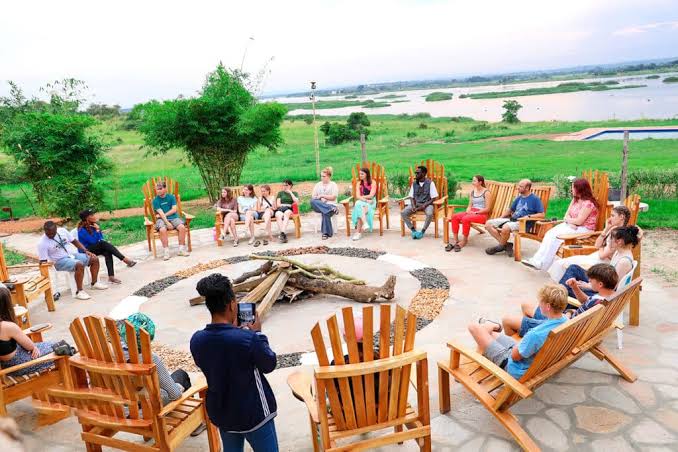
Group Tours in Uganda
Popular Group Tour Itineraries
A classic 8 to 10 day Uganda group itinerary typically links Kampala or Entebbe with Lake Mburo National Park for an easy first game drive, continues to Bwindi Impenetrable National Park for gorilla trekking, loops through Queen Elizabeth National Park for game drives and a Kazinga Channel boat cruise, and finishes with chimpanzee trekking in Kibale Forest before returning to Entebbe. Groups with more time sometimes extend north to Murchison Falls National Park for the Nile boat cruise and waterfall hike, or east to Jinja for white-water rafting and adrenaline activities on the source of the Nile.
Corporate and university groups sometimes favor a shorter 5 to 6 day version of this route focused on one or two headline activities, such as gorilla trekking plus a single savanna park, allowing a meaningful safari experience to fit within a standard week of annual leave.
Group Tours for Corporate Teams and Special Interest Groups
Beyond typical leisure travelers, Uganda has become a popular setting for corporate retreats, incentive travel and special-interest group tours, including dedicated birding groups, photography workshops, and university or alumni trips. These groups often work directly with an operator to design a custom itinerary around a specific theme, whether that is team-building activities alongside a savanna safari, or a birding-focused circuit built around Uganda’s Albertine Rift endemics, while still benefiting from the same shared-cost structure as any other group booking.
Faith-based and volunteer travel groups also make up a meaningful share of Uganda’s group tourism, often combining a community project or partnership visit with a shorter wildlife component at the end of the trip, a structure that Ugandan operators are well practiced at accommodating alongside standard safari logistics.
Managing Group Dynamics on a Multi-Day Safari
Even a well-organized group benefits from a little structure around expectations. Early morning departures for game drives and treks are non-negotiable given wildlife behavior and permit timing, so it helps for a group to agree in advance on a shared commitment to punctuality. Most experienced Uganda operators assign a lead guide who manages day-to-day logistics and keeps the group informed of timing, allowing individual travelers to relax into the experience rather than worry about coordination. For larger groups split across two vehicles, a designated meeting point and communication plan, such as a shared messaging group with the guides, helps keep everyone aligned without constant radio contact.
Choosing the Right Group Tour Operator
Look for a licensed Uganda tour operator registered with the Association of Uganda Tour Operators (AUTO), transparent pricing that clearly separates permit costs, accommodation, transport and guide fees, and reviews from past group travelers. Ask specifically how group size affects the itinerary, whether permits are pre-purchased in bulk (a sign of an established, well-organized operator), and what the group’s vehicle-to-passenger ratio will be on both game drives and longer transfer days.
It is also worth asking how the operator handles last-minute group changes, such as a traveler dropping out close to departure, since permit and accommodation cancellation policies can affect the remaining group’s per-person cost. A transparent operator will walk you through these scenarios before you book rather than leaving them buried in fine print.
Frequently Asked Questions
Is a group tour cheaper than a private safari in Uganda?
Generally yes, since vehicle, fuel, guide and often accommodation costs are shared across the group, typically lowering per-person land costs by roughly 20 to 40 percent compared with a fully private solo safari. Permit costs remain the same per person regardless of group size.
What is the ideal group size for a Uganda safari?
Four to seven travelers per vehicle offers the best balance of cost savings and comfort, ensuring everyone has good window access for game viewing and photography. Larger groups typically split across two vehicles.
Can solo travelers join a group tour in Uganda?
Yes, this is one of the most popular ways for solo travelers to visit Uganda. Scheduled join-in group departures pool individual travelers into a shared itinerary, offering both cost savings and built-in social company.
How many people can trek gorillas together in Uganda?
Uganda Wildlife Authority regulations cap each gorilla family visit at eight visitors per day, regardless of whether they booked as part of a private group or joined individually.
What should I check before booking a Uganda group tour?
Confirm the operator is licensed, ask how group size affects vehicle allocation and itinerary flexibility, clarify whether accommodation is shared or has a single-supplement option, and check that permit costs and inclusions are clearly itemized.
Can I book a private group tour for my own family or friends?
Yes. Custom private group tours are widely offered and allow you to set the pace, accommodation level and route while still sharing vehicle and guide costs across your own group rather than joining strangers.
How far in advance should a group tour be booked?
Groups intending to include gorilla or chimpanzee trekking should book at least 3 to 6 months ahead, particularly for peak season travel, since permits are limited and purchased individually for every member of the group.
Plan Your Uganda Group Tour
Group travel is one of the most efficient ways to experience Uganda’s premium wildlife encounters without a premium solo-travel price tag, while adding a genuinely social dimension to a trip that can otherwise feel logistically complex to plan alone. Whether you join a scheduled departure or organize a custom private group with friends, family or colleagues, Uganda’s compact geography and well-developed group tour infrastructure make it an easy country to explore together.
Gather your group, or sign up for a scheduled departure, and let a licensed Uganda operator handle permits, logistics and routing while you focus on the experience.