Budongo Forest Reserve: Chimpanzees, Mahogany Trees & Birdwatching
Budongo holds a claim as the largest natural forest in East Africa, an 825 square kilometre expanse of tropical rainforest in northwestern Uganda that has been studied continuously by chimpanzee researchers since the 1990s and named after a Bunyoro king who once used its most famous trail as an escape route from British colonial forces.
This guide covers Budongo’s distinctiveness: its research-grade chimpanzee community, its record-breaking mahogany trees, and the Royal Mile, widely considered Uganda’s single most productive birding location.
Positioned roughly three hours by road northwest of Kampala via Masindi town, Budongo sits directly on the route to Murchison Falls National Park and is administratively part of the wider Murchison Falls Conservation Area, making it a natural, efficient addition to a Murchison-focused itinerary rather than a separate destination requiring its own dedicated trip.
The Royal Mile:
The Royal Mile, Budongo’s most celebrated birding trail, located in the Busingiro sector, takes its evocative name from King Kabalega of the Bunyoro Kingdom, who reportedly used this specific stretch of forest while fleeing arrest by British colonial forces.
Running from the forest’s main research station to a nearby forestry college, the trail today draws serious birders from across the globe rather than fugitive royalty, and it’s widely regarded as the single most rewarding birding hotspot anywhere in Uganda.
A single day’s birding along the Royal Mile can realistically reveal up to half of Budongo’s total recorded species list, an extraordinary concentration reflecting the trail’s ideal mix of canopy height, understorey density, and forest-edge habitat.
Record-Breaking Mahogany Trees
Budongo’s East African mahogany trees, Khaya anthotheca, rank among the most impressive single natural features anywhere in Uganda’s forests, reaching heights of 80 meters or more with trunk circumferences so vast that it takes up to eight people holding hands to fully encircle the largest specimens, a genuine, tangible way to appreciate their scale that photographs alone struggle to convey.
Many of these trees are estimated to be hundreds of years old, and Kaniyo Pabidi specifically holds mahogany trees documented at over 70 years old within its guided walking trails.
Beyond the mahogany, Budongo holds over 465 recorded plant species, including a further endangered mahogany variety, Khaya senegalensis, giving the forest genuine botanical significance well beyond its famous primates and birds.
The Sonso Chimpanzee Community:
Budongo’s chimpanzee population, estimated at 700 to 800 individuals across the wider forest, includes the Sonso community, studied continuously since the 1990s and now overseen by the Budongo Conservation Field Station, an NGO that took over from the original Budongo Forest Project in 2005, currently under the direction of researchers from the Universities of St Andrews and Neuchâtel.
This makes Budongo different in character from a purely tourism-oriented chimp destination: visitors here are engaging with an active, decades-long scientific research program rather than a community habituated purely for visitor viewing.
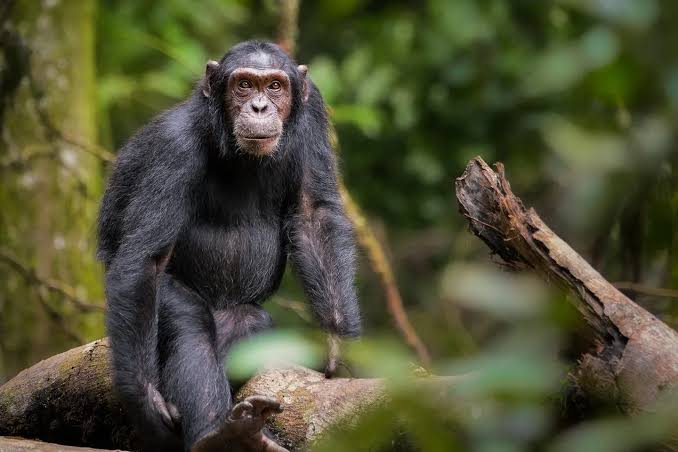
Chimp trekking runs in two daily sessions, morning and afternoon, each allowing a maximum of eight visitors and a strict one-hour observation window once the group is located, structurally similar to Kibale’s format but delivered within a different, research-grounded context.
Why Budongo Rivals Kibale, Without the Crowds
The honest, practical comparison most travelers eventually want: in Kibale, you might be one of eight people in a single viewing group at a popular, high-traffic destination. At Budongo, particularly at the Kaniyo Pabidi eco-tourism site specifically, visitor numbers run considerably thinner, and the overall experience feels more intimate and less commercialized.
Terrain here is also more physically demanding and varied, taking trekkers through genuine ravines and across forest streams rather than Kibale’s comparatively gentler trail network, delivering a more immersive sense of wilderness exploration for travelers who prioritize that atmosphere over guaranteed ease of access.
The Three Sectors: Busingiro, Kaniyo Pabidi, and the Royal Mile
Budongo’s tourism infrastructure is organized across three main areas. Busingiro hosts the Royal Mile birding trail specifically. Kaniyo Pabidi, closer to Murchison Falls National Park’s southern boundary, offers the strongest concentration of mature mahogany trees alongside its own chimp trekking access, and its relative solitude means buffalo, lion, and leopard occasionally wander through, a genuine reminder of the forest’s direct ecological connection to the wider Murchison Falls ecosystem. Together, these sectors and the connecting Royal Mile trail give Budongo a varied activity menu within a single forest reserve.
Bird Highlights: The “Budongo Five”
Budongo’s roughly 360 to 366 recorded bird species include several specialties collectively known among birding guides as the “Budongo Five”: the chocolate-backed kingfisher, Puvel’s illadopsis (found nowhere else in East Africa), yellow-footed flycatcher, Ituri batis, and Pitta reichenowi (the African pitta). Additional notable species include the African emerald cuckoo, black-headed paradise flycatcher, and chestnut-capped flycatcher, many endemic to the wider Albertine Rift region.
Nature Walks and the Boomu Women’s Group
Beyond dedicated birding and chimp trekking, Budongo offers guided nature walks through its network of forest trails, accompanied by armed rangers for safety given the occasional presence of buffalo, elephant, and lion wandering through from the adjacent national park. A cultural visit to the Boomu Women’s Group offers genuine insight into daily rural Ugandan village life, a worthwhile, low-key addition for travelers wanting a cultural dimension alongside the forest’s wildlife and botanical highlights.
Entrance and Activity Fees
Standard park entry runs approximately $40 per person, with chimpanzee trekking and habituation experience permits priced separately and generally more affordable than Kibale’s equivalent activities, reflecting Budongo’s positioning as a worthwhile but somewhat less commercially developed alternative destination.
Best Time to Visit
The dry seasons, December through February and June through September, offer the firmest trail conditions, and June through September specifically coincides with the forest’s main fruiting season, driving increased bird breeding activity and making it the strongest window for dedicated birding visits. Chimp trekking remains available year-round given the Sonso community’s consistent presence within the forest.
Combining Budongo With Murchison Falls
Given Budongo’s administrative position within the wider Murchison Falls Conservation Area, most itineraries combine the two seamlessly: a morning or afternoon at Budongo for chimp trekking or Royal Mile birding, paired with Murchison’s boat cruise, game drives, and the falls hike itself, all accessible within the same general area without requiring a separate journey.
Travelers completing this combination alongside a Ziwa Rhino Sanctuary stop en route from Kampala can realistically claim to have seen all of Africa’s so-called great beasts, plus chimpanzees, within a single well-planned northern Uganda circuit.
Frequently Asked Questions
Why is Budongo’s famous birding trail called the Royal Mile?
It’s named after King Kabalega of the Bunyoro Kingdom, who reportedly used this stretch of forest while fleeing arrest by British colonial forces.
How does Budongo compare to Kibale for chimpanzee trekking?
Budongo offers considerably thinner crowds, particularly at the Kaniyo Pabidi site, a more research-grounded experience given the ongoing Sonso community study, and more physically varied terrain, though Kibale holds a larger overall chimpanzee population and considerably more established tourism infrastructure.
How big are Budongo’s mahogany trees?
The largest specimens reach 80 metres or more in height, with trunks so wide it takes up to eight people holding hands to fully encircle them, many estimated at hundreds of years old.
What are the “Budongo Five” birds?
The chocolate-backed kingfisher, Puvel’s illadopsis, yellow-footed flycatcher, Ituri batis, and Pitta reichenowi (African pitta), five specialty species that draw dedicated birders to the Royal Mile specifically.
How do I combine Budongo Forest with Murchison Falls National Park?
Easily. Budongo is administratively part of the wider Murchison Falls Conservation Area and sits directly on the standard road route from Kampala, making it a natural half-day or full-day addition to any Murchison-focused itinerary.