Lake Bunyonyi: Island Hopping, Kayaking & Post-Safari Relaxation
Lake Bunyonyi’s name, meaning “place of many little birds” in the local Rukiga language, undersells just how much genuine history and natural drama sits within its 29 scattered islands.
This isn’t simply a scenic post-gorilla-trekking stopover, though it excels genuinely at that too; it’s a lake with real stories: an island once used to abandon unmarried pregnant girls, a former leprosy colony now serving as a school, and one of Africa’s deepest bodies of water, formed when volcanic lava dammed an entire river valley roughly 10,000 years ago.
Located in Kabale District in Uganda’s far southwest, near the Rwandan border and just seven kilometers from Kabale town, Lake Bunyonyi sits within easy reach of Bwindi Impenetrable National Park’s southern trekking sectors, making it the natural, restorative close to a gorilla trekking itinerary.
How the Lake Was Formed
Lake Bunyonyi’s formation traces back roughly 10,000 years, when lava from an eruption within the wider Virunga volcanic system dammed the River Ndego, flooding the surrounding valley and creating what has since grown into a genuinely stunning island-cluster lake.
At approximately 25 kilometers long and seven kilometers wide, with depths reportedly reaching extraordinary figures, Lake Bunyonyi ranks among the deepest lakes in Africa, and its bilharzia-free waters make it genuinely one of the safest lakes in Uganda for swimming, a rare and welcome distinction given how many East Africa lakes carry this specific health risk.
Akampene: Punishment Island
Among Lake Bunyonyi’s 29 islands, Akampene, known in English as Punishment Island, carries the lake’s darkest and most sobering history. Historically, unmarried girls who became pregnant were abandoned on this small, isolated island to face their fate alone, a practice reflecting the severe social consequences attached to premarital pregnancy in traditional Bakiga society.
Guides visiting the island today share this history directly and candidly, and it remains, for many visitors, the single most memorable and thought-provoking stop on a Bunyonyi island-hopping tour, precisely because it resists the more comfortable, purely scenic framing most lake destinations offer.
Bwama: From Leper Colony to School
Bwama Island’s history follows a genuinely different arc, from isolation and suffering toward renewal. The island once served as a hospital and place of forced isolation for people living with leprosy, sent here specifically to prevent the disease’s spread to the surrounding mainland population.
Since the discovery of a permanent, effective leprosy treatment, the practice of isolating patients on Bwama ended entirely, and the former leper hospital has since been repurposed as a school for local children, a genuinely meaningful transformation that guides typically highlight during island tours.
Other Notable Islands
Bushara Island, known for its eucalyptus groves, offers a genuinely tranquil stop for travelers wanting a quieter, more contemplative island visit. Kyahugye Island holds a small population of introduced zebra, a genuinely unexpected sighting for a lake destination and a popular stop on longer island-hopping itineraries. Akabucuranuka, nicknamed “Upside-Down Island” for a local legend regarding its formation, rounds out the more commonly visited islands, each carrying its own distinct character and story.
A Curious Colonial-Era Footnote: The Crayfish
Among the lake’s more unusual historical details, Louisiana crayfish were introduced to Lake Bunyonyi during Idi Amin’s rule, and the species has since thrived to become the most common aquatic species in the lake and surrounding waters, now served as a genuine local delicacy at nearly every lakeside resort and restaurant. Travelers with an interest in trying it will find crayfish on nearly every menu around the lake, alongside native tilapia for those preferring a more familiar option.
Canoeing and Island Hopping
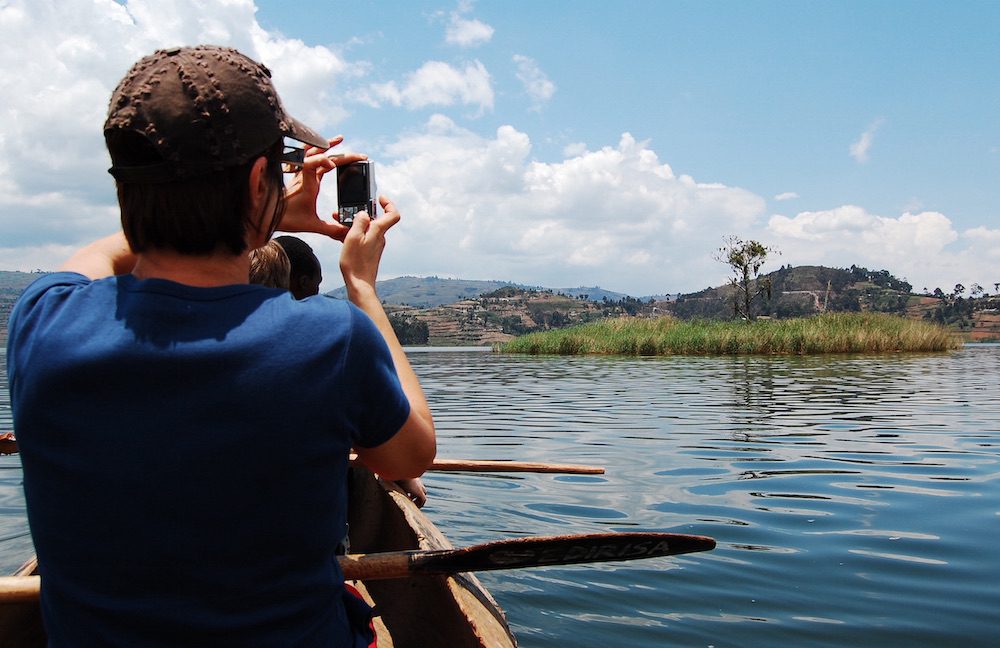
The single most iconic Lake Bunyonyi activity is a traditional dugout canoe ride, available at any time of day but genuinely most atmospheric in the early morning, when mist often settles over the lake and drifts partway up the surrounding terraced hills, a scene several travelers have compared to something from a fantasy film.
Canoe excursions typically run two to three hours, combining island hopping with genuine local paddling technique instruction from your guide, who also points out birdlife and shares each island’s specific history along the way.
Pricing varies by boat type and group size: a canoe or kayak excursion runs roughly $8 to $20 per person depending on group size, a standard motorboat tour runs $15 to $40 per person, and a speedboat option runs somewhat higher, $35 to $80 per person, again scaling down considerably for larger groups.
A full historical islands tour, covering Bwama, Akabucuranuka, Kyahugye, Akampene, and Bushara, typically takes 40 minutes to three hours depending on the specific combination chosen.
Sunset Cruises
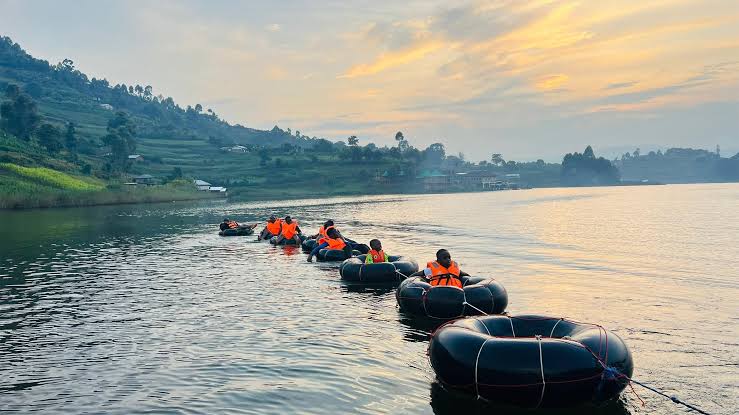
A separate, genuinely worthwhile activity, the sunset cruise, uses an open motorized boat to catch Lake Bunyonyi’s terraced hills and island silhouettes bathed in evening light, typically paired with drinks and snacks for a relaxed, unhurried close to the day. Running roughly $20 to $40 per person, this activity suits travelers wanting a purely scenic, low-effort experience distinct from the more history-focused island-hopping tours.
Cultural and Community Visits
Beyond the lake itself, guided walks near the shoreline offer genuine insight into daily Bakiga community life, including the chance to try traditional tasks like digging with local hand hoes, or visiting a local school to interact directly with children.
The Bakiga’s traditional drinks, marwa (a banana-based brew) and obushera (made from millet or sorghum), are worth sampling for travelers curious about local culinary custom, and community visits here consistently feel genuinely unstaged given the lake region’s relatively modest overall tourist volume relative to Uganda’s headline wildlife destinations.
Hiking
For travelers wanting elevation alongside the water-based activities, hiking to the “Top of the World” viewpoint above the lake delivers genuinely sweeping panoramic views across the entire island cluster and surrounding Kigezi highlands, typically arranged as an add-on to a standard boat tour for an additional fee.
Why Lake Bunyonyi Works So Well After Gorilla Trekking
Lake Bunyonyi’s genuine strength lies in its proximity to Bwindi’s southern sectors, Rushaga and Nkuringo specifically, combined with its fundamentally different pace: calm water, cool highland air, and activities requiring considerably less physical exertion than the trekking days that likely preceded it.
Most travelers build in one to two nights here specifically as a deliberate decompression stop, and the lake’s consistently cool, comfortable climate year-round makes it a genuinely rewarding stop regardless of when your wider Uganda trip happens to fall.
Frequently Asked Questions
Is it safe to swim in Lake Bunyonyi?
Yes, genuinely. Lake Bunyonyi’s waters are bilharzia-free, making it one of the safest lakes in Uganda for swimming, a rare distinction compared with many other East African lakes.
What is Punishment Island?
Akampene Island historically used to abandon unmarried girls who became pregnant, reflecting the severe social consequences of premarital pregnancy in traditional Bakiga society. It remains one of the lake’s most sobering, historically significant stops.
How many islands does Lake Bunyonyi have?
29 islands in total, scattered across the lake, with Bwama, Akampene, Bushara, and Kyahugye among the most commonly visited on guided tours.
How much does an island-hopping canoe tour cost?
Roughly $8 to $20 per person for canoe or kayak, $15 to $40 for a standard motorboat, and $35 to $80 for a speedboat, with per-person costs decreasing considerably for larger groups.
Why do travelers combine Lake Bunyonyi with Bwindi gorilla trekking?
The lake sits within easy reach of Bwindi’s southern Rushaga and Nkuringo sectors, and its calm, low-exertion activities and cool climate make it a genuinely restorative stop after the physical demands of a gorilla trek.