Pian Upe Wildlife Reserve
Pian Upe Wildlife Reserve, spanning more than 2,000 square kilometres of open savanna, rocky hills, and acacia woodland in Uganda’s remote Karamoja region, offers a raw, frontier wilderness experience, and it holds one distinction no other Ugandan protected area can claim: it’s the only place in the country to find roan antelope in the wild. Uganda’s second-largest protected area sees a genuine fraction of the visitors that flock to Murchison Falls or Queen Elizabeth national park, and that obscurity is precisely the point for a growing number of travelers actively seeking Africa without the crowds.
Located in Nakapiripirit district along the northern foothills of Mount Elgon, Pian Upe was first established in 1964, later designated a game reserve in 1989, and, in a significant and recent development, elevated to full national park status in 2025.
Uganda’s Only Roan Antelope
Pian Upe holds a unique wildlife distinction: it’s the sole location in Uganda where roan antelope, a striking, large, grey-brown antelope with distinctive backward-curving horns, can be found in the wild. Combined with cheetah, a species otherwise essentially restricted to Kidepo Valley National Park within Uganda’s borders, Pian Upe offers travelers who’ve already covered the country’s more famous parks a genuine chance at two species unavailable almost anywhere else in the national protected area network.
Beyond these headline species, the reserve holds roughly 40 to 44 recorded mammal species, including elephant, lion, leopard, Nubian giraffe (with Rothschild’s giraffe also successfully reintroduced in recent years), striped hyena, topi, and dik-dik, alongside rare sightings of aardwolf and serval cat for particularly fortunate visitors.
A Birder’s Genuine Secret
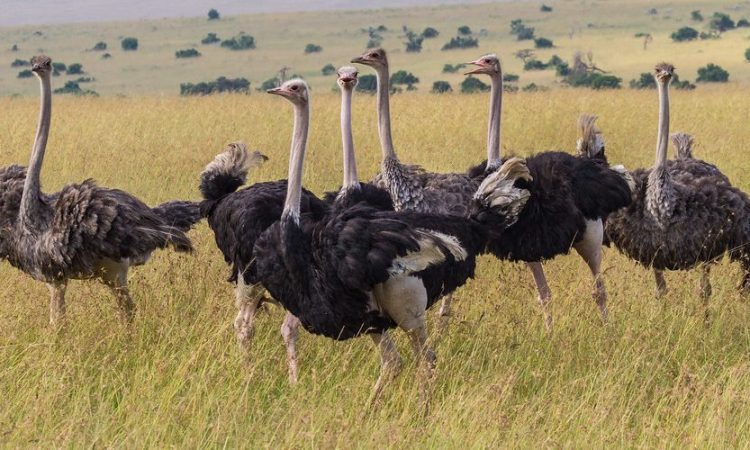
Pian Upe holds somewhere between 242 and 525 recorded bird species depending on the specific count, and it has become one of Uganda’s genuine top birding destinations, home to the country’s largest population of ostrich, alongside secretary bird, Abyssinian ground hornbill, superb starling, eastern chanting goshawk, and the endemic Karamoja apalis, found only in this specific corner of northeastern Uganda. The reserve overlaps with Lake Opeta, a RAMSAR-designated wetland hosting thousands of waterbirds, adding a different habitat dimension to the reserve’s predominantly dry savanna character.
Game Drives and Walking Safaris
Pian Upe’s open, sweeping terrain suits open-roofed 4×4 game drives particularly well, with morning and evening drives delivering the strongest wildlife activity across the reserve’s vast landscape. Walking safaris, accompanied by knowledgeable armed rangers and nature guides, offer a different pace, tailored to birding, on-foot game viewing, or simply casual wandering across the wilderness, a level of flexible, personalized activity structuring that reflects the reserve’s still-developing, uncrowded tourism infrastructure.
Cultural Encounters With the Karamojong and Tepeth
Pian Upe sits within the Karamoja region, home to the Karamojong people, often compared to the Maasai of Kenya and Tanzania given their shared pastoralist traditions, alongside the Tepeth people. Community tours here offer genuine engagement with traditional Karamojong and Tepeth culture, hunting demonstrations, storytelling, food preparation, and traditional dance and music, and given the region’s genuine remoteness relative to Uganda’s more visited tourism circuits, these encounters carry a level of authenticity considerably harder to find in more commercialized cultural tourism settings elsewhere in the country.
Mount Kadam:
The reserve’s north-eastern edge is dominated by Mount Kadam, a towering 3,043-metre volcanic massif offering a dramatic scenic backdrop to game drives and camping across the reserve, and adventurous travelers with additional time can arrange guided hikes on its lower slopes for those wanting to combine wildlife viewing with a genuine physical challenge.
Camping Under the Stars
Pian Upe is considered one of Uganda’s best camping destinations, and given the reserve’s remote location and low light pollution, camping here delivers spectacular night skies alongside the daytime wildlife viewing. Accommodation options remain modest but functional: Karamoja Overland Camp, Uganda Wildlife Authority bandas, and dedicated camping grounds cover the reserve itself, with further options including Lavender Inn, Shalosa Hotel, and Mount Moroto Hotel available in nearby towns for travelers preferring a roof over their heads.
The 2026 Open Park Days Initiative
Pian Upe’s growing prominence within Uganda’s wider tourism strategy was formally reinforced in 2026, when the Uganda Wildlife Authority selected it, alongside Murchison Falls, Queen Elizabeth, Kidepo Valley, and Lake Mburo, for inclusion in the national Open Park Days programme, running 25 to 27 September 2026, a three-day initiative opening selected protected areas to visitors without standard entrance fees, specifically to boost domestic tourism and public engagement with Uganda’s conservation network. Pian Upe’s inclusion in this prestigious programme, alongside the country’s most internationally recognized parks, reflects its rapidly rising status within Uganda’s tourism landscape.
Combining Pian Upe With the Rest of Eastern Uganda
Pian Upe’s location makes it a natural addition to a wider eastern Uganda circuit, combining efficiently with Sipi Falls and Mount Elgon National Park given their relative proximity, or extending north to Kidepo Valley National Park for travelers building a comprehensive Karamoja-region itinerary. A full round-trip through Uganda’s national parks incorporating Pian Upe benefits from twelve to fifteen days, traveling east through Jinja and Sipi Falls before connecting to Pian Upe, then north to Kidepo, before eventually looping back through Murchison Falls, Kibale, Queen Elizabeth, and Bwindi.
Best Time to Visit
Pian Upe’s semi-arid climate delivers temperatures averaging 20 to 30 degrees Celsius year-round, with 600 to 800 millimetres of annual rainfall. The dry seasons offer the firmest game-drive conditions and clearest wildlife viewing, though given the reserve’s low overall visitor numbers, crowding is essentially never a concern regardless of when you choose to visit.
Frequently Asked Questions
What makes Pian Upe unique among Uganda’s protected areas?
It’s the only location in Uganda to find roan antelope in the wild, and one of only two locations (alongside Kidepo Valley) with a resident cheetah population, alongside Uganda’s largest ostrich population.
Did Pian Upe recently become a national park?
Yes, in 2025, following a 2022 co-management agreement between Space for Giants, the Uganda Wildlife Authority, Karimojong Overland Safaris, and nine district governments aimed at restoring and protecting the reserve.
How does Pian Upe compare to Uganda’s more famous parks in terms of crowds?
uncrowded. Given its remote Karamoja location, Pian Upe sees a fraction of the visitors found at Murchison Falls or Queen Elizabeth, making it a strong choice for travelers specifically seeking solitude.
Can I combine Pian Upe with other eastern Uganda destinations?
Yes, naturally. It pairs well with Sipi Falls and Mount Elgon National Park given their relative proximity, and extends efficiently north to Kidepo Valley National Park for a comprehensive Karamoja circuit.
What is the Open Park Days initiative?
A Uganda Wildlife Authority programme running 25-27 September 2026, opening selected parks including Pian Upe to visitors without standard entrance fees, part of a broader push to boost domestic tourism and conservation engagement.