Tree-Climbing Lions & Kazinga Channel
Queen Elizabeth National Park is built from four distinct zones stitched into a single protected area: the Kasenyi Plains for classic savanna game viewing, the Kazinga Channel for water-based wildlife density, Kyambura Gorge for chimpanzee trekking, and the remote Ishasha sector for one of Africa’s rarest wildlife behaviors—lions that climb and rest in trees. Understanding how these four zones function separately, rather than treating the park as a single undifferentiated destination, is the key to planning a visit that makes the most of a short stay.
With 95-plus mammal species and more than 610 recorded bird species, Queen Elizabeth holds a genuine claim to being Uganda’s most biodiverse single park, and its straddling of the equator, marked by physical monuments travelers can stand astride, adds a further, easily overlooked point of interest to an already dense itinerary.
Kasenyi Plains
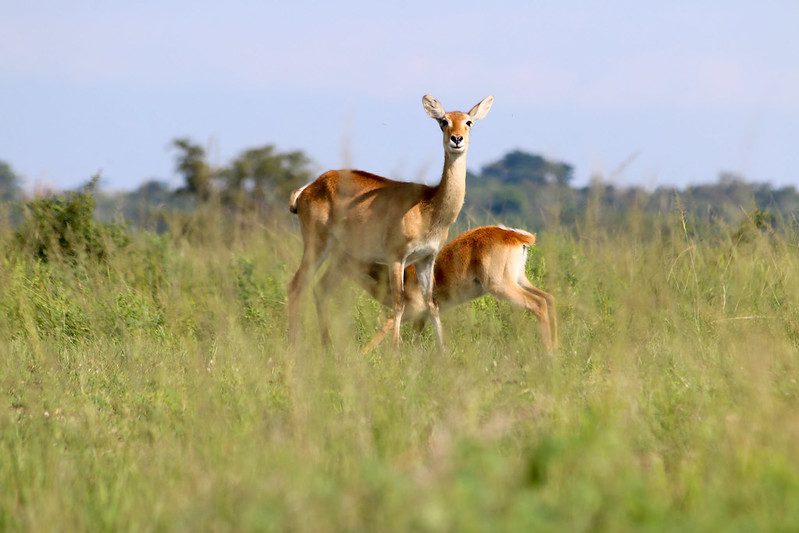
The Kasenyi Plains, in the park’s eastern section, provide the best classic savanna game viewing in Queen Elizabeth, with buffalo, elephants, and reliable lion sightings as prides hunt the large herds of Uganda kob grazing in the open grassland.
Dawn and dusk game drives across Kasenyi in 4WD vehicles deliver the park’s most dependable predator-prey action, and this sector is typically where a Queen Elizabeth itinerary opens, given its straightforward access from the park’s main entrance points.
For travelers with a specific interest in lion research, the park now offers Lion Tracking sessions conducted alongside Ishasha Pride researchers, a distinctive activity giving visitors direct exposure to the ongoing collar-and-monitor conservation work behind the park’s headline predator population.
Kazinga Channel
The Kazinga Channel, a 40-kilometer natural waterway connecting Lake Edward and Lake George, anchors the park’s northern Mweya sector and delivers what many visitors describe as the single best two hours of their entire Uganda trip.
The standard cruise costs $30 per person and runs roughly two hours, passing an estimated 2,000 hippos alongside basking Nile crocodiles, elephants coming down to drink at the shoreline, and over 100 recorded water bird species, a dense concentration of wildlife visible without needing to leave the boat.
Because the channel supports such reliable, close-range sightings regardless of season, it functions as the one Queen Elizabeth activity nearly every itinerary includes, typically scheduled for late afternoon when both light and animal activity peak simultaneously.
Ishasha
The remote Ishasha sector, bordering the Democratic Republic of Congo in the park’s far south, holds one of only two known lion populations on earth that habitually climb trees, the other being Tanzania’s Lake Manyara National Park.
Prides here spend genuine daytime hours resting draped across the branches of sycamore-fig and acacia trees, a behavior researchers attribute to escaping ground-level heat, avoiding biting insects, and gaining a better vantage point for spotting prey across the surrounding plains.
Sightings here can’t be guaranteed on any specific day, since they depend entirely on where the pride happens to be resting, but Ishasha’s genuine remoteness, considerably further from the park’s main entrance than Kasenyi or Kazinga, means guides here report the sighting rate remains consistently strong precisely because so few other vehicles compete for the same viewing spots. Ishasha also functions as a natural, logical gateway for travelers continuing south toward Bwindi Impenetrable National Park for gorilla trekking.
Kyambura Gorge
Kyambura Gorge, a dramatic, 100-meter-deep forested gorge cutting through the park’s savanna, is home to a small habituated community of wild chimpanzees, and trekking down into the gorge to find them with a Uganda Wildlife Authority ranger offers a different experience from the open-plains game drives elsewhere in the park. Permits here cost around $50 for chimp trekking, considerably less than Kibale’s equivalent, though sighting reliability runs somewhat lower given the community’s smaller overall size.
Kyambura sits roughly two hours by road from Ishasha, making a same-day combination of both activities feasible for travelers with a full day to dedicate to the southern half of the park.
Entrance and Activity Fees in 2026
Standard park entrance costs $40 per day for foreign non-residents, $30 for foreign residents, and UGX 20,000 for East African citizens, valid for 24 hours from time of entry. The Kazinga Channel boat cruise runs for $30, chimpanzee trekking in Kyambura Gorge around $50, and game drives $20 to $40 depending on timing and vehicle arrangement. Guided nature walks cost $15 for foreign non-residents, and dedicated birdwatching excursions run $30, both considerably more affordable than the park’s headline activities and worthwhile additions for travelers with an extra half-day.
Birding
With more than 610 recorded species, Queen Elizabeth stands as Uganda’s premier birding destination, and the Kazinga Channel cruise alone produces a species count that first-time visitors from outside Africa often find hard to believe. Target species include the shoebill stork, African skimmer, papyrus yellow warbler, martial eagle, and Verreaux’s eagle-owl, and serious birders should plan a minimum of three dedicated days within the park to properly cover its varied habitat, savanna, wetland, and forest-edge, given how directly habitat diversity here translates into species diversity.
Cultural Visits and Crater Lakes
Beyond wildlife-focused activities, Queen Elizabeth offers cultural visits to the nearby Kikorongo and Katwe villages, including a stop at Katwe’s historic salt lake, still actively mined using traditional methods largely unchanged for generations.
Guided crater lake walks through the park’s volcanic Kasenyi and Katwe-Kikorongo craters add a further, different landscape dimension to a stay that might otherwise focus purely on savanna and water-based wildlife.
How Long to Stay and How to Sequence Your Visit
| Days | Recommended Focus |
| 1-2 days | Kasenyi game drive plus Kazinga Channel cruise, a compact but complete introduction |
| 3 days | Add a dedicated half-day in Ishasha for the tree-climbing lions. |
| 4 days | Add Kyambura Gorge chimp trekking and a crater lake or cultural village tour |
Getting There
Queen Elizabeth sits roughly six to seven hours by road from Kampala, and its central position between Entebbe and Bwindi Impenetrable National Park makes it the natural midpoint stop on Uganda’s most popular combined itinerary, with savanna wildlife and the Kazinga Channel paired with gorilla trekking within a single week. Domestic flights into the park’s airstrips offer a faster alternative for travelers prioritizing time over the scenic value of the overland route.
Best Time to Visit
Queen Elizabeth is a genuine year-round destination, and unlike migration-dependent parks, its resident wildlife remains consistently strong regardless of season. The dry months, June through September and December through February, offer the firmest roads and easiest access to Ishasha specifically, while the wetter months bring lush scenery and noticeably fewer other vehicles at every sighting.
Where to Stay by Sector
Mweya Peninsula, in the park’s northern Kazinga sector, holds the greatest concentration of accommodation, from the historic Mweya Safari Lodge through to smaller boutique camps, all offering convenient access to both the Kazinga Channel and Kasenyi Plains game drives. Ishasha’s more remote southern sector offers a smaller number of properties, including Ishasha Wilderness Camp, positioned specifically for early access to the tree-climbing lion sightings before other vehicles arrive.
For travelers wanting to properly cover both the northern and southern halves of the park without excessive daily driving, splitting a stay between two lodges, one near Mweya and one near Ishasha, works better than attempting to base entirely from a single central property.
Practical Notes on the Equator Crossing
Queen Elizabeth’s position straddling the equator is marked by physical monuments along the main road through the park, a popular, low-effort photo stop for travelers passing through between sectors. It’s a small but memorable detail worth building a brief pause into your itinerary for, particularly given how directly it sits along the standard route most visitors already travel.
Health and Safety Preparation
Queen Elizabeth sits within a malaria-risk area, and standard prophylaxis alongside mosquito precautions remains important throughout your stay. Given the park’s proximity to the Democratic Republic of Congo border at Ishasha, travelers should confirm current border-area guidance with their operator, though the park itself is considered safe and well-managed for standard tourism activities across all four sectors.
Combining Queen Elizabeth with the Rest of Uganda
Beyond the popular gorilla trekking combination, Queen Elizabeth pairs naturally with Kibale National Park to the north for chimpanzee trekking, given the relatively short transfer between the two, and with Lake Mburo National Park for travelers wanting to add a compact, easily accessible savanna stop on the return journey toward Kampala or Entebbe.
Frequently Asked Questions
Are visitors guaranteed to see the tree-climbing lions at Queen Elizabeth?
No, sightings depend on the pride’s movements on any given day and can’t be guaranteed, though Ishasha’s remoteness and low vehicle density mean guides report consistently strong odds relative to more heavily visited lion destinations.
How much does the Kazinga Channel boat cruise cost?
$30 per person, running roughly two hours and passing an estimated 2,000 hippos alongside crocodiles, elephants, and over 100 recorded water bird species.
Can I combine Ishasha’s lions with Kyambura Gorge chimp trekking in one day?
Yes, the two sectors sit roughly two hours apart by road, making a same-day combination feasible for travelers with a full day available in the park’s southern section.
What is Lion Tracking with the Ishasha Pride researchers?
A distinctive activity giving visitors direct exposure to the park’s ongoing lion collaring and monitoring conservation work, offered as an addition to standard game drives in the Ishasha sector.
How many days should I spend at Queen Elizabeth National Park?
Two to four days is ideal: two covers the core Kasenyi and Kazinga Channel experience, while three or four allows time to add Ishasha’s tree-climbing lions and Kyambura Gorge chimp trekking without feeling rushed.