Complete Visitor & Trekking Guide
Bwindi Impenetrable National Park sits in Uganda’s far southwest along the Albertine Rift, 331 square kilometers of ancient montane rainforest at elevations between 1,160 and 2,607 meters, protecting close to half the world’s remaining mountain gorillas. What follows is a straightforward, step-by-step walk through everything a first-time visitor needs to plan and execute the trip correctly.
Permit Costs
A standard gorilla trekking permit for Bwindi currently costs $800 per person for foreign non-residents, $700 for foreign residents, $500 for citizens of other African nations, and UGX 300,000 for East African citizens. This single fee is all-inclusive for the day: it covers park entrance for the trek itself, the services of an experienced ranger guide, an armed security escort, and a certificate of tracking presented after the encounter.
For travelers wanting considerably more time with the gorillas, the Gorilla Habituation Experience costs $1,500 for foreign non-residents, $1,000 for foreign residents, and UGX 750,000 for East African citizens, extending your time from the standard one hour to up to four hours spent alongside researchers and rangers actively habituating a semi-wild family to human presence, a different, considerably more immersive activity available only in specific sectors.
For activities other than gorilla trekking itself, birdwatching, guided nature walks, and cultural visits, standard park entrance fees apply: $40 per person per day for foreign non-residents and $30 for foreign residents, with a 25 percent discount available to students holding a valid international identification card.
How Many Permits Exist, and How Far Ahead to Book
As of 2026, Bwindi holds approximately 19 fully habituated gorilla families spread across its four sectors, with each group capped at a maximum of eight visitors per day, producing a firm total of roughly 152 to 192 permits available on any given day across the entire park, depending on the exact number of active families that season. This is a hard ceiling, not a guideline, and no walk-in permits are available at any of the four sector offices.
For peak season travel, June through August and December through February, book three to six months in advance as the standard recommendation. For the quieter low season, April, May, and November, permits are typically obtainable within four to eight weeks, though booking earlier remains sensible given how unpredictable demand can be even in the shoulder months.
Choosing Your Sector
Bwindi is divided into four trekking sectors, each with its own park office, trailhead, and set of habituated families, and your permit ties you to one specific sector for the day. Buhoma, in the north, holds the park’s original headquarters and the greatest concentration of established tourism infrastructure, making it the most straightforward first choice for travelers wanting reliable logistics. Ruhija, in the east near Mubwindi Swamp, sits at the park’s highest elevation and offers the strongest birdwatching alongside gorilla trekking.
Rushaga, in the south, holdhighest numbernumber of habituated families of any sector and is currently the only location offering the Gorilla Habituation Experience. Nkuringo, also in the south, delivers the most physically demanding terrain paired with the most dramatic scenery, sweeping views toward the Virunga volcanoes on a clear day. Because driving between sectors can take several hours given Bwindi’s mountainous roads, choose your accommodation to match your assigned sector rather than the reverse.
Getting to Bwindi
Two practical routes exist. By air, fly into Entebbe International Airport, then take a scheduled or chartered flight to Kihihi Airstrip, the closest to Buhoma, or Kisoro Airstrip, serving Nkuringo and Rushaga, a journey of roughly ninety minutes to two hours in the air. By road, the drive from Kampala takes approximately eight to ten hours, considerably longer but scenic, passing through Uganda’s terraced highland farmland and, for many travelers, offering a worthwhile overland introduction to the country’s landscape.
Most itineraries combine the Bwindi leg with at least one other park, commonly Queen Elizabeth National Park to the north, connected by a four-to-five-hour drive, making a fly-in/drive-out or drive-in/fly-out combination efficient for a multi-park Uganda circuit.
A Trekking Day, Start to Finish
Gorilla trekking begins with registration at 7:00am and a mandatory briefing at your sector’s park headquarters, where rangers explain trekking etiquette, maintaining distance, keeping voices low, and what to do if a gorilla approaches directly, before groups of up to eight visitors are assigned to a specific family based on that morning’s tracker reports and the group’s overall fitness level. Trekking itself starts around 8:30am and can last anywhere from thirty minutes to six hours or more depending entirely on where the assigned family happens to be that day.
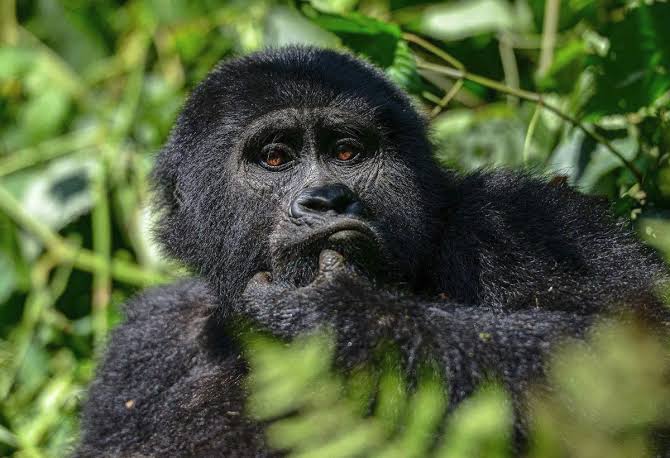
Once located, visitors are permitted exactly one hour with the family, timed precisely by the accompanying ranger, observing feeding, grooming, and social behavior at a respectful, regulated distance. The return trek generally takes somewhat less time than the outbound journey, and successful trekkers receive a certificate back at park headquarters before returning to their lodge.
Fitness, Age, and Physical Requirements
The minimum age for gorilla trekking is strictly 15, verified by passport at the briefing, with essentially no exceptions. There is no formal upper age limit or fitness test, but the terrain, steep, often muddy volcanic slopes at meaningful altitude, demands reasonable cardiovascular fitness and comfort with sustained uphill walking. Hiring a porter, typically arranged on the morning of the trek for a modest fee, is worth doing regardless of fitness level, both for practical assistance and as direct, meaningful support for the local trekking economy.
What to Pack
Sturdy, waterproof, well-broken-in hiking boots are non-negotiable given Bwindi’s consistently muddy terrain. Long trousers and a long-sleeved shirt in neutral colors protect against stinging nettles and thorny undergrowth along the trail, and gardening gloves help when gripping vegetation on steeper sections. A lightweight, packable rain jacket is essential regardless of season, since Bwindi’s rainforest canopy produces its own microclimate independent of the general forecast.
Bring more water than you think you’ll need, energy-dense snacks, a daypack for your camera and personal items, and cash in small denominations for tipping your guide, porter, and any additional trackers involved in the day.
Beyond Gorilla Trekking
Bwindi offers 18 confirmed activities in total, well beyond gorilla trekking alone. These include guided forest walks to waterfalls, dedicated birdwatching treks targeting the park’s 23 Albertine Rift endemic species, mountain biking on select trails, and the Batwa cultural experience, a guided walk led by former forest-dwelling Batwa community members sharing traditional forest skills and history.
It’s worth confirming with your guide the day before which of these can realistically pair with your gorilla trek, since the full-day demands of trekking and the layout of trailheads in sectors like Ruhija make same-day combinations impractical in most cases. Building an extra day into your Bwindi stay specifically for one or two of these additional activities is generally the more realistic approach.
Quick-Reference Summary Table
| Category | Detail |
| Standard gorilla permit (foreign non-resident) | $800 |
| Gorilla Habituation Experience | $1,500 (Rushaga sector only) |
| Standard park entrance (non-gorilla activities) | $40/day |
| Minimum age for trekking | 15 years, no exceptions |
| Group size per gorilla family | Maximum 8 visitors |
| Booking window (peak season) | 3-6 months ahead |
| Booking window (low season: Apr/May/Nov) | 4-8 weeks ahead |
| Trek start time | 8:30am, after the 7:00am briefing |
Best Time to Go
The dry seasons, June through September and December through February, offer firmer trails and are the standard recommendation for a first trek, though they also represent peak demand and the tightest permit availability. The wetter months, March through May and October through November, bring muddier, more physically demanding conditions in exchange for easier permit availability, greener scenery, and noticeably fewer other trekkers. Gorillas are present and trekkable year-round regardless of season, so no month rules out a rewarding encounter.
Where to Stay in Each Sector
Accommodation varies by sector and budget tier. Buhoma offers the widest range, from budget guesthouses to established luxury properties like Buhoma Lodge and Mahogany Springs, given its status as the park’s original, most developed sector.
Ruhija’s options are somewhat more limited but include Ruhija Gorilla Safari Lodge, well positioned for the sector’s strong birding alongside trekking. Rushaga has grown considerably recently to match demand from the Gorilla Habituation Experience, with properties including Four Gorillas Lodge and Gorilla Heights Lodge. Nkuringo’s Clouds Mountain Gorilla Lodge remains the standout choice for travelers prioritizing scenery alongside gorilla access.
Matching your lodge to your assigned sector, rather than choosing based on price or photographs alone, remains the single most important accommodation decision for a Bwindi trip, since a lodge in the wrong sector can add hours to an already early trekking morning.
Health and Safety Preparation
Bwindi sits at a significant altitude, and combined with the physical demands of trekking, travelers should arrive having built some baseline cardiovascular fitness in the weeks before departure. Malaria prophylaxis is recommended given the wider region’s risk profile, and a travel clinic consultation four to six weeks before departure allows time to confirm appropriate medication and any required vaccinations specific to your broader Uganda itinerary.
Comprehensive travel insurance covering medical evacuation is important given Bwindi’s remote location relative to hospital-level care, and confirming your policy explicitly covers trekking activities, rather than assuming standard coverage applies, avoids any gap in protection specifically relevant to this activity.
Combining Bwindi With the Rest of Uganda
Most Bwindi itineraries extend into a wider circuit rather than standing alone. Queen Elizabeth National Park, roughly four to five hours away, pairs naturally for savanna game drives and the Kazinga Channel boat cruise, and Ishasha’s tree-climbing lions sit directly on the standard road route between the two parks. For travelers wanting a second primate encounter, a cross-border transfer into Rwanda’s Volcanoes National Park adds golden monkey trekking and, for those wanting it, a second gorilla trek at a considerably higher permit cost.
Frequently Asked Questions
How much does a Bwindi gorilla permit cost in 2026?
$800 per person for foreign non-residents, $700 for foreign residents, $500 for other African nationals, and UGX 300,000 for East African citizens, all-inclusive of park entry, guide, and ranger security for the day.
Can I book a gorilla permit on arrival in Uganda?
No. Permits must be reserved in advance through the Uganda Wildlife Authority’s central reservations office or a licensed tour operator; no walk-in permits are sold at any of the four sector offices.
Which Bwindi sector should I choose?
It depends on your permit assignment, since your permit ties you to one specific sector. Buhoma offers the most established infrastructure, Ruhija the best birding, Rushaga the most families and the habituation experience, and Nkuringo the most dramatic scenery.
How physically demanding is gorilla trekking?
demanding. Treks range from thirty minutes to six or more hours across steep, often muddy volcanic terrain, and reasonable fitness plus a hired porter are strongly recommended for all trekkers.
Is the gorilla habituation experience worth the extra cost?
For travelers with a genuine interest in gorilla behavior and conservation research, yes; it extends your time from one hour to up to four hours alongside researchers, though it’s currently only available in the Rushaga sector and costs nearly double the standard permit.