Trekking, Volcanoes & Batwa Culture
Mgahinga Gorilla National Park covers just 33.7 square kilometres, making it Uganda’s smallest national park, and yet it packs in gorilla trekking, the country’s only golden monkey population, three distinct hikeable volcanoes, and one of Uganda’s most powerful cultural experiences into that compact footprint.
This guide walks through each of these four pillars individually, since a Mgahinga visit rewards understanding all four options rather than assuming it’s simply a smaller, quieter version of Bwindi.
Gazetted in 1991 specifically to protect the endangered mountain gorillas found on the Uganda slopes of the Virunga massif, Mgahinga sits in Kisoro district in the country’s far southwestern corner, bordering both Rwanda and the Democratic Republic of Congo, and remains, alongside Bwindi, Rwanda’s Volcanoes National Park, and DRC’s Virunga National Park, one of only four places on earth where mountain gorillas can be trekked in the wild.
Gorilla Trekking: The Nyakagezi Family
Mgahinga is currently home to roughly 80 mountain gorillas, though only a single group, the Nyakagezi family, is habituated and open for the standard one-hour trekking experience, in contrast to Bwindi’s roughly 19 habituated families spread across four sectors. This single-family structure shapes the Mgahinga trekking experience: with far fewer daily visitors overall than Bwindi, the park delivers a considerably quieter, less crowded encounter, though it also means less flexibility if the Nyakagezi group happens to cross into neighbouring Rwanda or Congo on a given day, since gorilla families move freely across these unfenced international borders.
A standard gorilla permit costs $800 for foreign non-residents, identical to Bwindi’s pricing, all-inclusive of park entry, ranger guide, and armed security for the day.
Golden Monkey Trekking: Uganda’s Only Location
Mgahinga holds a genuine, exclusive distinction within Uganda: it’s the only national park in the country where golden monkeys can be trekked, a species found otherwise only in Rwanda’s Volcanoes National Park within the wider region.
Standard golden monkey trekking permits cost $60 for foreign non-residents, $50 for foreign residents, and UGX 40,000 for East African citizens, delivering a full hour observing these vividly coloured, energetic primates leaping through the park’s bamboo forest.
For travelers wanting considerably more depth, a golden monkey habituation experience extends the encounter to four or more hours, priced at $100 for foreign non-residents, $80 for foreign residents, and UGX 100,000 for East African citizens, joining researchers actively engaged in the habituation process. Both golden monkey activities exclude the park’s standard $40 daily entrance fee, charged separately.
The Three Virunga Volcanoes
Mgahinga is the only Uganda national park where three Virunga volcanoes, collectively part of what’s locally called the Mufumbiro Mountains, meaning “mountains that cook”, sit simultaneously visible and hikeable within a single park. Each offers a distinct experience, and hiking fees run approximately $35 to $50 per person depending on the specific summit, with all climbs requiring advance booking and led by Uganda Wildlife Authority rangers.
Mount Gahinga, at 3,474 metres, is the smallest and most accessible, a four-to-six-hour return hike through bamboo and heath vegetation to a summit crater containing a small swamp, well suited to reasonably fit visitors wanting a genuine volcano experience without extreme technical demand. Mount Sabinyo, meaning “Old Man’s Teeth” in the local language, rises to roughly 3,645 to 3,674 metres and ranks as the second-highest and most demanding climb, its jagged, tooth-like summit ridge, from which climbers can technically stand in Uganda, Rwanda, and Congo simultaneously, adding genuine drama to an already serious trek. Mount Muhabura (or Muhavura), at 4,127 metres, is both the tallest and most demanding of the three, an eight-to-ten-hour round trip through cold, often muddy terrain, rewarding successful summiteers with a swimmable crater lake and sweeping views across the Rwenzori Mountains, Bwindi Impenetrable Forest, and the wider Virunga range.
The Batwa Trail and Garama Cave
The Batwa, the indigenous forest-dwelling people displaced from the Virunga forests when Mgahinga was gazetted in 1991, have developed one of Uganda’s most powerful and ethically significant cultural experience programmes. The Batwa Trail is led entirely by Batwa guides themselves, offering genuine, first-person insight into traditional forest life, medicinal plant knowledge, hunting techniques, and the community’s history, rather than an outside guide narrating on their behalf, and proceeds fund schools, medical facilities, and broader community wellbeing.
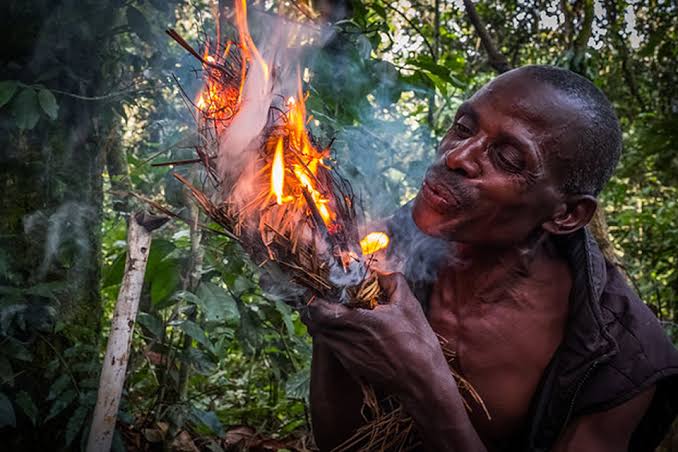
The trail includes a visit to Garama Cave, a 200-metre-long cave roughly four kilometres from the Ntebeko visitor centre, held as a sacred site by the Batwa community and used historically as a place of refuge and ceremony before their eviction from the surrounding forest.
Birding at Mgahinga
Beyond its headline primate and volcano activities, Mgahinga holds over 180 recorded bird species within its bamboo and montane forest habitat, including a genuine range of Albertine Rift endemics. Dedicated birding walks can be arranged separately, and even travelers focused primarily on gorilla or golden monkey trekking will encounter meaningful birdlife along the same forest trails used for primate treks.
How Mgahinga Compares to Bwindi
The honest comparison most first-time visitors eventually want: Bwindi offers roughly 19 habituated gorilla families across four sectors, considerably more permit flexibility and choice, while Mgahinga offers just one, the Nyakagezi family, but adds exclusive golden monkey trekking, three hikeable volcanoes, and a considerably quieter overall visitor experience given its lower daily numbers. Many travelers choose Mgahinga specifically as a complement to Bwindi rather than a substitute, gorilla trekking at one park, golden monkeys and volcano hiking at the other, within a single southwestern Uganda circuit.
A Sample 3-4 Day Mgahinga Itinerary
| Day | Activity |
| 1 | Transfer to Mgahinga, settle into lodge |
| 2 | Gorilla trekking (Nyakagezi family, $800 permit) |
| 3 | Golden monkey tracking or habituation ($60-$100) |
| 4 | Batwa cultural walk or a volcano hike (Gahinga recommended for time-limited visitors) |
Practical Preparation
Bring USD cash in good, undamaged condition for UWA permits, since older or torn bills are frequently refused, alongside small bills for tipping, roughly $10 to $20 for rangers and $15 to $25 for porters. Basic restroom facilities are available at the Ntebeko Visitor Centre before and after activities, but none exist along the trails themselves, worth planning for accordingly given how long some of the volcano hikes and treks run.
Getting There
Mgahinga sits in Kisoro district, reachable by road from Kampala in roughly nine to ten hours, or via a considerably shorter transfer from Bwindi’s southern sectors, Rushaga and Nkuringo, given their relative proximity in Uganda’s far southwest. Kisoro’s own airstrip offers a faster alternative for travelers prioritizing time over the overland journey.
Best Time to Visit
The dry seasons, June through September and December through February, offer the firmest trekking and hiking conditions across all of Mgahinga’s activities. Given the park’s high altitude and volcanic terrain, weather can shift quickly regardless of season, and packing warm, waterproof layers matters more here than at lower-elevation Ugandan parks.
Where to Stay
Around Mgahinga, you’ll find accommodation concentrated near Kisoro and the Ntebeko park entrance, with options ranging from genuine luxury to budget guesthouses. Mount Gahinga Lodge, positioned close to the park boundary with volcano views, remains a popular mid-to-upper-range choice, while several properties in Kisoro town itself offer more affordable alternatives for travelers on a tighter budget. Given Mgahinga’s relatively compact geography, nearly any nearby accommodation choice keeps activities within reasonable morning transfer time.
Health and Safety Preparation
Mgahinga’s high altitude, considerably higher than Bwindi’s average elevation, means genuine altitude effects can affect trekkers during both gorilla trekking and volcano hiking, worth discussing with a travel clinic ahead of departure alongside standard malaria prophylaxis. Given the park’s border position adjacent to both Rwanda and the Democratic Republic of Congo, confirming current travel guidance for the wider region with your operator is a sensible precaution, though the park itself remains a well-managed, safe destination for standard tourism activities.
Combining Mgahinga With the Rest of Uganda and Rwanda
Mgahinga’s position in Uganda’s extreme southwest makes cross-border extension straightforward: Rwanda’s Volcanoes National Park sits within a short drive, allowing travelers to combine Ugandan golden monkey trekking with Rwandan gorilla trekking, or simply add Rwanda’s Kigali and Lake Kivu to a longer regional itinerary. Within Uganda itself, Mgahinga pairs naturally with Bwindi’s southern Rushaga and Nkuringo sectors, given their relative proximity in this compact corner of the country.
Frequently Asked Questions
How many gorilla families can be trekked at Mgahinga?
Just one, the Nyakagezi family, in contrast to Bwindi’s roughly 19 habituated families. This means considerably fewer daily visitors but also less flexibility if the family crosses into neighbouring Rwanda or Congo.
Is Mgahinga the only place to see golden monkeys in Uganda?
Yes, exclusive within the country. Golden monkeys are otherwise found only in Rwanda’s Volcanoes National Park within the wider region.
Which of the three Mgahinga volcanoes should I climb?
Mount Gahinga suits visitors wanting a genuine volcano experience without extreme demand (4-6 hours). Mount Sabinyo offers a more serious, technical climb with a three-country summit view. Mount Muhabura is the tallest and most demanding at 8-10 hours, rewarding climbers with a crater lake.
What is the Batwa Trail?
A cultural experience led entirely by Batwa guides themselves, the indigenous forest people displaced when Mgahinga was gazetted in 1991, including a visit to the sacred Garama Cave, with proceeds funding schools and community wellbeing.
Should I visit Mgahinga instead of Bwindi, or in addition to it?
Most travelers treat the two as complementary rather than substitutes: Bwindi for broader gorilla permit choice, Mgahinga for exclusive golden monkey trekking and volcano hiking, combined within a single southwestern Uganda circuit.