Mount Elgon offers something distinctive among East Africa’s major peaks: a true multi-day mountain trekking experience, moorland, bamboo forest, volcanic caves, and one of the largest calderas on the continent, all without the technical climbing pressure or altitude-sickness risk that define Kilimanjaro or the Rwenzori Mountains. This guide walks through Mount Elgon’s four main trekking routes individually, since choosing correctly between them is the most important planning decision for anyone considering the climb.
Straddling the Uganda-Kenya border in the country’s east, Mount Elgon rises to 4,321 meters at Wagagai Peak, its highest point, and the mountain’s summit caldera spans roughly eight kilometers, among the widest of any extinct volcano in East Africa.
The Four Trekking Routes Compared
Sasa Trail is the shortest and steepest route to the summit, starting from Budadiri at 1,250 meters in the Sironko Valley and reaching Wagagai in as few as three days for strong, time-limited hikers. The route climbs quickly through a demanding early stretch known as “the ladders,” a set of metal staircases leading up into the national park and rainforest proper, making Sasa the clear choice for fit trekkers prioritizing speed over gradual acclimatization.
Sipi Trail begins at the Uganda Wildlife Authority’s forest exploration center in Kapkwai, at 2,050 meters, and offers a considerably longer, more gradual four- to six-day ascent, popular with hikers wanting more time to properly absorb the mountain’s changing vegetation zones and scenery.
Piswa Trail offers the longest and often gentlest gradient of the four routes, typically taking around six days, and is known specifically for its towering podocarpus forest and strong wildlife viewing along the way, with the option to detour to the mountain’s hot springs. Suam Trail, a less mainstream route approaching from the mountain’s southern side, offers good summit access with a generally more peaceful, less-trafficked trekking experience than the more popular Sasa and Sipi options.
The Sasa-Sipi Combination:
For travelers with the time, combining Sasa and Sipi into a single traverse—ascending via Sasa’s steeper, faster path through Mude Cave to the Wagagai summit, then descending via the more scenic Sipi Trail past Kajeri Peak back to the forest exploration center—provides the fullest cross-section of what Mount Elgon offers: more landscape variety, more solitude, and a considerably richer overall trekking experience than a direct up-and-back on a single route. This combination typically runs four to five days and requires arranging return transport for guides and porters to their original starting point, a detail your operator will handle but worth understanding as part of the overall logistics.
A Typical Summit-Day Itinerary
On a standard Sasa-Sipi combination, day one covers the strenuous initial climb from Bumasola through the ladders to Sasa River Camp and onward to Mude Camp, gaining considerable elevation on demanding early terrain.
Day two is typically the summit push itself, often starting early to maximize the chance of clear conditions, with gear and porters left behind at camp for a lighter, faster final ascent to Wagagai Peak before returning to Mude Camp for the night. Later days descend via the Sipi route, crossing the roughly eight-kilometer-wide caldera rim and passing landmarks including Kajeri Valley, Dirigana Falls, and distinctive volcanic rock formations, before a final descent to Sipi Falls itself.
What’s Included in a Standard Trekking Package
Most operators structure Mount Elgon treks as fully inclusive packages covering local guides, park entrance fees, porters, meals, camping gear, camping fees, a dedicated chef, water, and local ground transportation within the park, meaning the headline trek price reflects the near-total cost of the experience rather than a bare-bones base rate. Confirming exactly what’s included, and specifically whether porter and guide return transport is covered for route-combination treks, avoids any surprise costs once the trek is already underway.
Sipi Falls:
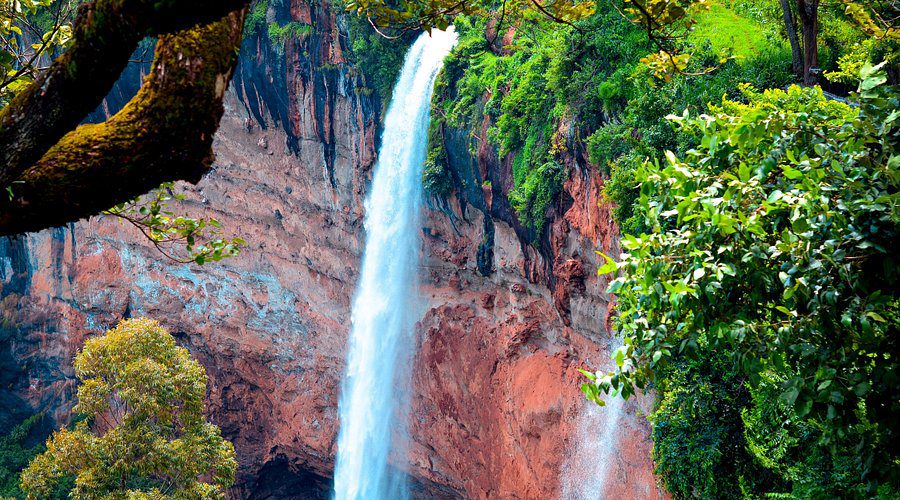
Sipi Falls, sitting just outside the park boundary and roughly an hour’s walk from the Kapkwai gate, comprises three dramatic cascades where the Sipi River drops over successive basalt cliffs and functions as the natural gateway town for most Mount Elgon treks regardless of which specific route is chosen. Beyond its role as a trekking base, Sipi Falls stands as a worthwhile standalone destination for travelers not planning the full multi-day summit trek, offering guided waterfall walks, abseiling, and coffee farm tours across the surrounding highland scenery.
Wildlife and Birding
Mount Elgon holds over 300 recorded bird species, making it a worthwhile destination for dedicated birders independent of the summit trek itself, and the lower forest sections along both the Sasa and Piswa trails support primates, including blue monkeys, black-and-white colobus, and baboons. The Piswa Trail in particular is known for stronger overall wildlife viewing than the other three routes, reflecting its passage through dense, less-disturbed podocarpus forest.
Tatum Cave and the Mountain’s Volcanic Features
The Piswa Trail also passes through Tatum Cave, hidden within extensive forest cover, one of several volcanic features scattered across the mountain alongside its hot springs and the summit caldera itself. These features add genuine geological interest to what might otherwise be experienced purely as a physical trekking challenge, and guides along each route typically build in time to properly explore the more significant formations along the way.
Comparing Mount Elgon’s Four Routes
| Route | Duration | Character |
| Sasa Trail | 3 days (fastest) | Steepest, most direct; demanding early “ladders” section |
| Sipi Trail | 4-6 days | Longer, more gradual; strong scenery and caldera views |
| Piswa Trail | ~6 days | Gentlest gradient; best wildlife viewing, hot spring detour |
| Suam Trail | Varies | Southern approach; quieter, less mainstream |
| Sasa-Sipi Combination | 4-5 days | Fast ascent, scenic descent, the fullest overall experience |
Altitude and Physical Demands
While Mount Elgon’s gentler gradients make it considerably more accessible than Kilimanjaro or the Rwenzori Mountains, reaching over 4,300 meters at Wagagai Peak still carries genuine altitude effects, and even hikers without classic mountain sickness symptoms, headache, nausea, or loss of appetite should expect to notice breathing considerably harder than normal at altitude.
Choosing a longer route, Piswa or Sipi over the faster Sasa Trail, improves acclimatization and overall comfort for hikers without significant prior high-altitude experience.
Getting There
Mount Elgon sits in eastern Uganda near the town of Mbale, roughly four to five hours by road from Kampala, with Sipi Falls itself a further, shorter drive beyond Mbale. The region pairs naturally with a Kidepo Valley National Park itinerary given their shared general direction from Kampala or functions as a standalone eastern Uganda adventure focused purely on the mountain and surrounding highland scenery.
Best Time to Trek
The dry seasons, June through August and December through February, offer the firmest trails and clearest summit views, important given how much of the reward on any Mount Elgon route depends on visibility across the caldera and surrounding plains. The wetter months bring lush, dramatically green scenery at the cost of muddier trails and reduced visibility at altitude.
Where to Stay Before and After the Trek
Sipi Falls itself has developed into a genuine small tourism hub, with accommodation ranging from simple guesthouses to more established lodges offering views directly over the falls, well suited to travelers wanting a comfortable base both before setting off and after returning from the mountain. Budadiri, the starting point for the Sasa Trail, offers more basic accommodation options geared toward trekkers rather than general tourism.
Health and Safety Preparation
While Mount Elgon’s non-technical routes reduce the overall risk profile relative to Kilimanjaro or the Rwenzori, genuine altitude effects remain possible above 4,000 meters, and choosing a longer, better-paced route meaningfully reduces this risk.
Comprehensive travel insurance covering trekking activities, alongside standard vaccinations and malaria prophylaxis for the wider region, remains sensible preparation regardless of which specific route you choose.
Combining Mount Elgon With the Rest of Uganda
Mount Elgon’s position in eastern Uganda, somewhat apart from the country’s western and southwestern primate-trekking circuit, makes it a natural pairing with Kidepo Valley National Park given their shared general direction from Kampala, or a worthwhile standalone eastern Uganda adventure combined with a stop at the source of the Nile in Jinja for travelers wanting to add adventure sports to their itinerary.
What Distinguishes Mount Elgon From Uganda’s Other Mountains
Where the Rwenzori demands genuine technical mountaineering skill and Kilimanjaro carries real altitude-sickness risk given its rapid ascent profile, Mount Elgon occupies a distinct middle ground: a true multi-day mountain experience with real physical demand, but without the technical or altitude complications that make the other two considerably more serious undertakings. This makes it a strong choice specifically for hikers wanting a genuine mountain achievement as a first step before attempting a more demanding peak elsewhere in the region.
Frequently Asked Questions
Which Mount Elgon route is fastest to the summit?
The Sasa Trail reaches Wagagai Peak in as few as three days, though it’s also the steepest and most physically demanding of the four main routes.
How long does the Sasa-Sipi combination trek take?
Typically four to five days, ascending via the faster Sasa Trail and descending via the more scenic Sipi Trail, offering the fullest overall cross-section of the mountain’s landscapes.
Do I need technical climbing experience for Mount Elgon?
No. Unlike Kilimanjaro or the Rwenzori Mountains, Mount Elgon’s routes are non-technical treks suited to a broad range of hikers, though genuine physical fitness and a reasonably long itinerary for acclimatization remain important.
What is included in a standard Mount Elgon trekking package?
Most packages include local guides, park entrance fees, porters, meals, camping gear and fees, a dedicated chef, water, and ground transportation within the park.
Is Sipi Falls worth visiting without doing the full mountain trek?
Yes, Sipi Falls functions as a strong standalone destination with guided waterfall walks, abseiling, and coffee farm tours, well suited to travelers not planning the multi-day summit trek.