A walking safari strips the safari experience down to its essentials: no engine noise, no windscreen between you and the wilderness, just a trained ranger guide, an armed escort where required, and the sounds, smells and scale of the African bush at close range. Uganda offers walking safaris in a handful of parks where terrain and wildlife density make foot exploration both safe and rewarding, from gentle savanna strolls at Lake Mburo to serious multi-day mountain treks in the Rwenzoris.
Where a vehicle covers ground quickly and prioritizes larger, more visible animals, a walking safari forces a slower rhythm that tends to reveal a different layer of the ecosystem entirely, tracks left in soft mud, the alarm call of a bird signaling a predator nearby, or the particular smell of an elephant’s recent passage through the grass. For travelers who have already experienced a few vehicle-based game drives elsewhere in Africa, a Uganda walking safari often becomes the most vividly remembered part of the entire trip.
This guide explains where walking safaris are offered in Uganda, what to expect on foot, safety protocols, and how to fit a walking element into a broader safari itinerary.
Quick Facts
| Best parks for walking safaris | Lake Mburo NP, Kidepo Valley NP, Murchison Falls NP (Rabongo Forest), Kibale NP, Bwindi (nature walks) |
| Multi-day trekking | Rwenzori Mountains National Park (Mount Stanley circuit) and Mount Elgon National Park |
| Typical duration | 1 to 3 hours for standard walks; multi-day for Rwenzori and Elgon treks |
| Escort | Ranger guide, plus armed UWA ranger in parks with dangerous game |
| Best time to go | Dry seasons (December-February, June-September) for easier underfoot conditions |
| Fitness level | Easy to moderate for standard walks; strenuous for Rwenzori and Elgon multi-day treks |
| Typical cost add-on | Modest per-person walking safari fee on top of park entry, generally lower than a vehicle game drive |
Why Choose a Walking Safari
A vehicle-based game drive is efficient and comfortable, but it inevitably filters the bush through glass and engine noise. Walking safaris flip that experience: guides slow the pace right down, pointing out tracks, dung, termite mounds, medicinal plants and bird calls that are easy to miss from a moving vehicle. Because walking safaris in Uganda are generally conducted in areas without high densities of lion or elephant, they tend to focus on smaller wildlife, scenery, birdlife and bush skills, offering a more intimate, sensory complement to a vehicle-based safari rather than a replacement for it.
Best Places for Walking Safaris in Uganda
Lake Mburo National Park
Uganda’s most accessible park for walking safaris, Lake Mburo lacks resident lions, which makes it one of the few places in the country where guided bush walks among zebra, giraffe, eland, impala and buffalo are routinely offered, always accompanied by an armed ranger as a precaution against buffalo. A guided walk here is an easy, low-key add-on for travelers passing through en route to or from Bwindi.
Kidepo Valley National Park
In Uganda’s remote northeast, Kidepo offers walking safaris across some of the country’s most dramatic and least-visited terrain, often combined with visits to nearby Karamojong communities. Because of its predator population, walks here are led by an armed ranger and generally confined to areas assessed as lower risk on a given day.
Murchison Falls National Park
Rabongo Forest, a pocket of tropical forest within Murchison Falls, offers guided nature walks focused on primates, forest birds and butterflies, distinct from the park’s open savanna game drives. A short walk to the top of Murchison Falls itself, where the Nile is compressed into a narrow, thundering gorge, is one of Uganda’s most photographed short hikes.
Rwenzori Mountains and Mount Elgon
For travelers seeking a serious trekking challenge rather than a gentle nature walk, the Rwenzori Mountains, Africa’s legendary ‘Mountains of the Moon,’ offer multi-day treks through afro-alpine moorland toward glaciated peaks, including Africa’s third-highest summit. Mount Elgon, an ancient extinct volcano straddling the Kenya-Uganda border, offers a gentler multi-day alternative with waterfalls, caves and one of the largest volcanic calderas in the world.
Both mountains offer shorter day-hike options for travelers who want a taste of the terrain without committing to a full multi-day expedition, such as a half-day walk to the Sipi Falls area on Mount Elgon’s lower slopes, or a short foray into the Rwenzori foothills from Kilembe.
Bwindi and Kibale Nature Walks
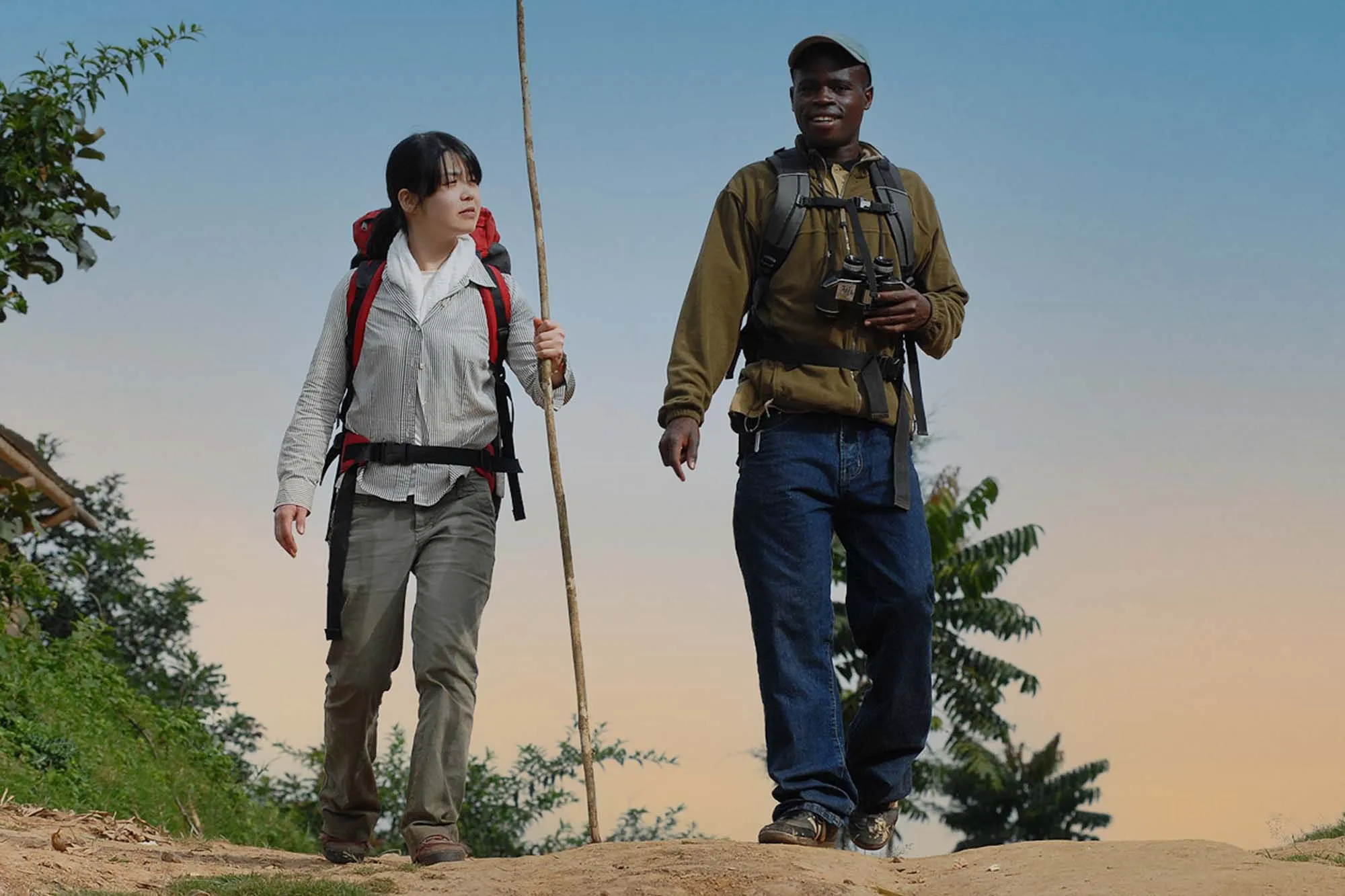
Beyond primate trekking itself, both Bwindi and Kibale offer dedicated nature walk trails distinct from gorilla and chimp permits, focused on waterfalls, birdlife, and Batwa cultural heritage in the case of Bwindi, and forest ecology and butterflies in Kibale, giving travelers a lower-cost way to spend additional time in these forests.
What to Expect and Safety Protocols
Standard walking safaris in Uganda last between one and three hours and are led by a trained ranger guide who sets the pace, reads animal behavior, and maintains a safe distance from any wildlife encountered. In parks with dangerous game, an armed UWA ranger accompanies the group as standard practice, not because incidents are common, but as a precautionary safeguard. Guides brief every group beforehand on how to behave if an animal is encountered at close range, generally involving standing still, staying quiet, and following the ranger’s instructions rather than running.
Multi-day treks in the Rwenzoris or on Mount Elgon are a different category of activity altogether, involving porters, mountain huts or camping, and several consecutive days of genuine high-altitude hiking, and should be booked through an experienced trekking operator with appropriate acclimatization built into the itinerary.
- Wear sturdy, closed walking shoes and long trousers
- Bring water, sun protection, and binoculars
- Follow your ranger’s instructions immediately if wildlife is encountered
- For multi-day mountain treks, budget extra days for acclimatization and unpredictable weather
Best Time of Year for Walking Safaris
The dry seasons, December to February and June to September, offer the most comfortable underfoot conditions for standard nature walks and the clearest visibility on mountain treks. Rwenzori and Elgon treks are particularly weather-dependent, and the driest windows significantly improve trail conditions and summit visibility, though rain gear is essential regardless of season given the mountains’ notoriously wet microclimate.
Combining Walking Safaris with the Rest of Your Trip
Because most standard walking safaris last only a few hours, they slot easily into a wider itinerary rather than requiring a dedicated trip. A morning bush walk at Lake Mburo pairs naturally with a drive between Kampala and Bwindi, while a Rabongo Forest walk fits neatly alongside a Murchison Falls game drive and boat cruise. Multi-day Rwenzori or Elgon treks, by contrast, work best as a dedicated hiking-focused addition for travelers with extra time and a taste for altitude.
What Makes Uganda Well Suited to Walking Safaris
Uganda’s mix of forest, savanna and mountain habitats gives walking safaris here a different character from the classic East African bush walk. Rather than one uniform experience, a Uganda walking itinerary can shift from tracking animal signs on open grassland at Lake Mburo, to identifying medicinal forest plants with a guide in Rabongo Forest, to genuine high-altitude mountaineering in the Rwenzoris, all within the same two-week trip. This variety, combined with knowledgeable ranger guides trained in both wildlife interpretation and visitor safety, makes walking a genuinely worthwhile addition rather than a novelty activity.
Booking a Walking Safari
Most standard nature walks can be booked directly at the park gate or visitor center on the day, or arranged in advance through your lodge or tour operator as part of a wider itinerary, typically for a modest per-person fee on top of standard park entry. Multi-day Rwenzori and Mount Elgon treks require considerably more advance planning, including booking through a registered trekking company that provides porters, guides, park permits and, in the case of the Rwenzoris, mountain hut or camping arrangements along the route. Given the physical demands and logistics involved, these longer treks are best booked at least a few months ahead of travel.
Cultural Walks: Batwa and Karamojong Experiences
Several of Uganda’s walking experiences extend beyond wildlife into cultural heritage. Around Bwindi and Mgahinga, guided Batwa Trail walks, led by members of the Batwa community who once lived within these forests as hunter-gatherers before the parks were gazetted, offer a walking experience focused on traditional forest skills, medicinal plants and storytelling rather than wildlife tracking. In Kidepo Valley, walks are sometimes paired with visits to Karamojong homesteads, giving travelers insight into one of Uganda’s most distinctive pastoralist cultures alongside the park’s wildlife. These cultural walks are typically gentler in pace than wildlife-focused walks and offer a meaningful complement to a trip otherwise centered on animals and landscapes.
Frequently Asked Questions
Are walking safaris safe in Uganda?
Yes, when conducted through official park channels. Walks are led by trained ranger guides, with an armed UWA ranger accompanying groups in parks that hold dangerous game, and guides brief every group on safety protocol before setting out.
Which Uganda park is best for walking safaris?
Lake Mburo National Park is the most accessible and beginner-friendly, since it has no resident lions. Kidepo Valley offers a wilder, more remote walking experience for travelers seeking solitude.
Can I do a multi-day trek in Uganda?
Yes. The Rwenzori Mountains and Mount Elgon both offer multi-day trekking routes with porters and mountain huts or camping, suited to travelers with genuine hiking experience and time for acclimatization.
Do I need to be very fit for a walking safari?
Standard nature walks of one to three hours are accessible to most reasonably active travelers. Multi-day Rwenzori and Elgon treks require good fitness and some hiking experience due to altitude and terrain.
Can walking safaris be combined with gorilla trekking?
Yes. Many travelers combine a short walking safari at Lake Mburo, which lies directly along the Kampala-to-Bwindi route, with gorilla trekking, rather than adding a separate detour.
How long does a Rwenzori Mountains trek take?
Rwenzori treks typically range from a 3-day foothills introduction to a 7 to 9-day full circuit toward the glaciated central peaks, depending on the route and how high you intend to climb.
What is the difference between a nature walk and a walking safari?
The terms are often used interchangeably, though ‘nature walk’ sometimes refers to shorter, forest-focused walks centered on plants, birds and smaller wildlife, while ‘walking safari’ more often implies savanna terrain and larger game, requiring an armed ranger escort.
Plan Your Uganda Walking Safari
A walking safari won’t replace a vehicle-based game drive for covering ground or tracking predators, but it offers something a vehicle never can: the immediate, unfiltered sensation of standing in the bush, guided by rangers who read the landscape as fluently as a book. Whether it’s an easy morning stroll among Lake Mburo’s zebra or a multi-day push through the glaciated Rwenzoris, walking safaris add texture and intimacy to a Uganda itinerary.
Ask your safari operator to build in a walking element, even a short one, alongside your vehicle-based game drives for a more complete feel of Uganda’s wild places.