Top 10 Souvenirs to Buy in Kampala and Kigali; Stepping from a dusty game-drive vehicle into the vibrant, sensory world of a Kampala or Kigali market is an unforgettable part of any East Africa trip, with air thick with roasted coffee and drying spices, stalls overflowing with colors that mirror the landscapes you’ve spent your days exploring. This guide covers the ten worthwhile souvenirs to seek, where to find them, and how buying them directly supports the artisans who made them.
Purchasing arts, crafts, and souvenirs in Uganda and Rwanda empowers local artisans and their families, preserving traditional crafts, weaving, carving, horn work, and bead-making that might otherwise fade without tourism-driven demand keeping them economically viable.
- Woven Baskets
Hand-woven baskets rank among the most versatile, widely available crafts in both cities. Artisans in Kampala transform banana fibers into baskets, placemats, and wall art, while Kigali’s Kimironko Market offers baskets that reflect Rwanda’s own cultural traditions, some tracing back to peace-basket designs with real historical significance in the country’s post-genocide reconciliation story.
- Ankole Cow-Horn Items
A distinctive Ugandan craft, the elegant, curved horns of Ankole cattle are transformed into sophisticated bowls, cutlery, bangles, and decorative items, a souvenir with no direct equivalent found in most other African craft traditions and a unique way to bring home something specifically, recognizably Ugandan.
- Local Coffee
Both countries produce world-class Arabica coffee: Uganda’s rich, full-bodied beans from brands like Endiro Coffee or Good African Coffee, and Rwanda’s equally acclaimed coffee culture, reflected in the country’s growing international reputation for premium specialty beans. A bag of locally roasted coffee is lightweight, practical for luggage limits, and offers recipients back home a real, ongoing taste of the trip long after you’ve returned.
- Kitenge and Kanga Textiles
Vibrant, colorful African fabrics, kitenge in particular, are highly sought after throughout Kigali’s markets, with Kimironko Market serving as the best source for these materials, many of which are imported from across the wider region, including Ghana, Tanzania, and DR Congo. These fabrics work well as scarves, wraps, or simply decorative textile pieces, and their bold patterns make for a distinctly memorable, easily packable gift.
- Hand-Carved Wooden Sculptures
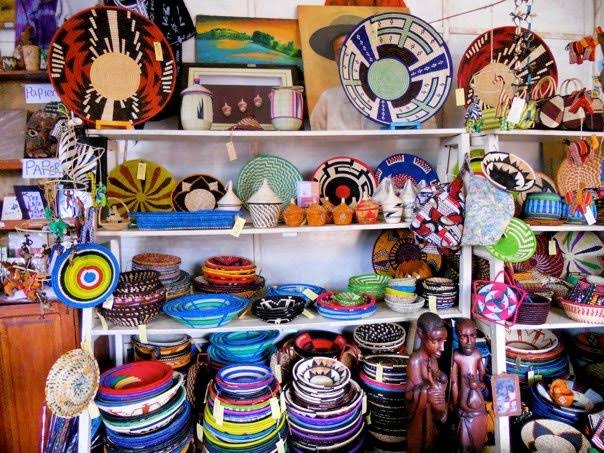
Wooden sculptures depicting animals, masks, and figures capture Uganda’s wildlife and folklore in skilled craftsmanship, with artisans working in mahogany, ebony, and teak to create pieces that range from simple, affordable figurines to museum-quality carved work. For authentic pieces, Exposure Africa and the Friday Craft Market in Kampala offer particularly strong selections.
- Beaded Jewellery
Ugandan and Rwandan artisans create beautiful necklaces, bracelets, and earrings using local materials, including recycled paper, glass beads, and cow horn, often featuring bold colors and intricate designs. In Kampala, Maridadi Crafts and Afriart Gallery offer particularly strong selections, while Kigali’s craft markets and cooperatives offer comparable quality with distinctly Rwandan design sensibilities.
- Traditional Drums
Hand-carved wooden drums, found across markets in both cities, offer a striking, functional souvenir reflecting the region’s deep musical and ceremonial traditions. While larger and heavier than many other craft options, smaller decorative versions travel considerably more easily for travelers with limited luggage capacity.
- Local Tea
Uganda’s highlands produce excellent tea, black, green, and spiced varieties, with brands like Igara Tea or Rwenzori Tea offering a simple, widely available gift option for tea enthusiasts back home, a lighter-weight, practical alternative or complement to coffee.
- Leather Goods
Uganda’s leather industry produces high-quality sandals, belts, and bags, offering a more practical, everyday-usable souvenir category beyond purely decorative crafts. These items combine local craftsmanship with items travelers can actually incorporate into daily use long after returning home.
- Batik Art and Paintings
Vibrant batik artwork and rolled canvas paintings, widely available across both cities’ markets, offer a striking, easily transportable way to bring home visual art reflecting the region’s landscapes and cultural themes, particularly well suited to travelers wanting a decorative piece rather than a wearable or functional item.
Where to Shop in Kampala
The Uganda Arts and Crafts Village, next to the National Theatre in central Kampala, offers dozens of stalls showcasing baskets, carved wooden gorillas, beaded jewellery, bark-cloth handbags, and batik art, a one-stop option for travellers short on time.
Exposure Africa, the city’s largest crafts market, and the Friday Craft Market in Nsambya both offer strong bargaining opportunities and variety, while Uganda Crafts 2000 Ltd, a Fair Trade non-profit supporting marginalized communities including orphans and widows, offers a particularly meaningful place to shop with confidence; your purchase benefits its intended recipients.
Where to Shop in Kigali
Kimironko Market, in the northeastern part of the city, remains the top choice for souvenirs, offering woven baskets, hand-carved masks, traditional drums, and bead jewelry at reasonable, bargainable prices, and functioning as the beating heart of Kigali’s commercial life for both residents and visitors alike. Caplaki Craft Village offers a further option, though it caters somewhat more directly to tourists than Kimironko’s local commercial atmosphere.
Bargaining Etiquette
Bargaining is part of the shopping experience at most markets in both cities, but it should be approached with good humor and fairness, not aggressive negotiation. Artisans depend on tourism income directly, and reasonable prices reflect skilled labor rather than inflated tourist markup. Always ask permission before photographing an artisan or their work; this simple, respectful courtesy is important.
What to Avoid
Avoid ivory, coral, wild animal skins, feathers, and any unlabelled animal products entirely, both for ethical reasons and because these items face significant customs restrictions and potential seizure at international borders. Keeping receipts and maker details for legitimate craft purchases helps smooth any customs questions on your return journey.
If You’re Short on Time
Both Entebbe International Airport and major Kampala hotels like Serena and Sheraton maintain small souvenir shops for travelers unable to visit dedicated markets, and Kigali’s airport offers similar last-minute options, though prices and selection at these convenience-focused outlets can’t match the depth and value found at the dedicated markets themselves.
Packing Souvenirs for the Journey Home
Wooden carvings and larger craft items should be wrapped carefully in checked luggage, ideally cushioned by clothing to prevent damage during transit, while lightweight textiles and jewelry travel well in carry-on bags. For particularly fragile pieces or larger purchases, some markets and shops offer shipping arrangements directly to your home address, worth asking about specifically if you’re drawn to a piece too large or delicate for standard luggage.
A Way to Extend Your Trip’s Impact
Choosing to purchase directly from named artisans or cooperative shops, rather than anonymous market stalls alone, creates a traceable connection between your purchase and its maker, and several Fair Trade-oriented shops in both cities offer detailed information about the specific individuals or communities behind each piece. This kind of intentional purchasing extends your trip’s positive economic impact well beyond the wildlife experiences that likely anchored your itinerary.
Souvenirs Specific to Rwanda’s Story
Beyond the general craft categories covered above, several souvenirs have special meaning tied to Rwanda’s own history and recovery: peace baskets, woven with intricate patterns and originally developed as part of post-genocide reconciliation and women’s economic empowerment programs, offer a souvenir with real, documented cultural weight beyond simple decoration. Purchasing these specifically through cooperatives connected to their original development programs, rather than generic market versions, honors their origin story.
Negotiating Prices Respectfully
When bargaining at markets in either city, starting with a reasonable counter-offer rather than an aggressively low opening bid tends to produce a considerably smoother, more pleasant negotiation for both parties. Vendors generally expect some back-and-forth, but approaching the process as a friendly exchange rather than an adversarial contest reflects better on you as a visitor and often results in a fairer final price for everyone involved.
Frequently Asked Questions
What is the single most distinctive Ugandan souvenir?
Ankole cow-horn items, elegant bowls, cutlery, and bangles crafted from the distinctive curved horns of Ankole cattle, a craft with no direct equivalent found in most other African traditions.
Where is the best place to buy souvenirs in Kigali?
Kimironko Market, in northeastern Kigali, offers the widest range of woven baskets, hand-carved masks, traditional drums, and bead jewelry at reasonable, bargainable prices.
Is bargaining expected at Kampala and Kigali markets?
Yes, it is part of the shopping culture, though it should be approached fairly and with good humor rather than aggressive negotiation, since artisans depend directly on tourism income.
What souvenirs should I avoid buying?
Ivory, coral, wild animal skins, feathers, and unlabelled animal products, both for ethical reasons and due to significant customs restrictions at international borders.
Where can I buy a Fair Trade-certified souvenir in Kampala?
Uganda Crafts 2000 Ltd, a Fair Trade non-profit on Bombo Road, supports marginalized communities, including orphans and widows, offering assurance your purchase directly benefits its intended recipients.