Guide to Family Safaris in Uganda
Parents considering Uganda for a family safari usually arrive with the same two questions. Is it safe and manageable with children, and will the kids actually enjoy it as much as the adults do. Having planned family trips across Uganda’s parks for years, the honest answer is that Uganda works exceptionally well for families, but only when the itinerary is built around what children can realistically handle rather than adapted from an adult focused route at the last minute.
Uganda offers something rare among safari destinations: savannah game viewing, boat safaris, and primate tracking within the same country, so a family can build genuine variety into a single trip without long internal flights between wildly different landscapes.
Is Uganda a Good Choice for a Family Safari
Uganda suits families who want an authentic safari without the more clinical, resort style feel of some southern African family circuits. Roads between parks are manageable by vehicle, most lodges are used to hosting children even if they do not market themselves specifically as family properties, and the variety of activities means a ten year old and a fifty year old can both find something that holds their attention.
The main limiting factor is age restrictions on specific activities, most notably gorilla trekking, which has a strict minimum age of fifteen at every trekking location in Uganda. This is a conservation rule set by the Uganda Wildlife Authority, not a preference, and it will not be waived. Families with younger children need to plan around this rather than assuming an exception is possible.
Why Families Choose Uganda Over Other Safari Countries
Compared with Kenya or Tanzania, Uganda’s parks tend to be smaller and closer together, which cuts down on long, tiring drive days that are harder on young children than on adults. Queen Elizabeth National Park, Lake Mburo, and Murchison Falls can be combined into a single loop without the multi hour transfers that a Serengeti and Ngorongoro combination often requires.
Uganda also offers a genuinely wide age range of activities. Boat cruises and short nature walks suit even very young children, while older teenagers can take part in gorilla or chimpanzee trekking, giving a multi-generational family group real options rather than forcing everyone into the same fixed schedule every day.
Where to Go: The Best Parks for Families
| Park | Best For Families Because | Minimum Suggested Age |
| Lake Mburo | Short game drives, walking safaris, no dangerous predators in walking areas | Any age |
| Queen Elizabeth | Boat cruise on the Kazinga Channel, tree climbing lions, varied terrain | Any age for the park; 5 to 6+ for full day drives |
| Murchison Falls | Boat safari to the falls, strong game density, spacious lodges | Any age |
| Kibale Forest | Chimpanzee tracking with a shorter, more flexible walk than gorilla trekking | 12+ typically recommended, some operators allow younger with a private permit |
| Bwindi Impenetrable | Gorilla trekking for older teens, forest walks and cultural visits for younger siblings | 15+ for gorilla trekking; younger children can join village walks instead |
A common and effective structure is to open the trip in Lake Mburo or Queen Elizabeth, where younger children can ease into game viewing with shorter drives, then move toward Bwindi later in the trip where teenagers can trek while younger siblings enjoy a village walk or a nature trail with a dedicated guide.
When to Travel With Children
The dry seasons, roughly June to September and December to February, are the easiest months for families. Roads are firmer, walking trails are less muddy, and the reduced humidity makes long days outdoors noticeably more comfortable for children.
The wetter months bring lower prices and lush scenery but also more mud on trekking trails and a higher chance of a rained out afternoon drive, both worth weighing if your children have limited patience for delays.
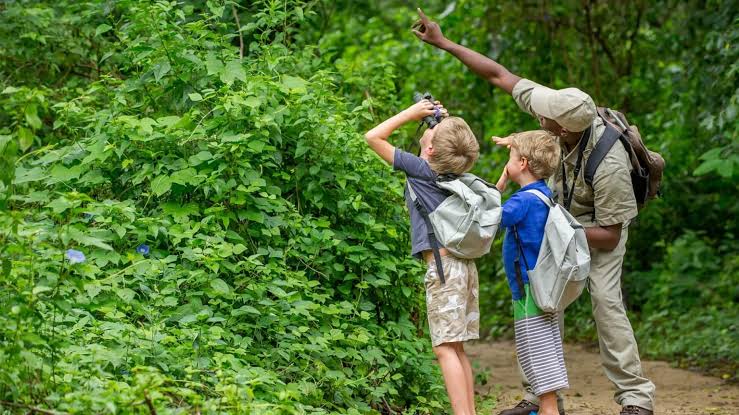
School holiday periods, particularly July and August and the December break, are the busiest and most expensive times to travel, so booking accommodation and any gorilla or chimpanzee permits for older children well in advance is essential if your trip falls in those windows.
What a Family Safari Costs
Family safari budgets are shaped heavily by two factors: whether older children require full paying gorilla or chimpanzee permits, and whether the family needs a larger vehicle or a second room configuration at each lodge.
| Cost Item | Typical Range | Notes |
| Family friendly lodge, per adult per night | $150 to $350 | Most Ugandan lodges price children under 12 at a reduced rate, often 50 percent |
| Gorilla permit (age 15+) | Around $800 | Full price regardless of age once the minimum of fifteen is met |
| Chimpanzee permit | Around $200 | Some operators can arrange private, shorter treks for younger teens |
| Private family vehicle with guide, per day | $180 to $280 | Recommended over shared vehicles for flexibility with young children |
Family Friendly Accommodation
Family rooms and interconnecting tents are available at most mid range and upper lodges in Queen Elizabeth, Murchison Falls, and Lake Mburo, and are worth requesting specifically when booking rather than assuming a standard room will accommodate everyone comfortably.
Lodges with enclosed grounds or raised walkways reduce the need for a chaperone to walk children between rooms and the dining area after dark, which matters more in parks with unrestricted wildlife movement through camp at night.
Family owned or smaller camps often adapt more readily to children’s schedules and dietary needs than very large lodges, and the more personal staff attention tends to make younger children feel more at ease.
Activities That Work Well for Children
- Boat cruises on the Kazinga Channel or the Nile below Murchison Falls, which hold children’s attention with close hippo and elephant sightings without requiring long stretches of sitting still.
- Guided nature walks in Lake Mburo or around lodge grounds, often tailored to a shorter attention span with tracking games and simple bird and insect spotting.
- Cultural visits to nearby communities, which give children a change of pace from wildlife viewing and a concrete, hands on experience such as basket weaving or a local cooking demonstration.
- Village walks and forest edge nature trails near Bwindi for younger children while older siblings are out trekking gorillas, so nobody is left simply waiting at the lodge.
Planning Advice for Families
Keep game drives shorter for younger children. A full day drive that suits an adult birdwatcher can exhaust a seven year old by midday, so building in a rest at the lodge over the hottest hours of the afternoon keeps everyone in better spirits for an evening drive.
Pack a basic first aid kit with children’s formulations of common medications, since not every rural pharmacy near a national park will stock paediatric doses. Sun protection matters even more for children than adults given the equatorial sun, so wide brimmed hats and a high factor sunscreen are worth prioritising over almost anything else in the packing list.
Discuss the gorilla trekking age rule with teenagers early if it applies to your trip, since a fourteen year old missing the cutoff by months is a common and avoidable disappointment when the trip is not planned around the actual rule from the start.
Managing Screen Time and Long Drive Days
Even the most wildlife enthusiastic child can grow restless on a three hour transfer between parks, and Uganda’s road network, while improving, still involves stretches of unpaved track that add time compared with a straight line distance on a map. Rather than banning devices outright, most experienced guides recommend treating a tablet or a book as a tool for the transfer legs specifically, while keeping game drives themselves as a device free window where children are encouraged to spot and identify animals with the guide.
Breaking a long transfer into two shorter days with an overnight stop, rather than one exhausting push, is worth the extra lodge night for families travelling with children under ten. A guide who has worked with families before will usually suggest this pacing on their own, which is one more reason to be direct about your children’s ages when the itinerary is first being built rather than after arrival.
Recommendations by Family Type
- Families with children under six: Lake Mburo and Queen Elizabeth, shorter drives, boat cruises, avoid gorilla trekking logistics entirely.
- Families with children aged seven to fourteen: Queen Elizabeth and Murchison Falls, with a cultural visit and nature walks in place of primate trekking.
- Families with teenagers fifteen and older: full circuit including Bwindi gorilla trekking or Kibale chimpanzee tracking alongside classic game viewing.
- Multi generational groups: Queen Elizabeth as a base, splitting into trekking and non trekking groups on different days rather than forcing one shared itinerary.
Frequently Asked Questions
What is the minimum age for gorilla trekking in Uganda?
Fifteen years old, set by the Uganda Wildlife Authority and applied without exception at every trekking location in the country. There is no way to arrange an earlier trek regardless of a child’s fitness or maturity.

Is malaria a serious concern for children in Uganda?
Malaria risk exists across most of Uganda, and families should consult a travel health clinic well before departure for age appropriate prevention advice, since recommendations differ for young children compared with adults.
How long should a family safari in Uganda be?
Seven to nine days works well for most families, long enough to combine two or three parks without excessive driving, while short enough to avoid fatigue setting in among younger travellers.
Can babies and toddlers come on a Uganda safari?
Yes, though most gorilla and chimpanzee trekking is impractical for them given the age rules and the physical demands of the forest, so a trip focused on Lake Mburo, Queen Elizabeth, and Murchison Falls tends to suit very young children best.
Bringing It Together
Uganda rewards families who plan around their children’s actual ages and stamina rather than around the most famous activities in the country. Once the gorilla trekking age rule and the pace of each park are factored in early, the rest of the itinerary tends to fall into place naturally, and most families come away surprised by how much every generation in the group enjoyed.
If you would like help structuring a family itinerary around your children’s ages and interests, we are happy to put together a route and cost estimate built specifically around your family.