East Africa Tourist Visa: How to Travel Between Uganda, Rwanda, and Kenya
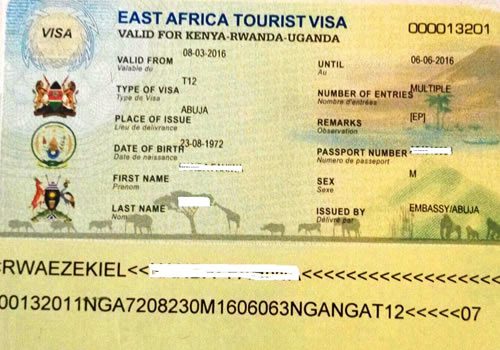
The East Africa Tourist Visa lets you cross between Uganda, Kenya, and Rwanda on a single document for a flat $100 fee, simplifying what would otherwise require three separate visa applications and payments. But one specific rule, which country you apply through first, catches enough travelers off guard that it deserves real, upfront attention before anything else in this guide.
Introduced in 2014 as a joint initiative between the three East African Community member states, the EATV was designed specifically to help sell the region as a single, integrated tourism destination rather than three separate, bureaucratically siloed countries.
What the EATV Actually Covers
The East Africa Tourist Visa is a multiple-entry visa valid for 90 days from the date of first entry, covering Uganda, Kenya, and Rwanda only, Tanzania, Burundi, and South Sudan have not joined this joint visa system. Within those three countries, you can cross borders freely and repeatedly during the 90-day window without reapplying or paying additional fees at each crossing, valuable for itineraries combining gorilla trekking in Uganda or Rwanda with a Maasai Mara safari in Kenya.
The Critical First-Entry Rule
This is the single most important detail in this entire guide: you must apply for the EATV through the immigration portal of whichever country you’ll enter first, and physically enter through that same country. If you plan to start your trip in Uganda for gorilla trekking before flying to Kenya for a Maasai Mara safari, you must apply through Uganda’s e-Visa portal and enter Uganda first. Arriving in Nairobi with an EATV issued by Rwanda, for instance, can result in denial of entry or considerable additional immigration scrutiny.
This rule has , direct implications for itinerary design, and travel forums regularly flag it as a planning constraint that catches people mid-trip, particularly those who book flights before finalizing their visa application. Confirm your first port of entry before applying, not simply which country you’re most excited to visit first.
Application Portals by Country
Starting in Uganda (typically Entebbe): apply via the Uganda e-Visa Portal. Starting in Kenya (Nairobi or Mombasa): apply via the Kenya eCitizen Portal. Starting in Rwanda (Kigali): apply via the Irembo Portal. Each portal is entirely digital, and confirming you’re using the correct, official government site matters, given documented cases of fraudulent visa websites charging inflated fees, sometimes $110 to $200, for a visa that officially costs $100.
Cost and Validity
The EATV costs a flat $100 per person, a one-time, non-refundable payment covering the full 90-day period across all three countries. This compares favourably against booking three separate single-country visas, Kenya’s eTA runs $30, Uganda’s e-Visa $50, and Rwanda’s single-entry visa $50, which together would cost $130 and require three entirely separate applications and approval processes.
The visa is non-extendable. If your trip requires more than 90 days within the three-country bloc, you must exit the region entirely and either reapply for a new EATV or secure an appropriate resident permit through the relevant immigration authority. Leaving the three-country bloc entirely, flying to Tanzania or back home, for instance, also invalidates the remainder of your visa even if days technically remain.
East African Community Citizens Are Exempt
Citizens of East African Community member states, Burundi, DR Congo, Rwanda, South Sudan, Tanzania, and Uganda, don’t need this visa at all for stays up to 180 days, a different, more favourable arrangement reflecting the deeper regional integration among EAC member nations themselves.
Documents You’ll Need
A high-resolution scan of your passport bio-data page is essential, and it must remain valid for at least six months beyond your intended departure date with at least two blank pages remaining. Beyond the passport, most applications require a passport-style photo, confirmed accommodation or itinerary details, and, increasingly, proof of travel insurance, particularly for Kenya, which has introduced a specific health insurance requirement for all travelers as of 2026.
What If My Trip Includes Tanzania Too?
If your itinerary includes Tanzania, whether for the Serengeti, Zanzibar, or Kilimanjaro, you’ll need a separate visa specifically for Tanzania, since the country hasn’t joined the EATV arrangement. Tanzania’s own eVisa runs roughly $50 to $100 depending on nationality, and this remains entirely separate from your East Africa Tourist Visa application and validity period, requiring its own independent approval before travel.
Comparing Individual vs. Joint Visa Costs
| Approach | Total Cost | Applications Required |
| EATV (Uganda + Kenya + Rwanda) | $100 flat | One |
| Individual visas (all three countries) | ~$130 ($30+$50+$50) | Three |
| EATV + separate Tanzania eVisa | $150-200 | Two |
Practical Application Tips
Apply well ahead of your travel dates rather than assuming last-minute processing, since the digital application process, while generally efficient, can take several business days for approval depending on volume and the specific portal used. Double-check every document scan for clarity and correct file format before submitting, since a rejected application due to a poor-quality scan wastes both time and, in most cases, the non-refundable application fee itself.
Border Crossing Logistics in Practice
Physical land border crossings between Uganda, Rwanda, and Kenya are generally straightforward for EATV holders, involving standard passport and visa verification rather than a separate re-application process at each crossing. Popular overland routes, such as Kisoro (Uganda) to Musanze (Rwanda) for travelers combining gorilla trekking destinations, or the Busia crossing between Uganda and Kenya, are well-established and used regularly by tour operators, though building in some buffer time at each border for processing remains sensible regardless of how routine the crossing itself has become.
What If My Visa Application Is Denied?
Applications can be denied for various reasons, incomplete documentation, passport validity issues, or inconsistencies in submitted information, and the $100 fee is generally non-refundable regardless of outcome. If denied, you can typically reapply with corrected documentation, though this consumes additional time, reinforcing why applying well ahead of your travel dates, rather than close to departure matters.
Combining the EATV With Gorilla Permit Planning
Since gorilla permits themselves require booking many months ahead, particularly for peak season, it makes sense to finalize your visa application around the same time you secure your permits, rather than treating them as entirely separate planning tasks. Confirming your exact first port of entry alongside your permit dates ensures both pieces of your itinerary align correctly from the outset, avoiding the scenario where a permit is booked for one country while your visa application assumes a different entry sequence.
Frequently Asked Questions
How much does the East Africa Tourist Visa cost?
A flat $100 per person, covering multiple entries across Uganda, Kenya, and Rwanda for 90 days from your first entry date.
Which country should I apply through if I’m visiting all three?
Whichever country you’ll physically enter first. This is a strict, enforced rule: apply through Uganda’s portal if entering Uganda first, Kenya’s eCitizen portal if entering Kenya first, or Rwanda’s Irembo portal if entering Rwanda first.
Does the EATV cover Tanzania?
No. Tanzania, along with Burundi and South Sudan, hasn’t joined the East Africa Tourist Visa arrangement, so a separate Tanzania eVisa is required if your itinerary includes that country.
Can I extend the East Africa Tourist Visa beyond 90 days?
No, it’s non-extendable. If you need more time within the three-country bloc, you must exit the region entirely and either reapply for a new EATV or obtain a resident permit.
How do I avoid fraudulent visa websites?
Only apply through the official government portals: Uganda’s e-Visa Portal, Kenya’s eCitizen Portal, or Rwanda’s Irembo Portal. Governments have explicitly warned about fake sites charging $110 to $200 for a visa that officially costs $100.