Kamiranzovu Swamp
Kamiranzovu means “swallowing elephants” in the local dialect, from “kamira” (to swallow) and “nzovu” (elephant), and the name is grounded in documented history rather than pure folklore: Nyungwe’s last forest elephant died in this exact swamp in 1999, trapped in its deep, boggy terrain, and its preserved skull remains on display today at the park’s Uwinka Interpretation Center.
This guide covers the swamp’s natural history, the trail itself, and the ongoing scientific effort to potentially bring elephants back to Nyungwe.
Kamiranzovu sits in the central part of Nyungwe Forest National Park, in Rwanda’s southwestern highlands, at an altitude of roughly 1,950 to 2,100 meters and spanning over 1,300 hectares, making it the largest wetland found anywhere within the park.
A Geological Curiosity
Kamiranzovu’s nearly circular basin shape, ringed by lush, forested mountain ridges, gives it the visual appearance of a collapsed volcanic caldera, and the swamp drains through a dramatic gap between two peaks, eventually feeding rivers that flow toward Lake Kivu and, further along, into the wider Nile Basin watershed.
This geological distinctiveness, alongside its role as Nyungwe’s principal high-altitude wetland, gives Kamiranzovu a real scientific significance beyond its scenic and hiking appeal alone.
The Last Elephant of Nyungwe
The swamp’s documented final chapter in Nyungwe’s elephant history is ly poignant: the last known forest elephant died here in 1999, trapped in the swamp’s deep, treacherous bogs, exactly the fate the swamp’s name has described for generations. Its skull, recovered from the site, is now displayed at the Uwinka Interpretation Center, giving visitors a , tangible connection to this specific piece of the forest’s ecological history rather than a purely abstract legend.
Scientists are currently using DNA sequencing and other genetic techniques to identify a close cousin species to Nyungwe’s original forest elephants, actively exploring the possibility of reintroducing elephants to the forest in the future, a research effort that adds a real, forward-looking dimension to a visit here beyond simply learning about the past.
The Trail Itself
The Kamiranzovu Swamp Trail runs approximately 5.9 kilometers, including a dedicated Orchid Loop section, and is rated a moderate hike requiring no prior hiking experience, typically taking around three to three-and-a-half hours round trip.
Two trailheads sit just 0.7 kilometers apart off the main Gisakura-Uwinka road: starting from the first trailhead brings hikers to the marsh quickly, while beginning at the second, eastern trailhead reduces overall elevation gain by roughly 37 meters and offers a longer, more scenic descent to the marsh with fine views along the way.
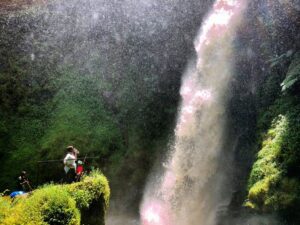
On the trail’s more elevated western side, several strong vantage points let hikers take in the whole marsh at once, including its outlet, before the route continues roughly three kilometers further to the Kamiranzovu Waterfall itself, the park’s largest tropical waterfall and a worthwhile extension for hikers with the time and energy.
Over 140 Orchid Species
Nyungwe holds more than 140 recorded orchid species, and the Kamiranzovu trail’s dedicated Orchid Loop section specifically showcases this botanical richness, giving the hike a real horticultural dimension beyond its wetland ecology and elephant history. The wet season specifically brings out the swamp’s greenest, most vivid beauty, making it rewarding for dedicated orchid enthusiasts despite the muddier trail conditions this timing involves.
Rare Birds: The Albertine Owlet and Grauer’s Swamp Warbler
Kamiranzovu holds significance for dedicated birders specifically, hosting two rare Albertine Rift endemic species: the Grauer’s swamp warbler and the elusive Albertine owlet. The owlet in particular is ly difficult to spot visually, and guides equipped with a recording of its distinctive call sometimes lead dedicated nighttime excursions to the marsh specifically to hear, rather than see, this rare species, a ly specialized activity worth arranging in advance for serious birders.
Cost and Timing
Hiking the Kamiranzovu trail costs roughly $15 for a half-day or $25 for a full day per person, with guided expeditions typically departing at 9am daily. The dry seasons, June through September and the shorter December-through-February window offer the firmest, least muddy trail conditions, with boardwalks in key sections remaining considerably easier to navigate during these drier months.
Where to Stay
Most visitors base themselves in Gisakura, near the park’s western edge, roughly 20 to 30 minutes by car from the Kamiranzovu trailhead. Accommodation options include One&Only Nyungwe House within the Gisakura Tea Estate itself, the mid-range Nyungwe Top View Hill Hotel offering panoramic forest views, and the more budget-friendly Gisakura Guest House, all providing access to park guides who can help arrange trail permits directly.
Getting There
Kamiranzovu sits roughly six hours by road from Kigali, or considerably faster by flying into Kamembe Airport near Cyangugu and continuing to Nyungwe in just over an hour, making the flight route very worthwhile for travelers prioritizing time over the scenic value of the longer overland journey.

Combining Kamiranzovu With Other Nyungwe Activities
Given its central position within the park, Kamiranzovu pairs naturally with a wider Nyungwe itinerary, including the canopy walkway and chimpanzee trekking, and its considerably quieter, more botanically focused character offers a very worthwhile contrast to the park’s more headline wildlife activities, well suited to travelers wanting a slower, more contemplative day within their broader Nyungwe stay.
Photography Tips for the Swamp
The elevated western vantage points along the trail offer the strongest photographic opportunities for capturing the marsh’s full circular basin shape, and morning light typically delivers the clearest, most atmospheric conditions before afternoon cloud cover moves in. Orchid enthusiasts specifically should bring a macro lens if possible, given how much of the trail’s botanical interest rewards close, detailed photography rather than wide landscape shots alone.
What to Pack
Waterproof hiking boots are ly essential given the trail’s boggy, occasionally muddy sections, particularly during the wetter months when the swamp’s greenery and orchid displays are at their most vivid. A rain jacket, insect repellent, and binoculars for spotting the rarer bird species round out the essential packing list for a Kamiranzovu excursion.
Frequently Asked Questions
What does Kamiranzovu mean?
“Swallowing elephants,” from the local words “kamira” (to swallow) and “nzovu” (elephant), referring to elephants that historically became trapped in the swamp’s deep, boggy terrain.
When did the last elephant disappear from Nyungwe?
1999, when the last known forest elephant died in the Kamiranzovu Swamp specifically, its skull now displayed at the park’s Uwinka Interpretation Center.
How long is the Kamiranzovu Swamp Trail?
Approximately 5.9 kilometers, including the Orchid Loop, rated a moderate hike taking around three to three-and-a-half hours, requiring no prior hiking experience.
What rare birds can be found at Kamiranzovu?
The Grauer’s swamp warbler and the elusive Albertine owlet, both Albertine Rift endemic species, with the owlet more often heard than seen during dedicated nighttime excursions.
Could elephants be reintroduced to Nyungwe Forest?
It’s a , active possibility. Scientists are currently using DNA sequencing to identify a close cousin species to Nyungwe original forest elephants, exploring potential future reintroduction.