Katwe Salt Lake & Crater Lakes
Most travelers arrive at Queen Elizabeth National Park thinking entirely about wildlife, tree-climbing lions, hippo-packed boat cruises, and chimpanzee trekking and understandably overlook one of the park’s most genuinely distinctive attractions: a living, six-century-old salt mining industry, still worked entirely by hand, on the shores of a volcanic crater lake most visitors drive straight past.
This guide covers Lake Katwe’s geology and history, what a visit actually involves, and the wider chain of crater lakes scattered across this section of the park.
Lake Katwe sits within Queen Elizabeth National Park’s Katwe-Kikorongo Volcanic Field, close to the Mweya entrance gate and directly on the standard route many visitors already travel, meaning a stop here requires minimal detour from an existing park itinerary.
How the Lake Was Formed
Lake Katwe is an explosion crater, formed roughly 10,000 years ago by volcanic activity, part of the same broader geological forces that created the numerous other crater lakes dotting this section of Queen Elizabeth National Park.
Covering approximately eight square miles with a maximum depth of just six feet at its deepest point, the lake has no outlet, meaning water flows in from surrounding streams but never flows back out, a critical detail that explains the lake’s extreme salt concentration: minerals carried in by rainwater and volcanic runoff accumulate steadily over time with nowhere to drain, and the region’s high evaporation rate, particularly during the dry season, concentrates this mineral content further, leaving behind crystalline salt deposits ready for harvest.
The surrounding landscape is genuinely striking in its own right: brutally hot and dry, since the rains falling on the nearby Rwenzori Mountains rarely reach this specific pocket of the park, with distinctive euphorbia trees dotting the arid terrain around the lake’s edge.
Six Centuries of Hand-Mined Salt
Communities around Lake Katwe have practiced salt mining continuously since the sixteenth century, making it one of Uganda’s oldest and most historically significant economic and cultural sites. Salt plots, and the specific mining skills required to work them, are passed down directly from one generation to the next, and the entire process remains genuinely manual: no industrial machinery, just bare hands and basic hand tools extracting rock salt, table salt, and industrial salty silt from the lake’s shallow pans.
Historically, salt from Katwe held genuine economic and political significance across the wider region, shaping trade routes and local power dynamics for centuries before modern transportation and commerce reduced its relative importance, though it remains a vital, ongoing livelihood for the local community today.
What a Visit Actually Involves
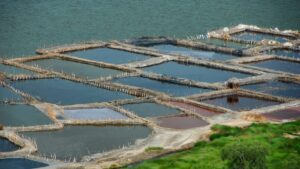
Tours are arranged through the Katwe Community Tourism Information Centre (KATIC), a genuine local community initiative based in Katwe-Kabatoro town, positioned directly beside the lake. Guided tours run two to three hours and take visitors through the full traditional mining process, watching local miners at work in the shallow salt pans, learning how salt is harvested, graded, and processed entirely without machinery, and understanding directly from community members how the lake continues to sustain thousands of livelihoods within a community that, given the harsh, dry climate and dangerous wildlife roaming the surrounding park, has essentially no alternative to salt mining as an income source.
Katwe is not a farming community, and for good reason: the surrounding land sits inside an active national park where elephant and other wildlife would regularly destroy crops, making salt mining not simply a cultural tradition but a genuine economic necessity shaped directly by the community’s unusual position living within protected wilderness.
Beyond the Mines: Village Life and Craft
For a modest additional fee, visitors can extend their Katwe visit into village tours, exploring local homes and the fishing village on nearby Lake Edward, or a dedicated birding excursion. At the lake shores, local community members sell handmade crafts directly to visitors, a worthwhile way to support the local economy beyond the salt mining tour itself, and Katwe town holds restaurants serving local meals and fresh fruit juice for travelers wanting a genuine taste of the area beyond the mines.
Lake Munyanyange: A Seasonal Flamingo Spectacle
A short distance from Lake Katwe, Lake Munyanyange offers a genuinely worthwhile addition for birders specifically: between August and November, lesser flamingos migrate here from Kenya, gathering in genuinely striking numbers along the lake’s saline shores. Combined with a Katwe salt mining tour, a stop at Munyanyange during this specific seasonal window adds a genuinely rewarding wildlife dimension to what might otherwise be framed purely as a cultural and historical stop.
The Wider Katwe-Kikorongo Crater Field
Lake Katwe sits within a genuinely dramatic broader landscape of volcanic crater formations, the Katwe-Kikorongo Volcanic Field, and further salty craters, including Lake Nyamunuka, host their own wildlife populations drawn to the mineral-rich water, with antelope, elephant, and warthog among the species regularly spotted along the tour route connecting these various crater lakes. This geological chain adds genuine scenic and wildlife-viewing value to what could otherwise be treated purely as a cultural stop.
Getting There
Lake Katwe is reached via a roughly 22-kilometre drive off the Mbarara-Kasese road, turning off between Kikorongo and Kasese towns, the same general route leading to the Mweya park gate. From the gate itself, it’s a further one-to-two-kilometre drive to the KATIC office, making the site genuinely convenient for travelers already based in the Mweya area of Queen Elizabeth National Park for standard game drives and the Kazinga Channel cruise.
Why This Belongs on a Queen Elizabeth Itinerary
Most Queen Elizabeth itineraries focus entirely on the Kazinga Channel, Kasenyi Plains game drives, and Ishasha’s tree-climbing lions, understandably, but a stop at Lake Katwe adds a genuinely distinctive cultural and historical dimension unavailable anywhere else in the park. For travelers wanting their Uganda safari to include more than wildlife alone, a two-to-three-hour salt mining tour offers real, tangible insight into how a community has adapted to sustain itself for centuries within one of the country’s most demanding, arid landscapes.
Frequently Asked Questions
How old is Lake Katwe’s salt mining tradition?
Communities have practiced salt mining here continuously since the sixteenth century, making it one of Uganda’s oldest ongoing economic and cultural traditions, with mining skills and salt plots passed down through generations.
Why is Lake Katwe’s water so salty?
The lake has no outlet, so minerals carried in by rainwater and volcanic runoff accumulate over time with nowhere to drain, and the region’s high evaporation rate further concentrates the salt content.
How do I arrange a visit to Lake Katwe?
Tours are arranged through the Katwe Community Tourism Information Centre (KATIC), a local community initiative based in Katwe-Kabatoro town beside the lake, either directly or through your lodge.
When is the best time to see flamingos at nearby Lake Munyanyange?
Between August and November, when lesser flamingos migrate from Kenya to gather along the lake’s saline shores, a genuinely worthwhile addition to a Katwe visit during this specific window.
How far is Lake Katwe from the Mweya area of Queen Elizabeth National Park?
Genuinely close, roughly 22 kilometres off the main Mbarara-Kasese road and just one to two kilometres from the Mweya park gate, making it an easy addition to a standard Queen Elizabeth itinerary.