Mount Gahinga & Mount Sabyinyo: Day Hikes in Mgahinga
Two of Mgahinga Gorilla National Park’s three volcanoes offer genuinely achievable single-day hikes, and they could hardly differ more in character. Mount Gahinga is the gentlest, most accessible summit in the entire Virunga range, a genuinely straightforward climb well suited to hikers wanting a real volcano experience without extreme physical demand.
Mount Sabyinyo, by contrast, ranks among the most technically demanding day hikes anywhere in East Africa, requiring ladder-assisted vertical sections and rewarding successful summiteers with the rare experience of standing simultaneously in three different countries. This guide covers both hikes in genuine detail.
Both mountains rise from within Mgahinga Gorilla National Park in Uganda’s far southwestern corner, part of the wider Virunga volcanic range shared with Rwanda and the Democratic Republic of Congo, and both are reached via the same park entrance and registration process.
Mount Gahinga: The Gentlest Virunga Summit
At 3,474 metres, Mount Gahinga is both the smallest of Mgahinga’s three volcanoes and, by a considerable margin, the most straightforward to climb. Its name derives from the local word for “a small pile of stones,” and the ascent typically takes under six hours round trip, considerably shorter than either of its neighbours, making it genuinely accessible to hikers without extensive mountaineering experience.
The trail climbs through grassy montane forest before entering a genuine bamboo zone, home to the park’s shy golden monkey population, worth watching for overhead as you ascend. The summit itself holds a swampy caldera filled with bamboo vegetation rather than a clear crater lake, a genuinely distinctive feature compared with some of the range’s other volcanic summits, and clear-day views extend across the surrounding Virunga landscape.
Mount Sabyinyo: “Old Man’s Teeth”
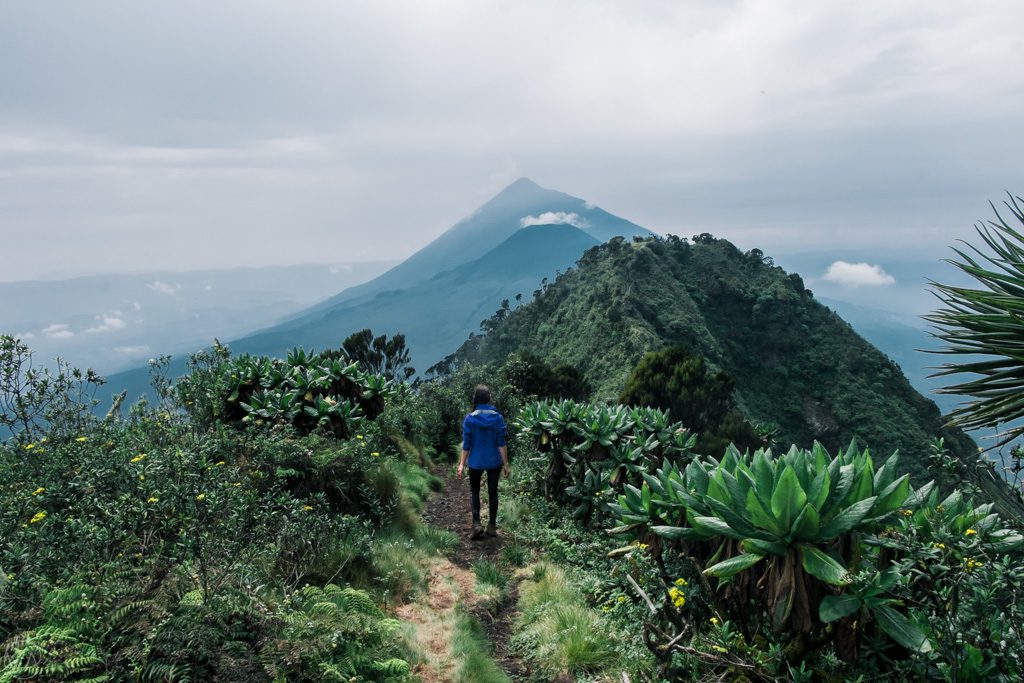
Mount Sabyinyo takes its evocative name, meaning “old man’s teeth” in the local Rufumbira dialect, from its genuinely jagged, worn-looking summit ridge, a stark visual contrast to the more rounded, level profiles of neighbouring volcanoes. At 3,634 to 3,645 metres depending on the specific source, Sabyinyo is separated from its nearest neighbour, Mount Muhabura, by a small crater lake roughly 20 metres in diameter.
What genuinely sets Sabyinyo apart from every other hike in the region is its summit structure: reaching the top requires climbing over two false peaks before the third and final summit, at the meeting point of three national borders, rewards successful hikers with the rare, genuine experience of standing simultaneously in Uganda, Rwanda, and the Democratic Republic of Congo. Few mountains anywhere in the world offer this specific geographic novelty.
How Difficult Is the Sabyinyo Climb?
Past hikers consistently describe Sabyinyo as not for the faint-hearted, involving near-vertical sections navigated via wooden and bamboo ladders, which become genuinely tricky and hazardous when wet. The round trip covers roughly 14 kilometres and takes seven to ten hours depending on pace and how long you linger at the summit, with total elevation gain from the park gate running around 1,000 metres. This is not a hike requiring elite athleticism, but a solid baseline fitness, comfort walking eight hours with sustained uphill sections, genuinely matters, and the hike is not suitable for anyone with a significant fear of heights or existing knee problems, given the strain the steep descent places on joints.
Wild animals, including forest elephant and buffalo, roam Mgahinga’s slopes, which is precisely why armed rangers accompany every hiking group alongside your designated Uganda Wildlife Authority guide, adding a genuine layer of safety and reassurance throughout the climb.
Cost and Booking
Permits for Mount Sabyinyo run approximately $80 to $85 per person, inclusive of guide and ranger fees and park entrance, while Mount Gahinga’s entrance runs around $75. Porters are available for hire at an additional cost, typically around UGX 50,000, and hiring one is genuinely worth considering for either hike, both for practical assistance and as direct, meaningful support for the local trekking economy. Booking a day or two ahead is possible given lower overall demand than gorilla trekking, but advance booking remains genuinely advisable since the Uganda Wildlife Authority typically assigns your guide the day before the hike itself.
Combining the Two Volcanoes
For travelers with sufficient time and stamina, Gahinga and Sabyinyo can genuinely be combined into a two-volcano hiking experience across consecutive days, using Gahinga’s shorter, gentler ascent as a natural warm-up before attempting Sabyinyo’s considerably more demanding climb. This sequencing also offers a genuine acclimatization benefit, helping hikers adjust to the region’s altitude before tackling the longer, more technical second summit.
Getting There
From Kampala, reaching Mgahinga National Park requires roughly an eight-hour drive to Kisoro town, followed by a further 14 kilometres to the park offices, typically covered by boda-boda (motorcycle taxi) for around UGX 20,000 or a vehicle pickup arranged through the Uganda Wildlife Authority for roughly $35. Travelers approaching from Rwanda find a considerably shorter journey via Kigali, making a Rwanda-based extension into Uganda specifically for these hikes a genuinely practical option for travelers already in the region for gorilla trekking at Volcanoes National Park.
Both trailheads open around 7:00am, and setting off as close to this time as possible genuinely improves your odds of clear summit views before afternoon cloud cover, an almost daily occurrence in the Virunga range, rolls in.
Comparing Gahinga and Sabyinyo
| Factor | Mount Gahinga | Mount Sabyinyo |
| Height | 3,474m | 3,634-3,645m |
| Round-trip time | Under 6 hours | 7-10 hours |
| Technical difficulty | Low, straightforward | High, ladder-assisted, exposure |
| Distinctive feature | Bamboo-filled swampy caldera | Three-country summit point |
| Best suited to | Most hikers, less experienced climbers | Fit, adventurous hikers comfortable with heights |
Where to Stay
Mount Gahinga Lodge, positioned near the park gate with direct views toward the volcanoes, remains the most celebrated accommodation choice for either hike, alongside a range of simpler guesthouses and mid-range lodges closer to Kisoro town. For travelers arriving directly from sea level, spending a full day in Kisoro to acclimatize before attempting either hike, Sabyinyo specifically, is genuinely worthwhile given the altitude involved.
Best Time to Hike
The drier months, June through September and December through February, offer the best odds of clear summit views and firmer, safer trail conditions, particularly important for Sabyinyo’s ladder sections, which become genuinely hazardous when wet. That said, rain is possible at any time of year in this equatorial highland environment, and no day on these mountains comes with a guaranteed clear view regardless of season.
Frequently Asked Questions
Which is easier, Mount Gahinga or Mount Sabyinyo?
Mount Gahinga, by a considerable margin. It’s the smallest, gentlest Virunga summit, typically completed in under six hours, while Sabyinyo requires seven to ten hours and involves genuinely technical, ladder-assisted vertical sections.
What makes Mount Sabyinyo’s summit unique?
Reaching the third and final peak puts hikers simultaneously in Uganda, Rwanda, and the Democratic Republic of Congo, a rare geographic experience offered by very few mountains anywhere in the world.
How much does it cost to hike these mountains?
Mount Sabyinyo permits run approximately $80-85 per person, and Mount Gahinga around $75, both inclusive of guide, ranger, and park entrance fees, with porters available for an additional fee.
Do I need mountaineering experience for Mount Sabyinyo?
No technical climbing certification is required, but a solid baseline fitness and comfort with heights are genuinely necessary given the near-vertical ladder sections and significant elevation gain.
Can I hike both mountains on the same trip?
Yes, and many travelers do exactly this across consecutive days, using Gahinga’s gentler ascent as a warm-up and acclimatization step before attempting the considerably more demanding Sabyinyo climb.