Lake Kivu
Lake Kivu holds a rare, almost paradoxical distinction: it’s classified among the world’s few “exploding lakes” given the vast reserves of methane gas trapped in its depths, and yet it remains entirely calm, safe for swimming, and free of the crocodiles and hippos that make so many other African lakes off-limits for casual bathers. This guide covers that scientific curiosity alongside the practical detail, where to base yourself, what activities are actually available, and how the lake’s methane is now being turned into clean energy.
Spanning over 2,700 square kilometers along the border between Rwanda and the Democratic Republic of Congo within the Albertine Rift Valley, Lake Kivu ranks as Rwanda’s largest lake and the sixth largest in Africa by volume.
The Methane, Explained Honestly
Lake Kivu holds vast quantities of methane gas and carbon dioxide trapped in its deeper layers, a rare geological phenomenon shared by only a handful of lakes worldwide.
The gas remains safely stored at depth unless significantly disturbed, and for swimmers and kayakers on the surface, it poses no practical risk whatsoever; the danger zone sits far below where any recreational activity actually takes place. This combination, scientific rarity paired with complete surface-level safety, is precisely what allows Lake Kivu to function as a recreational destination despite its unusual chemistry.
KivuWatt:
Rather than treating the methane purely as a hazard, Rwanda has developed KivuWatt, a innovative project extracting gas from the lake bed via an offshore barge platform, cleaning and separating it before pumping purified methane through an underwater pipeline to onshore gas engines.
The project’s first phase, powering three generator sets along the lakeshore, delivers 26 megawatts to Rwanda’s national grid, with subsequent phases planned to reach a total capacity of 101 megawatts. This positions Rwanda as a leader in a distinctly homegrown form of clean energy innovation, and the extraction process has no impact whatsoever on surface activities like swimming or kayaking.
A Geological Curiosity:
Lake Kivu’s drainage pattern tells a dramatic geological story. Thousands of years ago, intense volcanic activity in the Albertine Rift formed the Virunga Mountains, including Mount Nyiragongo and Mount Karisimbi, and this volcanic uplift physically blocked the lake’s original northern outlet, which had previously drained toward the Nile watershed via Lake Edward.
Today, Lake Kivu instead empties southward via the Ruzizi River into Lake Tanganyika, meaning the same volcanic forces that created the mountains gorilla trekkers now climb also fundamentally redirected an entire watershed.
The Three Lakeside Towns
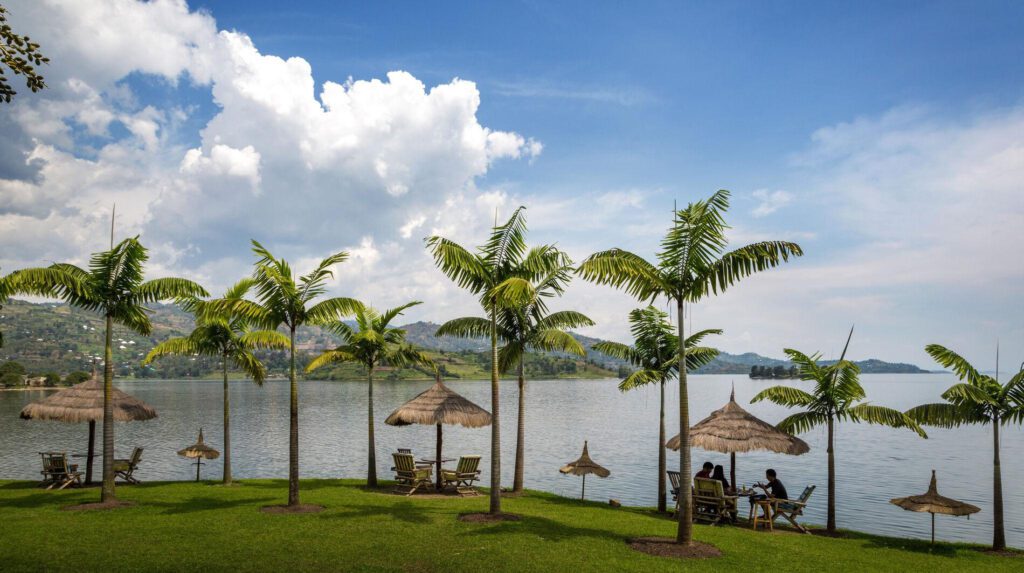
Gisenyi, officially known as Rubavu, sits on the lake’s northern shore and remains the most popular, lively base, offering golden sandy beaches, colonial-era architecture, luxury resorts, and a active nightlife scene, alongside its proximity to Volcanoes National Park making it the natural choice for travelers unwinding after gorilla trekking.
Karongi, also known as Kibuye, sits midway along the lake and offers considerably calmer waters and scenic peninsulas, well suited to travelers prioritizing relaxation and birdwatching over Gisenyi’s more active atmosphere. Rusizi, formerly Cyangugu, anchors the lake’s southern end near Nyungwe Forest National Park, giving travelers combining chimpanzee trekking with lake relaxation a natural, efficient base.
Water Activities
Kayaking along Lake Kivu’s shoreline offers a peaceful way to see fishermen, birdlife, and rolling terraced hills up close, and stand-up paddleboarding and canoeing are also widely available for travelers wanting further options. Swimming is safe in designated areas, with warm water year-round around 24 degrees Celsius (75°F), and the complete absence of bilharzia risk, crocodiles, and hippos makes Lake Kivu unusual among East Africa’s major lakes in how freely visitors can enter the water.
Island Excursions: Napoleon Island and Beyond
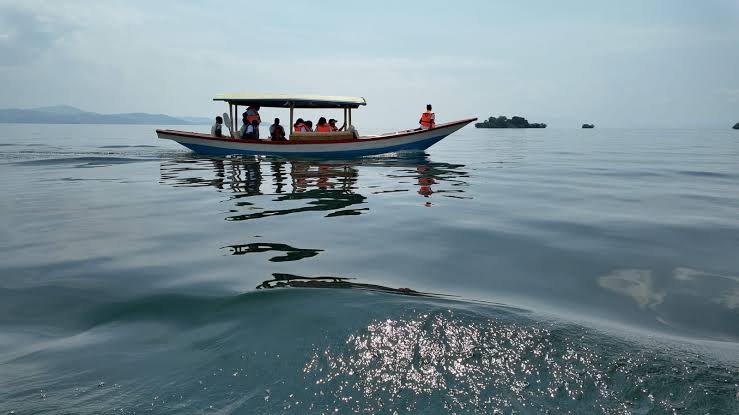
Boat trips to Lake Kivu’s scattered islands offer a worthwhile addition to a lakeside stay, with Napoleon Island holding a large fruit bat colony worth visiting specifically for this reason, alongside Peace Island, offering a tranquil, scenic escape. Scenic boat crossings between the lake’s main towns, typically two to three hours and costing roughly $20 to $40, offer a further way to experience the lake’s islands en route between destinations rather than as a dedicated round-trip excursion.
Coffee Tours
Rwanda’s coffee industry has developed international recognition in recent years, and Lake Kivu’s surrounding hillsides host numerous coffee plantations offering guided tours and tastings, walking visitors through the growing, harvesting, and processing stages before a proper cupping session. This has become one of the lake region’s distinctive cultural and culinary highlights, well worth building into a lakeside stay regardless of how much time you’re otherwise dedicating to water activities.
Hiking and Cycling: The Congo Nile Trail
Beyond the lake itself, the 227-kilometre Congo Nile Trail runs along Kivu’s eastern shore between Rubavu and Rusizi, well suited to hiking, biking, or even motorbiking through rolling hills and lakeside villages, a considerably more active complement to the lake’s more purely relaxation-focused water activities.
Combining Lake Kivu With the Rest of Rwanda
Lake Kivu’s flexibility as a stopover point is precisely what makes it such a natural fit within a wider Rwanda itinerary: Gisenyi sits a short drive from Volcanoes National Park, making it a natural post-gorilla-trekking unwind spot, while Rusizi’s proximity to Nyungwe Forest gives chimpanzee trekkers an equally natural lakeside close to their trip. Kibuye offers a worthwhile addition for travelers combining Lake Kivu with an Akagera National Park safari, rounding out a comprehensive Rwanda circuit with a properly restful final stretch.
Best Time to Visit
Lake Kivu rewards visits year-round given its consistently warm water and mild climate, though the dry seasons offer the clearest skies for boat trips and hiking sections of the Congo Nile Trail, consistent with the general Rwanda dry-season pattern of June through September and December through February.
Water Sports Beyond Kayaking
Several lakeside resorts along Lake Kivu now offer additional water-based activities beyond standard kayaking and canoeing, including stand-up paddleboarding, jet skiing at select properties, and, for the more adventurous, wakeboarding. This expanding activity menu reflects Lake Kivu’s growth as a recreational destination, giving travelers considerably more variety than a purely relaxation-focused lake visit might have offered even a few years ago.
Fishing on Lake Kivu
Traditional fishing remains a visible part of daily life along Lake Kivu, and several operators offer guided fishing excursions using local techniques, joining fishermen on the water for a authentic, low-key activity distinct from the more purely tourist-focused boat cruises. Isambaza (a small sardine-like fish) fishing, typically conducted at night using lanterns to attract the fish, offers a particularly distinctive, memorable evening activity for travelers wanting to witness this specific local tradition firsthand.
Frequently Asked Questions
Is it safe to swim in Lake Kivu given the methane gas?
Yes. The methane and carbon dioxide remain trapped far below the surface in the lake’s deeper layers, posing no risk to swimmers, kayakers, or other surface-level recreational activities.
Which Lake Kivu town should I base myself in?
Gisenyi (Rubavu) for the most lively atmosphere and proximity to Volcanoes National Park, Karongi (Kibuye) for calmer waters and relaxation, or Rusizi (Cyangugu) for proximity to Nyungwe Forest National Park.
What is KivuWatt?
An innovative Rwandan project that safely extracts methane gas from Lake Kivu’s depths and converts it into electricity, currently supplying 26 megawatts to the national grid with plans to expand further.
Why does Lake Kivu lack crocodiles and hippos, unlike other African lakes?
This is a natural characteristic of the lake, making it one of the few large African lakes where swimming is widely and safely enjoyed without the wildlife risks found elsewhere.
What is Napoleon Island known for?
A large fruit bat colony, making it a worthwhile boat excursion destination for travelers exploring Lake Kivu’s scattered islands.