Mount Karisimbi Hike
Of everything Volcanoes National Park offers, Mount Karisimbi represents its single most demanding physical challenge: a genuine two-day expedition, complete with overnight mountain camping, to reach Rwanda’s highest point and the tallest of the eight Virunga volcanoes. This guide covers exactly what that two-day climb involves, current permit costs, and what distinguishes Karisimbi from the park’s more accessible Bisoke hike.
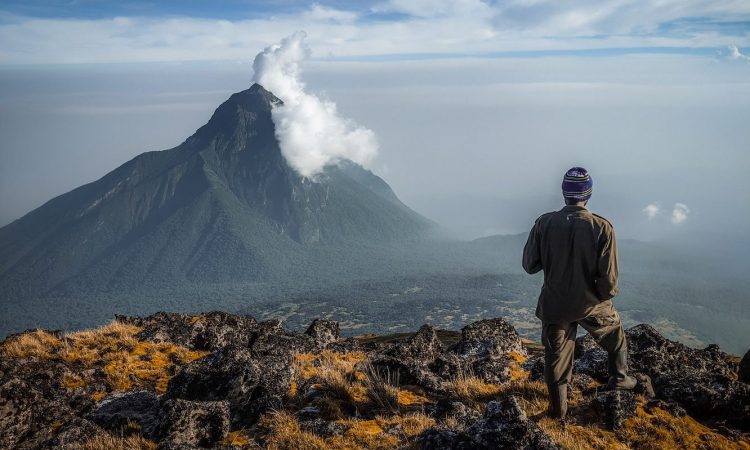
Rising to 4,507 metres, Karisimbi ranks as the eleventh-highest mountain in Africa, straddling the border between Rwanda and the Democratic Republic of Congo, flanked by neighbouring volcanoes Mikeno, Nyiragongo, and Bisoke within the wider Virunga Massif.
What “Karisimbi” Actually Means
The mountain’s name derives from “amasimbi,” the Kinyarwanda word for “white shell,” a direct reference to the snow and hail that occasionally cap the summit, a striking sight given the mountain’s position almost directly on the equator. This seasonal white capping happens specifically during certain months, and while Karisimbi is technically dormant rather than active, its lava dates to a young geological period, between roughly 0.24 and 0.01 million years old.
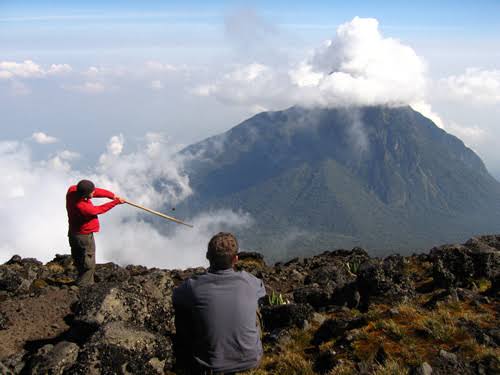
The Two-Day Structure
The climb begins with a morning departure from your accommodation to meet your guide at Volcanoes National Park headquarters, followed by roughly an hour’s drive to the trailhead at around 2,600 metres elevation, where you join your porters and begin the ascent. Day one covers genuine ground, climbing through several distinct vegetation zones before reaching a high camp positioned around 3,660 to 3,711 metres, where park staff maintain basic tent facilities and guests spend the night.
Day two begins early, with a further four-hour trek to the summit itself, ideally timed to arrive for sunrise, before descending back down to the high camp and continuing all the way to the original trailhead and briefing point, completing the full two-day round trip.
Five Distinct Vegetation Zones
Karisimbi’s climb earns its reputation as an ecological journey as much as a physical one, passing through five distinct zones: bamboo forest on the lower slopes, where hikers can visit Dian Fossey’s tomb for an additional fee if timing allows, hagenia-hypericum woodland at mid-elevation, open hillside dotted with giant lobelia and senecio moorland higher still, followed by alpine desert, and finally the sparse summit vegetation zone itself. Few single-day or even multi-day hikes anywhere in East Africa deliver this degree of dramatic ecological transition within such a compact overall route.
Permit Cost and What’s Included
A Karisimbi hiking permit costs $400 per person, all-inclusive: high camp accommodation (tent and basic facilities managed by park staff), a ranger guide for both days, and standard park entry. This makes it the only multi-day summit trek available within any of Rwanda’s national parks, a unique offering compared with the park’s other, single-day activities.
Porters, strongly recommended given the genuine physical demands of carrying gear across two full days of climbing, cost an additional $10 to $20 per day, and a portable chef can also be hired through the park for hot meals at the high camp, a welcome comfort after a demanding first day’s climb.
How Difficult Is It?
Karisimbi’s climb is consistently described as demanding, testing genuine physical fitness and endurance well beyond what Mount Bisoke’s single-day hike requires. The combination of significant elevation gain, altitude effects above 3,500 metres, and the sheer duration, two full days of sustained climbing, makes this a trek suited to hikers with a reasonable existing fitness baseline rather than complete beginners, though no technical climbing skill or specialized mountaineering equipment is required.
What to Pack
Good, well broken-in hiking shoes, warm layers including a proper sweater or fleece, a waterproof heavy jacket, a hat, and a walking stick or trekking poles cover the essential list, given the mountain’s genuine potential for cold, wet conditions at altitude regardless of season. Given the overnight camp component, a warm sleeping bag rated for near-freezing temperatures is also essential, and confirming exactly what sleeping gear your specific operator provides versus what you need to bring yourself is worth clarifying before departure.
Booking
Karisimbi permits can technically be obtained on the day of the trek directly from park headquarters, though booking in advance is strongly recommended to ensure the park is properly expecting your group and has arranged adequate porter and guide support. Most travelers arrange the permit through a recognized tour operator alongside their broader Volcanoes National Park itinerary, particularly given how naturally the climb pairs with gorilla trekking on the same wider trip.
Combining Karisimbi With Gorilla Trekking
Most visitors tackling Karisimbi build it into a broader Volcanoes National Park itinerary alongside gorilla trekking, since both activities share the same general base area around Musanze and Kinigi. Given the genuine physical toll of the two-day Karisimbi climb, scheduling it either well before or well after your gorilla trek, rather than on immediately adjacent days, allows your body genuine recovery time between two considerably demanding activities.
Best Time to Climb
The dry seasons, roughly April through September and, according to some operators, extending toward the broader June-through-September and December-through-February windows, offer the firmest trail conditions and the clearest summit views, important given how much of the climb’s reward depends on visibility across the wider Virunga range from the top.
Physical Preparation Before the Climb
Given the genuine two-day duration and significant altitude gain involved, arriving with a reasonable baseline of cardiovascular fitness matters considerably more here than for most other Volcanoes National Park activities. Regular hiking or stair-climbing training in the weeks before departure, combined with acclimatization time built into your broader Rwanda itinerary, meaningfully improves both comfort and genuine enjoyment of the climb.
Guides and Group Structure
Karisimbi treks are led by experienced Uganda Wildlife Authority-trained rangers, with groups typically kept small to maintain both safety and a personal pace suited to each climber’s fitness level. Given the trek’s genuine physical demands, communicating openly with your guide about how you’re feeling throughout the climb, rather than pushing through discomfort silently, is a sensible, important practice at this altitude.
Frequently Asked Questions
How long does it take to climb Mount Karisimbi?
A genuine two-day expedition, with day one covering the ascent to a high camp around 3,660-3,711 metres, and day two continuing to the summit before descending all the way back to the trailhead.
How much does a Karisimbi hiking permit cost?
$400 per person, including high camp accommodation, a ranger guide for both days, and standard park entry, making it all-inclusive.
Is Mount Karisimbi harder than Mount Bisoke?
Yes, considerably. Karisimbi requires a full two-day commitment with overnight camping at altitude, while Bisoke is a single-day hike, making Karisimbi the more physically demanding of the park’s two main volcano treks.
What does the name Karisimbi mean?
“White shell” in Kinyarwanda, referring to the snow and hail that occasionally cover the summit despite the mountain’s near-equatorial location.
Can I visit Dian Fossey’s tomb during the Karisimbi climb?
Yes, the tomb sits along the lower bamboo-forest section of the route and can be visited for an additional fee, timing permitting, as part of the broader two-day trek.