Twin Lakes Burera and Ruhondo
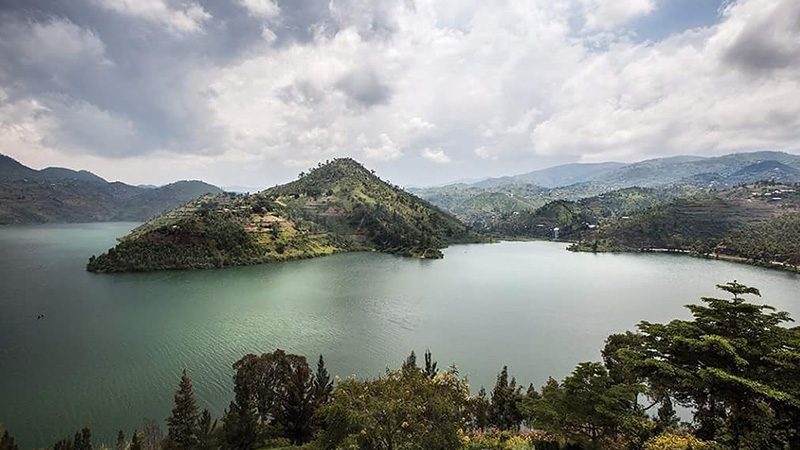
Most visitors to Volcanoes National Park never make it to the twin lakes just beyond its edge, and that’s their loss: Burera and Ruhondo offer one of Rwanda’s most serene, least-crowded scenic experiences, a natural, low-effort counterpoint to the physical demands of gorilla trekking, separated by just a single kilometre of volcanic land. This guide covers their geological origin, what a boat trip actually involves, and the working 1959 hydroelectric plant connecting them.
Located in Musanze and Burera districts in Rwanda’s Northern Province, at the base of Mount Muhabura and within reach of the wider Virunga volcanic range, the twin lakes sit roughly halfway between Musanze town and the Ugandan border.
A Volcanic Origin Story
The twin lakes’ formation traces back to a act of volcanic redirection: eruptions from Mount Sabyinyo altered the course of the River Nyabarongo, which had originally flowed northward through this valley, diverting its waters instead into what became Lake Burera. As Burera filled beyond capacity, its excess water spilled into the adjoining Lake Ruhondo, eventually giving rise to the Mukungwa River, meaning both lakes and a further river system all trace back to a single, dramatic volcanic event.
Lake Burera sits at a somewhat higher elevation, roughly 150 metres above Lake Ruhondo, explaining the natural direction of water flow between them, and the two lakes are separated by a narrow, roughly one-kilometre-wide, 2,800-hectare strip of land created by that same volcanic activity. Researchers estimate both lakes reach depths around 180 metres, substantial for lakes of their surface size.
Rwanda’s First Hydroelectric Plant, Still Running
A 70-degree sloped pipeline connects the two lakes atop the Ntaruka hydropower facility, built in 1959 and still operating today, making it Rwanda’s very first hydroelectric power plant. This piece of national infrastructure history adds a further, distinctive dimension to a twin lakes visit, standing as tangible evidence of the area’s long-running contribution to the country’s development well beyond its scenic and recreational value alone.

Which Lake Should You Choose?
The two lakes carry distinct characters worth understanding before choosing where to spend your time. Lake Burera is generally described as larger and cleaner, offering a broader, more open scenic experience, while Lake Ruhondo delivers noticeably stronger volcano views, with Mount Gahinga, Mount Bisoke, and Mount Karisimbi all visible from the water during a boat cruise on clear days. Neither lake is objectively superior, and travelers with sufficient time benefit from visiting both given how close together they sit.
Boat Trips and Canoeing
A boat or canoe trip on either lake typically costs $20 to $30 per person, and can be enjoyed at any time of day, morning, afternoon, or evening, each offering a somewhat different light and atmosphere across the water. Both traditional dugout canoes and motorized boats are available, with excursions frequently visiting small islands where local fishermen still use age-old net fishing techniques, a authentic glimpse into daily lakeside life rather than a staged tourist demonstration.
Given the lakes’ absence of crocodiles or other dangerous aquatic predators, they’re considered safe for swimming and closer water contact, a further point of differentiation from many other East African lakes where such activities carry real risk.
Island Excursions
Several small islands dot the twin lakes, including Bushongo, Munanira, Cuza, and Bishosho, each reachable by boat or canoe and offering the chance to interact directly with local fishing communities, and in some cases take swimming or canoeing lessons from skilled resident boatmen.
Guided village walks on the surrounding shoreline extend this cultural dimension further, with opportunities to watch local entertainment groups perform, hear folktales shared by community elders, and learn , first-hand detail about the region’s history and daily life.
Birding: The Rugezi Swamp
Beyond the lakes themselves, the adjoining Rugezi Swamp ranks among Rwanda’s seven most important birding areas, and the lakes’ broader shoreline, terraced hillsides, and wetland habitat combine to make the twin lakes rewarding for birdwatchers, well beyond their scenic and cultural appeal alone.
Why This Makes the Ideal Post-Trek Activity
The twin lakes are most commonly visited in the afternoon or evening immediately following a morning of gorilla trekking or golden monkey tracking in Volcanoes National Park, or after a cultural stop at the Iby’iwacu Cultural Village or a visit to the Musanze Caves. The low-exertion, purely scenic nature of a boat trip here makes it an ideal way to unwind after a physically demanding morning, without needing to travel far from the park’s main tourism hub.
Where to Stay
Accommodation directly around the twin lakes includes Twin Lakes Recreational Island, My Hill Eco Lodge, and Ruhondo Island Retreat, alongside a range of further guesthouses catering to different budgets, giving travelers a option to stay lakeside overnight rather than treating the visit purely as a day trip from Musanze.
Getting There
The twin lakes sit close enough to Volcanoes National Park’s main tourism infrastructure to be reached within a short drive from Musanze or Kinigi, making them a convenient half-day or evening addition to a wider gorilla-trekking itinerary rather than requiring separate, dedicated travel time.
Best Time to Visit
The twin lakes can be visited year-round, with boat trips rewarding at any hour, though the dry seasons offer the clearest skies for the volcano views Lake Ruhondo specifically is known for.
Fishing and Local Livelihoods
Fishing remains ongoing part of daily life around both lakes, and while not as commercially dominant an activity in Rwanda as in some neighbouring countries, guided fishing excursions with local boatmen offer visitors an authentic window into this traditional livelihood, alongside the chance to try their own hand at the activity under expert guidance.
Photography Opportunities
The twin lakes offer striking photographic opportunities beyond their volcano views: the terraced, cultivated hillsides surrounding both lakes create a distinctive layered visual pattern, and morning mist frequently settles over the water, producing atmospheric conditions particularly rewarding for photographers willing to arrive early. The contrast between the lakes’ calm surface and the surrounding dramatic volcanic peaks gives this location a claim to being among Rwanda’s most photogenic settings.
Frequently Asked Questions
Why are Burera and Ruhondo called the twin lakes?
Because of their close proximity, separated by just one kilometer of volcanic land, and the fact that Lake Burera’s water flows into the lower-elevation Lake Ruhondo, giving them physically connected relationship.
How much does a boat trip on the twin lakes cost?
Typically $20 to $30 per person for either a traditional canoe or a motorized boat excursion, available at any time of day.
Is it safe to swim in Lake Burera or Lake Ruhondo?
Yes, both lakes are free of crocodiles and other dangerous aquatic predators, making them safer for swimming than many other East African lakes.
Which lake has better volcano views, Burera or Ruhondo?
Lake Ruhondo offers noticeably stronger views of Mount Gahinga, Mount Bisoke, and Mount Karisimbi, while Lake Burera is generally larger and cleaner overall.
What is the Ntaruka hydropower plant?
Rwanda’s first hydroelectric power plant, built in 1959 and still operating today, connected to both lakes via a steeply sloped pipeline between them.