Nyungwe protects one of Africa’s oldest surviving rainforests, a montane ecosystem predating the last Ice Age, and it holds a genuine distinction unmatched anywhere else in East Africa: the region’s only suspended canopy walkway, carrying visitors roughly 70 meters above the forest floor. This guide covers the walkway itself in real detail, the park’s two distinct chimpanzee trekking areas, and the giant colobus troops that make Nyungwe different from Rwanda’s other primate destinations.
Spanning just over 1,000 square kilometers in Rwanda’s southwest, bordering Burundi’s Kibira National Park, Nyungwe holds 13 primate species, over 300 recorded bird species, and 1,050 recorded plant species, and it supplies roughly 70 percent of Rwanda’s entire freshwater supply, a significant ecological role well beyond its tourism appeal alone.
The Canopy Walkway
Nyungwe’s canopy walkway, East Africa’s only suspended forest bridge system, stretches roughly 160 meters in total, suspended between 50 and 70 meters above the forest floor depending on the specific section, and consists of several connected spans, the longest reaching approximately 90 meters. The walkway is accessed via the Igishigishigi Trail, a roughly 2.1-kilometer approach beginning at the Uwinka Visitor Centre, where visitors receive a safety briefing before setting out.
The full experience, including the approach hike, crossing the walkway itself, and the return, typically takes a maximum of two hours, accessible to travelers of moderate fitness rather than requiring the stamina a full chimp trek demands. Expect the bridges to sway gently underfoot as you cross, a thrilling rather than alarming sensation for most visitors, delivering sweeping views over the endless green canopy below, with orchids visible dangling from branches and distant waterfalls occasionally audible.
Chimpanzee Trekking
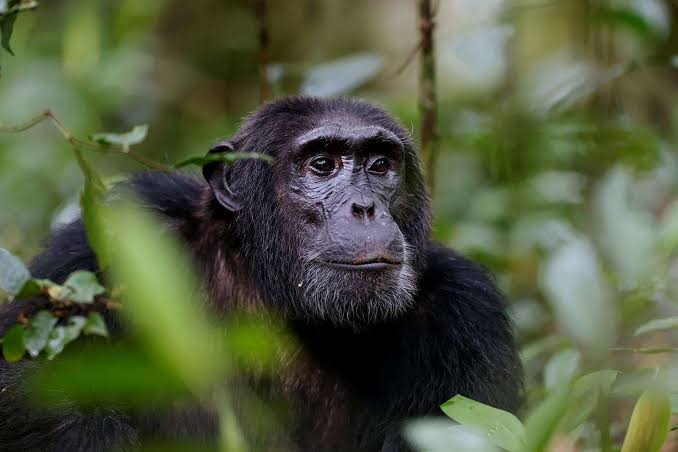
Nyungwe holds two separate habituated chimpanzee groups, located in the Cyamudongo Forest and the Uwinka area, giving the park genuine flexibility depending on which specific location your permit assigns. Trekks begin early, typically between 5:00 and 6:00am, with groups of up to eight tourists following expert rangers into the forest, and the total trek duration runs two to eight hours depending on how far the chimps have moved that particular morning.
Nyungwe is home to an estimated 500-plus chimpanzees across its combined territory, split between the two sectors, and the trekking experience follows the familiar East African structure, tracking calls and movement signs before a regulated observation period once the group is located, watching chimps feed, play, and interact within the forest canopy.
The Giant Angola Colobus Troops
Beyond chimpanzees, Nyungwe’s most visually striking primate spectacle is its black-and-white colobus monkeys, which are endemic to the Albertine Rift and found here in enormous troops, sometimes numbering in the hundreds of individuals at once. Watching such a large troop move through the canopy together, with their long white tails trailing as they leap between branches, is one of the park’s most memorable wildlife encounters. Dedicated colobus and other primate treks are available separately from standard chimp trekking for travelers who want to specifically prioritize this spectacle.
The Other Primates and 300-Plus Birds
Beyond chimpanzees and colobus, Nyungwe’s remaining primate roster includes mangabey, vervet monkey, and L’Hoest’s monkey, contributing to the park’s total of 13 recorded primate species, among the richest concentration found anywhere in Africa. The bird list runs past 300 species, including genuine Albertine Rift endemics found in few other locations, making Nyungwe a worthwhile destination for dedicated birders independent of its primate reputation.
Activity Pricing
Nyungwe’s activities are priced individually rather than bundled under a single park entry ticket. Chimpanzee trekking runs approximately $90 to $150, depending on the specific source and season; the canopy walk is roughly $40 to $60; guided birding is around $50; colobus and other primate treks are about $60; and guided nature trails are approximately $40 per person, with camping available for around $30 per tent per night. All activity fees include your guide and any necessary park entry for that specific day.
Thirteen Trails, Beyond the Headline Activities
Nyungwe’s trail network extends well beyond the canopy walkway and chimp trekking routes, with thirteen distinct trails covering more than 130 kilometers of forest terrain, ranging from a simple one-hour walk to full week-long treks for dedicated hikers. This depth gives Nyungwe a considerably longer potential stay than most visitors initially plan for, and travelers with extra time can spend several days exploring different sections of the forest without repeating the same route twice.
Mount Bigugu and the Nile’s Remote Source
A high-altitude spring on Mount Bigugu, rising to 2,950 meters within the park, marks what’s considered the most remote source of the entire Nile River, a significant geographical claim adding further depth to Nyungwe’s reputation beyond its wildlife alone.
Where to Stay
One&Only Nyungwe House, positioned on a genuine working tea plantation directly at the forest’s edge, remains the park’s standout luxury property, offering guests direct access to pristine hiking trails from private suite verandas. Given Nyungwe’s cool, high-altitude, malaria-free setting, the property delivers a different atmosphere from Rwanda’s gorilla-trekking lodges further north, a worthwhile consideration for travelers building a multi-region Rwanda itinerary wanting genuine variety in both landscape and climate.
Getting There
Nyungwe sits in Rwanda’s southwest near Nyamagabe, considerably further from Kigali than Volcanoes National Park, typically requiring a four-to-five-hour road transfer or a domestic flight for travelers prioritizing time. RwandAir operates direct long-haul connections into Kigali International Airport, with onward international carriers including Qatar Airways and KLM offering daily service, making Nyungwe accessible as part of a broader Rwanda itinerary despite its more remote southwestern position.
Best Time to Visit
The dry seasons, June through September and December through February, offer the firmest trail conditions across all of Nyungwe’s activities, though the park’s rewarding wildlife and canopy walkway experience remain available year-round given the resident nature of its chimpanzee and colobus populations.
Getting to Know Nyungwe’s Trail Network
Beyond the canopy walkway and chimp trekking, Nyungwe’s fifteen distinct trails offer varied experiences: the Kamiranzovu Swamp Trail leads to the park’s largest wetland, the Isumo Waterfall Trail rewards hikers with a dramatic cascade, and the Bigugu Trail climbs to the park’s highest point at 2,950 meters for sweeping views across Lake Kivu. Serious hikers with several days to spend can explore a different section of the forest each day without repeating a route.
Health and Practical Preparation
Nyungwe’s high altitude and cool, often misty climate differ from the warmer conditions found at Rwanda’s other major parks, and packing layered clothing, including a proper rain jacket, matters considerably given how quickly weather can shift at this elevation. The park sits within a malaria-low-risk zone given its altitude, though standard precautions remain sensible as part of a broader Rwanda itinerary that likely includes lower-elevation destinations.
Combining Nyungwe With the Rest of Rwanda
Given Nyungwe’s position in Rwanda’s remote southwest, many itineraries combine it with a Rusizi district extension near Lake Kivu’s southern shore or connect it northward toward Kibuye and Rubavu along the lake’s eastern coastline for travelers building a comprehensive circuit. The park also pairs naturally with the low-season gorilla permit discount at Volcanoes National Park, given Rwanda’s requirement of a qualifying Nyungwe or Akagera pre-stay to access that pricing.
Frequently Asked Questions
How high and how long is the Nyungwe canopy walkway?
Roughly 160 metres long in total, suspended between 50 and 70 metres above the forest floor, with the longest single span reaching approximately 90 metres, making it East Africa’s only suspended forest canopy walkway.
How many chimpanzee trekking areas does Nyungwe have?
Two distinct habituated groups, located in the Cyamudongo Forest and the Uwinka area, with your specific permit assigning you to one or the other.
How much does the canopy walk cost?
Approximately $40 to $60 for international visitors, with the full experience, including the approach hike via the Igishigishigi Trail, taking a maximum of two hours.
What makes Nyungwe’s colobus monkeys distinctive?
They form some of the largest troops of any primate species in Africa, sometimes numbering in the hundreds of individuals moving together through the canopy simultaneously.
How far is Nyungwe from Kigali?
Nyungwe is considerably further from Kigali than Volcanoes National Park, typically requiring a four-to-five-hour road transfer or a domestic flight, given its position in Rwanda’s southwest near Nyamagabe.