Essential Packing List for Gorilla Trekking in East Africa; What you pack for gorilla trekking determines whether the experience is transformative or miserable. This is rainforest hiking through steep mountain terrain where weather shifts without warning, trails turn from dry paths to mud streams within minutes, and vegetation actively fights back with thorns, stinging nettles, and biting insects.
The right gear isn’t about looking technical; it’s about staying dry, steady, and comfortable enough to enjoy your one hour with the gorillas rather than simply surviving the trek to reach them.
This checklist covers exactly what’s needed for treks in Uganda’s Bwindi Impenetrable Forest and Mgahinga, or Rwanda’s Volcanoes National Park, drawing on what professional, certified guides across both countries consistently recommend.
Footwear: The Single Most Important Decision
Waterproof hiking boots with proper ankle support are non-negotiable. Running shoes, sneakers, and sandals provide insufficient ankle support and waterproofing for steep, muddy rainforest trails, and proper boots prevent injuries that can end your trek entirely. Break in your boots at least two to three weeks before departure to avoid blisters during the actual hike, and pack an extra pair of thick socks, since wet feet on a multi-hour trek compromise both comfort and safety.
Clothing: Protection, Comfort, and Function
Long-sleeved, moisture-wicking shirts protect your arms from scratches and stinging nettles, and quick-dry technical fabrics matter more than cotton, which stays wet for hours in the rainforest’s humidity. Long trousers, lightweight but sturdy, should be tucked into your socks or boots to keep safari ants and other insects from working their way up your legs during the trek.
A lightweight, waterproof rain jacket is essential regardless of season, since rain can fall at any time in these tropical parks, and a warm sweater or fleece layer matters for cold mornings and higher elevations. Sturdy gardening gloves are a frequently overlooked essential, necessary for gripping wet vegetation and protecting your hands from thorns and nettles along the trail.
Color Matters: What to Wear and What to Avoid
Stick to earth tones, khaki, olive green, and beige, which blend naturally into the bush and don’t startle wildlife. Avoid blue and black specifically, since these colors attract tsetse flies, whose bite is considerably more unpleasant than standard mosquito bites. In Rwanda specifically, camouflage-patterned clothing is reserved exclusively for military use, and civilians wearing it will face questioning from authorities, a detail worth confirming with every member of your travel party before departure.
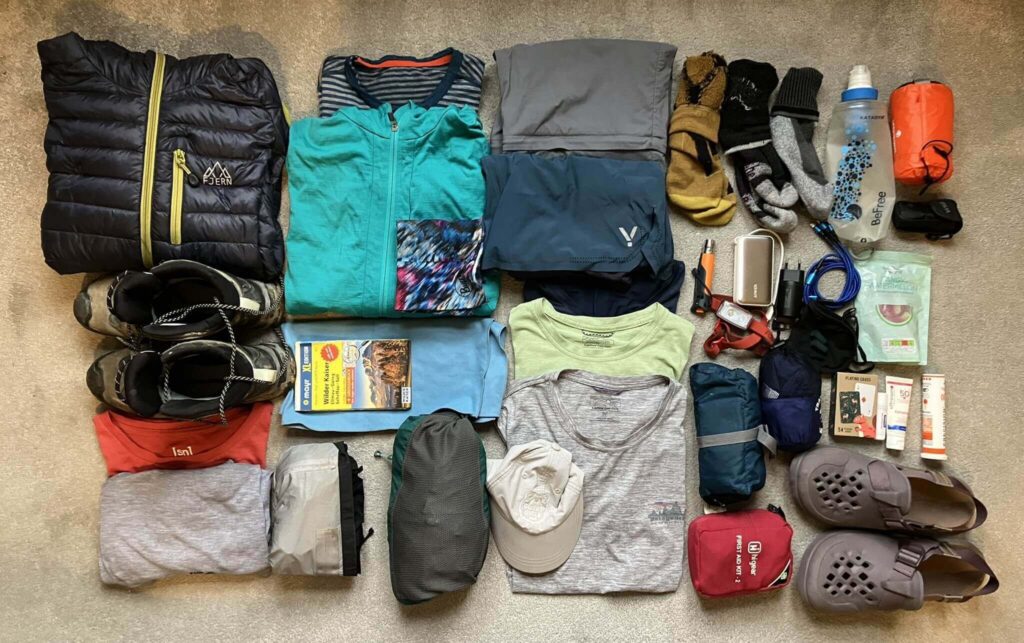
Daypack and Gear
A 15 to 25-liter waterproof daypack with a rain cover carries everything you’ll need during the trek itself, water, snacks, camera gear, and any personal items, while your main luggage stays back at the lodge. Reusable dry bags for electronics are worth packing specifically instead of standard plastic bags, since single-use plastic bags are illegal in Rwanda under the country’s well-enforced environmental regulations.
A walking stick or trekking pole, often available for rent locally at the trailhead, provides additional stability on steep, slippery sections, and hiring a porter, typically a modest additional cost, means someone else carries your daypack while offering a steadying hand on difficult terrain, directly supporting the local community in the process.
Sun and Insect Protection
Broad-spectrum, water-resistant sunscreen rated SPF 30 or higher is essential even under dense forest canopy, since altitude accelerates sunburn considerably faster than at sea level, and reapplication every two hours to your face, neck, ears, and hands matters given how much sweat and rain can wash off earlier applications. Insect repellent containing 30 to 50 percent DEET, the gold standard for African rainforest conditions, should be applied to exposed skin and clothing edges, with reapplication after sweating or rain, focusing particularly on ankles and wrists where insects most commonly bite.
Camera Equipment
A camera with a mid-range zoom lens, roughly 70 to 200 mm, is generally ideal, since gorillas are often close, and a massive telephoto lens can actually become a hindrance in tight forest spaces.
Pack extra batteries and memory cards, since the humid, occasionally cold environment can drain batteries faster than expected, and a waterproof dry bag protects your camera and electronics from sudden downpours. Flash photography is strictly prohibited throughout every gorilla trekking sector, since it can agitate the animals, so confirm your flash is disabled before setting out.
Hygiene: A Serious Consideration
Because humans share roughly 98 percent of their DNA with gorillas, human illnesses can transmit to gorilla populations with serious, sometimes fatal consequences. Hand sanitizer should be used before and after the trek, before eating, and after any bathroom break, and travelers experiencing symptoms of a cold, flu, or other contagious illness should inform their guide or operator ahead of the trek, since park authorities may reasonably reschedule or restrict participation to protect the gorillas’ health.
Two PFC-free face masks are increasingly recommended for gorilla viewing specifically, an added, sensible precaution against disease transmission during the close proximity of the actual encounter.
Documents and Money
Bring a copy of your passport and gorilla permit, since your operator typically carries the originals but having your own copy is a sensible backup. Small bills in local currency are essential for tipping your guide, trackers, and porter, since larger denominations or foreign currency can be difficult to break in remote trailhead locations.
What You Don’t Need
Heavy bags exhaust trekkers before they even reach the gorillas, according to UWA-certified rangers, so resist the temptation to overpack your daypack. If an item isn’t on this core list, it likely belongs back at the lodge rather than in your trekking bag.
Quick-Reference Packing Checklist
| Category | Essential Items |
| Footwear | Waterproof hiking boots (broken in), extra thick socks |
| Clothing | Long-sleeved moisture-wicking shirt, long trousers, rain jacket, sweater, gardening gloves |
| Gear | 15-25L waterproof daypack, dry bag, trekking pole |
| Protection | SPF 30+ sunscreen, 30-50% DEET repellent, hand sanitizer |
| Camera | Mid-range zoom (70-200mm), extra batteries/memory cards, dry bag |
| Documents | Passport copy, permit copy, small local currency bills |
Renting Gear Locally
Items including gaiters, waterproof boots, and rubber wellies can often be rented locally near both Bwindi and Volcanoes National Park, depending on current availability. If you’re uncertain what to bring or want to minimize luggage, asking your lodge or operator in advance what’s available for rental helps you pack more efficiently for the rest of your trip.
Packing for the Season You’re Traveling
Trekking happens year-round in both countries, and the dry seasons, roughly June through September and December through February, are generally easier underfoot, with firmer trails and less clinging mud. The wetter months bring more challenging conditions, slippery roots, thicker mud, and more frequent downpours, but also greener, quieter forest and excellent, dramatic light for rainforest photography. Regardless of season, packing as though rain is guaranteed remains the safest approach, since equatorial weather can shift from bright sun to a tropical downpour within minutes.
Back-at-the-Lodge Essentials
Beyond the trekking-specific gear covered above, pack a change of comfortable clothes and closed shoes for the evening, since muddy trekking gear will need time to dry and clean before your next activity.
Basic personal medications, any prescription drugs, and a small first-aid kit are worth carrying given how limited pharmacy access is near both Bwindi and Volcanoes National Park, meaning bringing your full supply from home is considerably more reliable than expecting to restock locally.
What to Skip Packing
Heavy tripods are impractical on a moving trek and rarely used given the strict one-hour time limit and constant repositioning required to track the gorillas. Bulky, oversized backpacks beyond the recommended 15-25 litre capacity slow you down unnecessarily on steep terrain, and excessive changes of trekking-specific clothing add weight without benefit, one or two full outfits for the trek itself, supplemented by lodge-appropriate evening wear, covers the realistic need.
Packing List for Combining Gorilla Trekking With a Wider Safari
If your itinerary extends beyond gorilla trekking into savanna game drives elsewhere in Uganda or Rwanda, pack a separate, lighter set of neutral-toned safari clothing for vehicle-based activities, since the heavier, more protective trekking gear becomes unnecessarily warm and cumbersome during open-vehicle game drives. A wide-brimmed hat and polarized sunglasses, less essential under dense forest canopy, become valuable once you’re out on open plains under direct sun.
Frequently Asked Questions
Do I really need waterproof hiking boots for gorilla trekking?
Yes, essential. Running shoes or sneakers provide insufficient ankle support and waterproofing for the steep, muddy rainforest terrain, and proper boots help prevent injuries that could end your trek.
Can I wear camouflage clothing for gorilla trekking?
Not in Rwanda. Camouflage patterns are reserved for military use there, and civilians wearing it face questioning from authorities. Neutral earth tones are the safe choice in both countries.
Why is hand sanitizer so important on a gorilla trek?
Humans share roughly 98% of their DNA with gorillas, meaning human illnesses can transmit to them with potentially serious consequences. Sanitizing before and after the trek and before eating is a conservation requirement.
What camera lens is best for gorilla trekking photography?
A mid-range zoom around 70-200mm generally works best, since gorillas are often quite close and an oversized telephoto lens can become a hindrance in tight forest spaces.
Can I rent gorilla trekking gear locally instead of packing everything?
Yes, items like gaiters, waterproof boots, and rubber wellies can often be rented near both Bwindi and Volcanoes National Park, worth confirming availability with your operator in advance.