Combining Kenya, Tanzania, Uganda, and Rwanda into One Epic Trip; The single biggest planning mistake travelers make when combining multiple East African countries is trying to fit too much into too few days. Every itinerary you find online sounds incredible—Serengeti sunrises, gorillas in the mist, Zanzibar’s turquoise water—but the challenge lies in sequencing these experiences realistically rather than assembling an exhausting checklist. This guide covers exactly how many days each country’s core experiences require and how to combine them without burning out mid-trip.
Many travelers end up visiting East Africa more than once precisely because each country offers such a distinct experience, but for those wanting to combine multiple destinations within a single trip, understanding realistic time requirements upfront prevents the common trap of an itinerary that looks impressive on paper but proves exhausting in practice.
How Many Days Each Country Requires
Rwanda safaris require three to five days for gorilla trekking and cultural experiences. Kenya wildlife safaris require four to six days for the Maasai Mara and Amboseli. Tanzania wildlife safaris require six to ten days for the Serengeti, Ngorongoro, and migration viewing given the country’s larger geography and more spread-out park network.
Uganda offers diverse experiences requiring correspondingly more time: Bwindi demands at least two days for gorilla trekking, Kibale one to two days for chimp tracking, Queen Elizabeth two to three days for game drives and boat safaris, and Murchison Falls two to three days for wildlife viewing and Nile River cruises.
Adding these figures together and combining all four countries creates a natural three-to-four-week journey if you want to properly experience each destination rather than rushing through a superficial sampling of them.
The 12-to-14-Day Realistic Combination
For travelers with more limited time, the ideal approach combines two “anchor” experiences rather than attempting all four countries superficially. For first-time travelers, the top-rated route pairs Tanzania’s Northern Circuit (roughly seven days) with a Zanzibar beach extension (four days).
For bucket-list-focused travelers specifically, a Uganda gorilla trek (three days) combined with a Kenya Maasai Mara safari (five days) delivers excellent wildlife diversity within a considerably tighter overall timeframe.
The 14-to-16-Day Full Four-Country Experience
A journey of fourteen to sixteen days provides enough time to experience Kenya, Tanzania, Uganda, and Rwanda at a comfortable, non-rushed pace, provided the itinerary is carefully sequenced to minimize backtracking and travel fatigue. This length works well specifically because it allows roughly three to four days per country, enough for the core headline experience in each destination without needing to compress everything into an unsustainable pace.
A Sample 14-Day Four-Country Route
| Days | Destination | Focus |
| 1-3 | Kenya (Maasai Mara) | Classic Big Five game drives |
| 4-6 | Tanzania (Serengeti/Ngorongoro) | Migration viewing, crater floor game drives |
| 7-9 | Uganda (Bwindi) | Gorilla trekking |
| 10-12 | Rwanda (Volcanoes NP) | Golden monkey trekking, volcano hiking |
| 13-14 | Rwanda (Kigali) | City exploration, departure |
The Full 3-to-4-Week Comprehensive Journey
For travelers with more time, a three-to-four-week itinerary allows for meaningful depth in each country rather than a rushed headline-only visit: proper time for Rwanda’s cultural experiences beyond gorilla trekking alone, Kenya’s private conservancies beyond the standard Maasai Mara reserve, Tanzania’s full migration circuit across multiple parks, and Uganda’s diverse activity menu, including chimps, gorillas, savanna wildlife, and Nile boat cruises, all within a single, unhurried trip.
The Ultra-Comprehensive Self-Drive Option
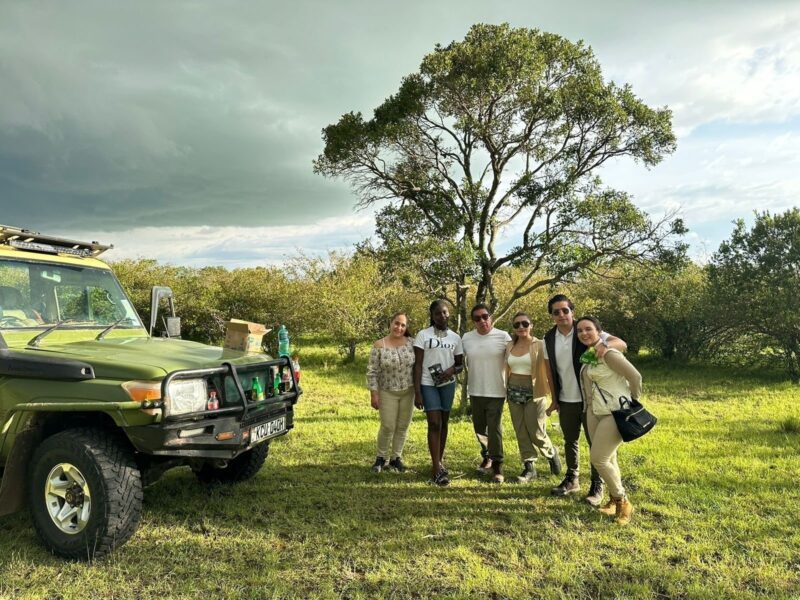
For adventurous travelers pursuing a self-drive road trip across all four countries independently, budget considerably more time, ideally 45 to 60 days, given how much longer overland travel between countries takes compared with flying, and the coordination required for cross-border vehicle permits and multiple visa applications. This approach suits travelers specifically seeking personalized, independent exploration over a more structured, guided multi-country circuit.
Visa Planning for a Multi-Country Trip
The East Africa Tourist Visa, covering Kenya, Uganda, and Rwanda for $100, simplifies logistics for a three-country combination, though Tanzania requires its own separate visa since it hasn’t joined the joint arrangement. If your itinerary begins in Kenya specifically, you’ll need Kenya’s own eTA for that initial entry before the EATV covers your subsequent movement between the three participating countries.
Sequencing Logic: Minimizing Backtracking
The most efficient multi-country itineraries move in a single geographic direction rather than zigzagging between countries, starting in one country and ending in another instead of returning to your original entry point. A route starting in Nairobi, continuing through Tanzania’s northern circuit, crossing into Uganda, and finishing in Rwanda before flying out of Kigali, for instance, avoids the wasted time and cost of doubling back on yourself partway through the trip.
Getting Between Countries
Scheduled and charter flights connect the region’s major hubs efficiently; Kenyan Airways, RwandAir, and Jambojet all serve routes between Nairobi, Entebbe, and Kigali. Overland bus services, including EasyCoach and MASH, also operate daily between Kenya and Uganda, typically taking around twelve hours and costing roughly 2,000 to 2,500 Kenyan shillings one way, a considerably slower but more budget-friendly alternative to flying for travelers with sufficient time.
Budgeting for a Multi-Country Trip
Daily budgets across a combined itinerary typically range from $350 to $700 for mid-range travel, up to $1,500 or more per day for luxury circuits, and most luxury itineraries include scheduled or charter flights between destinations specifically to maximize comfort and minimize the travel fatigue a purely overland multi-country journey would otherwise involve.
Why Combining Countries Works
Each East African country delivers something distinct: Kenya and Tanzania for classic Big Five game drives and the Great Migration, alongside cultural interactions with Maasai and Samburu communities and beach extensions on the Indian Ocean; Rwanda and Uganda for primate trekking, gorillas and chimpanzees, alongside their own traditional safari activities.
Combining destinations lets travelers experience the best of each country rather than compromising on any single one in a purely single-country trip.
Coordinating Multiple Operators Across Countries
For itineraries spanning multiple countries, working with a single specialist operator who coordinates the full multi-country logistics, rather than booking each country’s leg separately through different local operators, simplifies planning and reduces the risk of scheduling gaps or conflicts between legs. A good multi-country specialist will also flag realistic timing buffers between activities, ensuring, for instance, that a gorilla trekking date in Uganda doesn’t conflict with a tight flight connection to a Kenya safari the same afternoon.
Packing for a Multi-Climate, Multi-Country Trip
A four-country itinerary spans considerable climate variation, Rwanda and Uganda’s cooler, higher-altitude gorilla trekking regions, alongside Kenya and Tanzania’s warmer, drier savanna. Packing versatile layers, rather than committing entirely to either warm-weather or cold-weather gear, accommodates this range without requiring an unreasonably large suitcase, and confirming baggage weight limits for any included domestic flights well ahead of departure avoids unwelcome surprises at check-in.
Currency and Payment Across Four Countries
Each country maintains its own currency, Kenyan shillings, Tanzanian shillings, Ugandan shillings, and Rwandan francs, and while US dollars are widely accepted across the region for larger payments including permits and accommodation, carrying small amounts of local currency in each country helps with markets, tips, and smaller everyday purchases. Most travelers find it simplest to withdraw local currency from ATMs shortly after arriving in each new country rather than attempting to exchange large sums in advance.
Health Preparation for a Multi-Country Circuit
Given the breadth of a four-country itinerary, confirming vaccination and malaria prophylaxis requirements for each specific country individually, rather than assuming a single set of preparations covers the entire trip, matters considerably. Uganda’s mandatory yellow fever requirement applies regardless of your specific itinerary sequencing, while Kenya and Tanzania’s entry requirements depend more heavily on your point of origin and prior travel history, worth confirming directly with a travel clinic given how the situation can shift based on your exact routing.
Frequently Asked Questions
How many days do I need to combine all four East African countries?
A three-to-four-week journey allows proper time in each country. For a more condensed but still meaningful experience, 14 to 16 days lets you combine two or three anchor destinations comfortably.
What’s the best two-country combination for a shorter trip?
A Uganda gorilla trek (3 days) combined with a Kenya Maasai Mara safari (5 days) delivers excellent wildlife diversity within a tighter, roughly 10-day window, a popular bucket-list-focused combination.
Does the East Africa Tourist Visa cover all four countries?
No, it covers Kenya, Uganda, and Rwanda only. Tanzania requires its own separate visa application since it hasn’t joined the joint EATV arrangement.
How long would a self-drive trip across all four countries take?
A self-drive trip across all four countries would take a substantial 45 to 60 days, given the considerably longer overland travel times compared with flying, as well as the coordination required for cross-border vehicle permits and multiple visas.
What’s the most efficient way to sequence a multi-country itinerary?
Move in a single geographic direction rather than zigzagging, starting in one country and ending in another rather than doubling back to your original entry point, which minimizes wasted travel time and cost.