Eco-Friendly Accommodation in East Africa; Not every lodge that calls itself “eco-friendly” actually meets that standard. Distinguishing real environmental commitment from marketing language requires looking past the label itself toward specific, verifiable practices: solar power with actual usage metering, waste management systems extending well beyond a bin labelled “recycling,” and community partnerships travelers can investigate rather than simply take on faith. This guide covers what sustainability looks like across Uganda and Rwanda’s lodge landscape and highlights specific properties setting the real standard.
It’s worth noting, honestly, that Uganda currently lacks a unified national eco-certification body, unlike neighboring Kenya and Tanzania, which have established formal systems. This means Uganda’s sustainable lodges are identified through specific, verifiable practices rather than a single certification logo, making this guide’s property-level detail more useful than a simple certification checklist would be.
What Sustainability Actually Looks Like
Real eco-lodges follow several non-negotiable principles: environmental stewardship, minimizing waste, harnessing solar power, and managing water use responsibly; community investment, creating local jobs, sourcing food from nearby producers, and funding development projects; and guest education, providing useful information about conservation efforts and encouraging responsible travel behavior instead of just offering a comfortable, disconnected stay.
Singita Kwitonda Lodge, Rwanda
Positioned on the edge of Volcanoes National Park, Kwitonda features a dedicated Conservation Room, an interactive educational space managed by specialist conservationists offering guests insight into endangered mountain gorillas and their habitat. Its most notable conservation achievement is the on-site Akarabo Nursery, a hands-on reforestation initiative directly supporting habitat restoration in the surrounding landscape.
Virunga Lodge, Rwanda
Perched on a ridge overlooking the Virunga Volcanoes and the twin lakes Burera and Ruhondo, Virunga Lodge runs entirely on solar power and relies on rainwater harvesting for its full water needs, a comprehensive environmental commitment rather than a partial gesture. The lodge also supports women’s cooperatives and local infrastructure projects, deepening its community impact well beyond the property boundary itself.
One&Only Nyungwe House, Rwanda
Located on a working tea plantation at the entrance to Nyungwe Forest National Park, this property underpins its sustainability model with locally sourced materials and its own organic garden. Guests can participate directly in tea harvesting experiences alongside chimpanzee tracking and canopy walks, a rare combination of adventure, culture, and hands-on agricultural sustainability within a single property.
Sabyinyo Silverback Lodge, Rwanda
This community-owned property stands apart specifically for its ownership structure: rather than external investors, the lodge is owned by the local community trust SACOLA, meaning profits flow directly back into the surrounding population rather than out of the region entirely. This model represents one of the most direct forms of community investment available anywhere in Rwanda’s lodge landscape.
Mihingo Lodge, Uganda
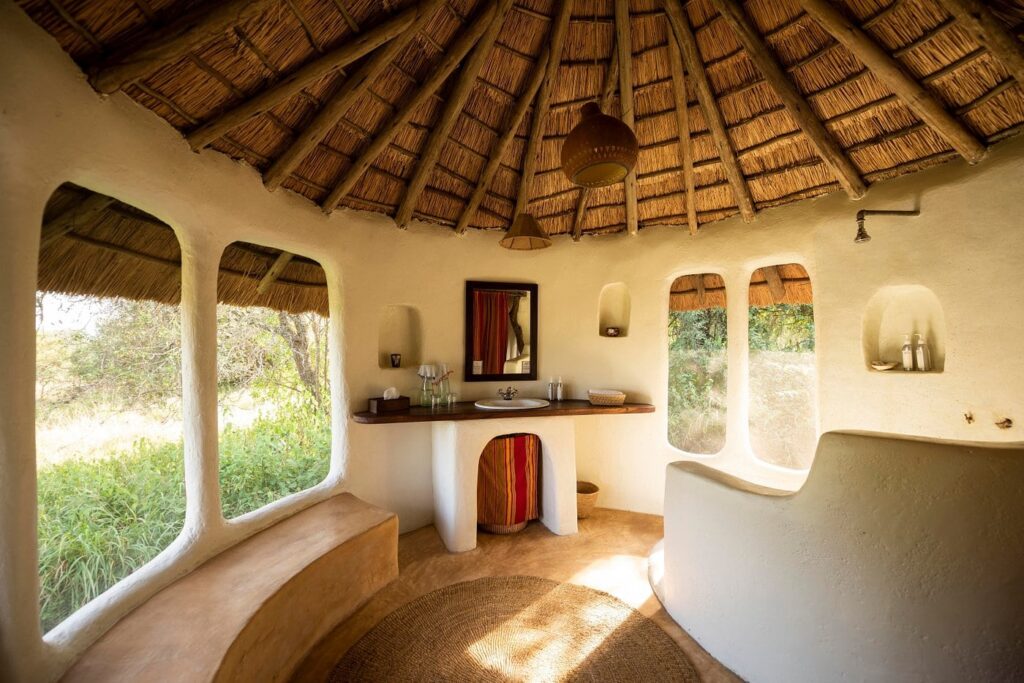
On the shores of Lake Mburo National Park, Mihingo’s thatched cottages use locally sourced materials throughout, and solar energy powers the entire property. The lodge actively participates in conserving the park’s giraffe, zebra, and other wildlife through direct habitat protection programs, extending its sustainability commitment beyond the property’s own footprint into the wider park ecosystem.
Clouds Mountain Gorilla Lodge, Uganda
Dramatically positioned on the edge of Bwindi Impenetrable National Park, Clouds harnesses solar energy and employs advanced waste management systems. The lodge sources produce from nearby farms, reducing transport emissions, and invests directly in local education and health initiatives, making it a favorite among travelers specifically seeking luxury paired with tangible community purpose.
Magashi Camp and Ruzizi Tented Lodge, Rwanda
Within Akagera National Park, these properties emphasize solar power, local materials, and community benefit alongside their Big Five safari access, extending Rwanda’s broader eco-lodge standard beyond the country’s gorilla-trekking parks into its savanna safari destination as well.
What to Ask Before Booking
Given the variation in sustainability practice, a handful of direct questions help distinguish substantively eco-friendly lodges from those using the label loosely: does the lodge use solar power with actual metering to track consumption, rather than simply claiming renewable energy use? What specific waste management systems exist beyond a general recycling bin? Can the lodge name specific, ongoing community partnerships or conservation contributions, rather than offering vague, general claims?
Lodge Tiers and Sustainability
Luxury eco-lodges combine elegance with sustainability, frequently featuring spacious cottages, private decks, and fine dining built around fresh, local ingredients, alongside solar energy and rainwater harvesting. Mid-range lodges balance comfort and affordability while maintaining responsible tourism practices, and budget eco-lodges, while offering simpler accommodation, frequently follow sustainable practices despite lower price points, proving that environmental commitment doesn’t require luxury-tier pricing to be authentic.
Rwanda’s Broader Eco-Lodge Standard
Rwanda’s eco-lodges generally use renewable energy like solar power, source food and materials locally, minimize single-use plastic waste, and support reforestation projects, sometimes allowing guests to directly plant trees as part of their stay. Profits from many of these properties support anti-poaching patrols, restore gorilla and other habitats, and fund community initiatives like schools and clean water access, often through established community trusts like SACOLA.
Comparing Eco-Lodges by Country
| Property | Country | Standout Practice |
| Singita Kwitonda Lodge | Rwanda | On-site Akarabo Nursery reforestation |
| Virunga Lodge | Rwanda | 100% solar power, full rainwater harvesting |
| One&Only Nyungwe House | Rwanda | Working tea plantation, organic garden |
| Sabyinyo Silverback Lodge | Rwanda | Community-owned via SACOLA trust |
| Mihingo Lodge | Uganda | Direct wildlife habitat protection programs |
| Clouds Mountain Gorilla Lodge | Uganda | Advanced waste management, local sourcing |
How Sustainable Lodges Handle Water Conservation
Beyond solar power, water conservation practices set committed eco-lodges apart from those making surface-level claims: rainwater harvesting systems that supply a meaningful share of daily water needs, greywater recycling for irrigation, and low-flow fixtures throughout guest accommodation. Given how many of these lodges sit in low-water-stressed regions, particularly around Volcanoes National Park’s high-altitude terrain, these practices carry real, measurable environmental significance beyond simply reducing utility costs.
Supporting Sustainable Lodges Through Your Own Behavior
Even at the most committed eco-lodge, individual guest behavior affects overall environmental impact: reusing towels rather than requesting daily replacement, being mindful of water use given many properties’ resource constraints, and asking staff directly about the lodge’s specific sustainability initiatives all reinforce the broader commitment these properties have made and help you make a more informed choice about where your accommodation spending goes.
Sustainable Lodges in Kenya and Tanzania Worth Knowing
For travelers extending their trip into Kenya or Tanzania, several properties there maintain comparably sustainable standards worth seeking: Kenya’s Segera Retreat integrates conservation research directly into its Laikipia setting, while Tanzania’s andBeyond properties across the Serengeti and Ngorongoro Crater consistently rank among the region’s strongest for verified environmental and community practices, extending the same principles covered here across a broader East African itinerary.
How to Verify Claims Once You’re Actually Staying
Beyond pre-booking research, many engaged travelers can verify a lodge’s sustainability claims directly during their stay: asking to see the solar installation, inquiring about the specific local farms supplying kitchen produce, or requesting a brief conversation with a staff member involved in the property’s community programs. Lodges committed to these practices welcome this kind of curiosity, while properties relying primarily on marketing language often struggle to provide specific, concrete answers when asked directly.
Frequently Asked Questions
Does Uganda have an official eco-certification system for lodges?
No, unlike Kenya and Tanzania, Uganda currently lacks a unified national eco-certification body. Sustainable Uganda lodges are identified through specific, verifiable practices rather than a single certification.
What questions should I ask to verify a lodge’s sustainability claims?
Ask whether solar power use is actually metered and tracked, what specific waste management systems exist beyond general recycling, and whether the lodge can name concrete, ongoing community or conservation partnerships.
Which Rwanda lodge is community-owned?
Sabyinyo Silverback Lodge, owned by the local community trust SACOLA, means that profits flow directly back into the surrounding population rather than to external investors.
Are budget-tier lodges ever eco-friendly?
Yes. Despite lower price points, many budget eco-lodges follow truly sustainable practices, proving environmental commitment doesn’t require luxury-tier pricing to be authentic.
What does ‘community investment’ really mean at these lodges?
It typically means local employment, sourcing food from nearby producers, and funding tangible development projects like schools, clean water access, or healthcare initiatives in communities surrounding the lodge.