Family-Friendly Safaris: Planning Trips with Children in East Africa; The single most important logistical fact for any family planning an East African safari with gorilla trekking in mind is the minimum age requirement, and it’s non-negotiable at every gorilla trekking destination in the region.
The minimum age is 15 years across Uganda, Rwanda, and the Democratic Republic of Congo, enforced without exception regardless of a child’s physical fitness, maturity, or how badly a parent wants to make it work. This guide covers that rule in full honesty, plus every rewarding alternative for younger family members.
The rule exists for real reasons beyond bureaucratic caution: gorillas share roughly 98 percent of human DNA, making disease transmission a risk, and the physically demanding, unpredictable forest terrain poses real safety considerations for younger children regardless of individual maturity.
The 15+ Rule, Enforced Without Exception
Rwanda’s enforcement reputation is well-earned: the Rwanda Development Board verifies age against passport birthdates at park entry gates, and no special permits or exceptions exist for younger children even accompanied by a parent. If your child’s 15th birthday falls during your trip window, schedule the trek for the day of the birthday or later, never the day before, since a ranger checking documentation at 7am doesn’t accept “basically 15” as sufficient.
Uganda’s Limited Flexibility
Uganda stands apart as the one country offering a documented, if limited, exception process. While the official minimum remains 15, the Uganda Wildlife Authority can grant case-by-case exceptions for mature children aged 13 or 14 who are physically fit and emotionally prepared, requiring a formal written request outlining the child’s specific readiness, submitted well ahead of the planned trek date. This makes Uganda the more flexible destination for families with a mature young teenager close to, but not quite at, the standard age threshold, though approval is never guaranteed and shouldn’t be assumed when planning your itinerary.
Why the Financial Stakes Matter Here
Given permit costs of $800 in Uganda and $1,500 in Rwanda, and strict refund policies, arriving at the park with an underage child, incomplete documentation, or any other disqualifying issue can mean losing the full permit cost entirely. Verifying every trekking family member’s age against their passport well before booking, rather than assuming everything will work out on the day, is a essential planning step.
What Younger Children Can Do Instead
Golden monkey trekking in Mgahinga Gorilla National Park carries no official age restriction, offering a rewarding primate encounter for younger family members left out of the gorilla trek itself. Guided nature walks, cultural village visits, boat cruises on the Nile or Kazinga Channel, and classic game drives in Murchison Falls, Queen Elizabeth, or Akagera National Parks all deliver wildlife excitement without any age barrier whatsoever, meaning younger children don’t need to sit out the safari entirely while older siblings or parents trek.
Several lodges near Bwindi and Volcanoes National Park offer babysitting services or dedicated guided children’s activities specifically designed to occupy younger family members while other relatives are off trekking, letting the whole family enjoy a meaningful trip despite the age split.
Structuring a Mixed-Age Family Itinerary
For families with children both above and below the 15-year threshold, a well-balanced itinerary splits activities deliberately: older teenagers and adults tackle gorilla trekking on a given morning while younger children join a lodge-arranged nature walk or cultural activity, reuniting for an afternoon game drive or boat cruise everyone can enjoy together. This structure avoids either forcing younger children to sit idle at the lodge or excluding older family members from the trip’s headline experience.
An Alternative Framing: Save Gorillas for a Future Trip
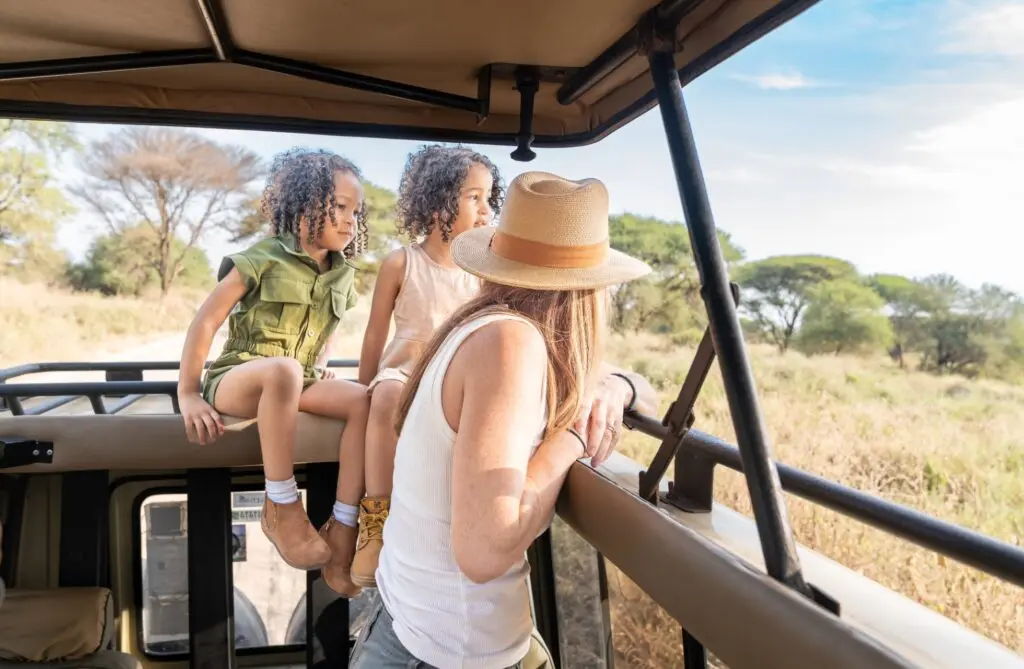
For families with children considerably younger than 15, one sound approach is simply building this trip around Tanzania’s classic Serengeti and Ngorongoro Crater safari circuit, or Uganda’s chimpanzee tracking in Kibale, which carries no minimum age restriction, and treating gorilla trekking as something to look forward to on a future family trip once the youngest children reach the required age.
A week spent across the Serengeti and Ngorongoro, extended with Kibale chimp tracking, holds its own against nearly any African family travel experience, with gorillas becoming a deliberate, anticipated highlight of a later visit rather than a missed opportunity on this one.
Family-Friendly Destinations at a Glance
| Destination | Minimum Age | Best For |
| Gorilla trekking (Uganda/Rwanda) | 15 (Uganda: rare case-by-case exception at 13-14) | Teenagers and adults |
| Golden monkey trekking (Mgahinga) | No official restriction | Younger children alongside older trekkers |
| Chimpanzee tracking (Kibale, Nyungwe) | Generally 12+ (varies by operator) | Older children and teens |
| Game drives (Murchison, QE, Akagera) | No restriction | All ages |
| Boat cruises (Nile, Kazinga Channel) | No restriction | All ages, low-exertion |
Health Preparation Specific to Children
Malaria prophylaxis for children requires specific, weight-based dosing that differs from standard adult guidance, making a dedicated pediatric travel clinic consultation essential rather than optional. Confirm your chosen medication suits your child’s specific age and weight well ahead of departure, since some common adult antimalarials aren’t appropriate for younger children, and comprehensive family travel insurance with medical evacuation coverage matters considerably given how remote many safari lodges sit from pediatric-level hospital care.
The Single Most Important Planning Principle
Across every family itinerary, building in downtime, a relaxed lodge morning, an unhurried boat cruise, and a slow pool afternoon between more active game drives and treks consistently produces happier children and considerably more relaxed parents than an over-scheduled itinerary trying to fit in everything at once. Involving children directly in the planning process, letting them choose one specific animal or activity they’re most excited about, increases their engagement and sense of ownership over the trip.
Choosing Family-Friendly Lodges
Beyond the activities themselves, a growing number of lodges across both countries have specifically invested in family-oriented infrastructure: interconnecting family rooms or suites, dedicated kids’ clubs, and flexible meal timing that accommodates children’s schedules rather than a strict, formal dinner seating. Asking directly about a specific property’s family track record, rather than assuming any lodge automatically accommodates children well, helps match your family to the right base for your trip.
Multi-Generational Trips
Families spanning grandparents through teenagers benefit from a private vehicle and guide arrangement rather than a shared group safari, allowing daily pacing to flex around whichever family member needs it most on a given day.
Lodges offering multi-bedroom family suites or interconnecting rooms, increasingly common across both countries, make multi-generational logistics considerably easier than coordinating separate standard rooms across a large family group.
Preparing Children for the Physical and Emotional Experience
For teenagers old enough to trek, setting realistic expectations beforehand, discussing the physical demands, the possibility of a longer-than-expected hike, and the strict rules around distance and quiet observation helps ensure that the actual experience matches their expectations and does not leave them feeling surprised mid-trek.
Watching age-appropriate documentaries about gorilla conservation together before the trip can also build excitement and context, transforming the encounter from a novelty into something considerably more meaningful.
Frequently Asked Questions
Is there any way for a 12-year-old to go gorilla trekking?
No, not in Rwanda, which enforces the 15-year minimum without any exception. Uganda offers a limited case-by-case exception process for mature 13- or 14-year-olds, requiring a formal written request to the Uganda Wildlife Authority.
What can younger children do while older family members go gorilla trekking?
Golden monkey trekking (no age restriction), guided nature walks, cultural village visits, boat cruises, and game drives all offer wildlife experiences, and several lodges near Bwindi and Volcanoes National Park provide babysitting or guided children’s activities.
Why is the gorilla trekking age limit set at 15?
The rule protects gorillas from disease transmission, given their close genetic relationship to humans, and reflects the physical and safety demands of steep, unpredictable forest terrain that younger children may not be prepared to handle safely.
Can I get a refund if my child is denied entry for being underage?
Refund policies are strict, and arriving with an underage or improperly documented child can mean losing the full, non-refundable permit cost. Verifying ages against passports before booking is essential.
What is a better alternative to an East Africa family trip if my children are too young for gorilla trekking?
A Tanzania Serengeti and Ngorongoro Crater safari, or Uganda’s chimpanzee tracking in Kibale (no minimum age), both deliver a rewarding family trip, with gorilla trekking saved as a highlight for a future visit.