Is Gorilla Trekking Worth It? Cost vs. Experience Breakdown: You could buy a new phone. You could book a week at a beach resort. Or you could spend sixty minutes face-to-face with a wild mountain gorilla, one of roughly 1,063 remaining anywhere on earth.
The real question isn’t whether gorilla trekking is expensive; it really is. It’s whether the experience justifies that price. This guide breaks down exactly what your permit fee covers, your realistic odds of success, and, honestly, who this experience really isn’t right for.
In 2026, a Uganda gorilla permit costs $800; Rwanda’s costs $1,500. Both grant a single hour with a habituated family, and understanding what stands behind that price tag, rather than treating it as an arbitrary luxury surcharge, changes how the cost feels once you’re standing in front of a silverback.
What Your Permit Fee Actually Funds
The permit price isn’t primarily about profit; it’s a deliberate conservation mechanism. High fees limit visitor numbers while generating enough revenue to fund ranger salaries, anti-poaching patrols, habituation research, and community development programs in the areas surrounding the parks.
Before any gorilla family can receive tourists, they undergo a multi-year habituation process, researchers and rangers visiting daily, gradually earning the animals’ trust through patient, sustained presence.
This funding model has produced one of conservation’s rare successes: mountain gorillas are the only great ape subspecies whose population is currently increasing rather than declining, a direct result of tourism revenue making these animals more economically valuable alive and protected than they would be to poachers or land developers.
Your Realistic Odds of Success
Sighting success rates across both Uganda and Rwanda sit between 95 and 99 percent, with several operators reporting figures close to 100 percent. This dramatically outperforms most wildlife encounters in Africa, where sightings largely depend on luck and unpredictable movement patterns.
The near-certainty comes from the daily tracking system itself: ranger teams locate each habituated family every single morning before trekkers even arrive at park headquarters, meaning your guide already knows roughly where the gorillas are before your trek even begins.
What an Hour With Gorillas Actually Feels Like
Unlike most safari wildlife, which keeps a wary distance from vehicles, habituated gorillas continue feeding, grooming, and interacting naturally while visitors observe quietly nearby, often just a few meters away. Sharing roughly 98 percent of their DNA with humans, gorillas display expressions, gestures, and social dynamics that feel strikinglyy, sometimes unsettlingly familiar, and many travelers who’ve experienced the Great Migration, whale watching, and countless other wildlife encounters still rank this specific hour as their single most memorable.
The Honest Case Against Trekking
This experience isn’t for everyone, and it’s more important to be upfront than to sell every traveler on it regardless of fit. Skip gorilla trekking if you expect a guaranteed effortless hike; treks range from one to eight hours through steep, muddy terrain at altitudes up to 3,000 metres.
Skip it if you’re physically unable to handle sustained climbing, dense vegetation, and unpredictable weather, or if you have severe underlying health conditions where the exertion and altitude could pose a risk.
Skip it too if you’re expecting a zoo-like guaranteed sighting on your own terms; these are wild animals in a forest habitat, and while success rates are extraordinarily high, the experience unfolds on the gorillas’ schedule, not yours. And skip it if you’re purely price-shopping without valuing the conservation impact; a standard game drive in Kruger or the Serengeti will deliver considerably more wildlife variety per dollar spent, just not this specific, singular encounter.
Uganda’s Extended Habituation Experience
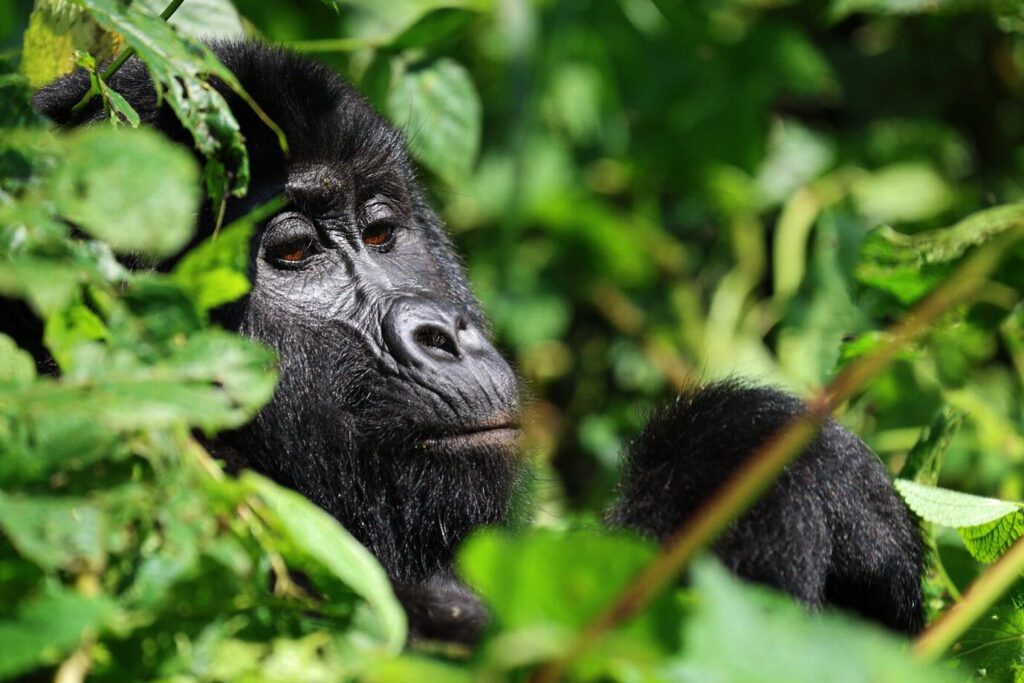
Uganda offers a distinct option for travelers who want to test whether the standard hour of gyration satisfies them before committing further: a four-hour gorilla habituation experience. This experience, priced at $1,500, allows travelers to accompany researchers and spend considerably longer with a family still in the process of becoming accustomed to human presence.
This experience delivers a rawer, more immersive version of the standard trek, which is worth the premium for photographers, researchers, or travelers who simply want more time absorbing gorilla behavior rather than a strictly timed encounter.
Comparing the Cost to Other Bucket-List Wildlife Experiences
| Experience | Approx. Cost | Duration |
| Gorilla trekking (Uganda) | $800 | 1 hour with gorillas |
| Gorilla trekking (Rwanda) | $1,500 | 1 hour with gorillas |
| Habituation Experience (Uganda) | $1,500 | Up to 4 hours |
| Great Migration balloon safari | $450-600 | ~1-hour flight |
| Standard game drive (per day) | $150-400 (varies by lodge) | Full day, multiple sightings |
Beyond the Hour: What the Full Trip Costs
The permit price alone doesn’t tell the full story. Factor in accommodation, typically $150 to $900 or more per night depending on lodge tier, transport, guide and porter tips, and any additional activities, before arriving at your total trip cost. Most travelers spend considerably more on the surrounding trip than on the permit itself, meaning the permit’s headline price, while significant, represents only part of the overall investment.
The Verdict: Is It Worth It?
For most travelers with the physical capacity and interest in wildlife and conservation, yes, gorilla trekking delivers value that few other experiences on earth can match. It’s not luxurious, it’s not comfortable, and it’s costly by any measure. What it offers instead is something considerably rarer: a real, unmediated connection with one of the world’s most endangered great apes, made possible specifically because your fee funds the protection that makes that connection sustainable for future travelers as well.
What Past Trekkers Consistently Say Afterward
Speaking with travelers after their trek, a very consistent theme emerges: almost none describe the permit cost as their lingering memory. Instead, they describe specific, small moments: a young gorilla tumbling playfully near its mother, a silverback’s calm, direct eye contact, and the sound of the group feeding quietly around them.
This pattern shows that financial anxiety beforehand almost entirely gives way to emotional impact afterward, which is precisely why so many operators and past guests alike describe gorilla trekking as one of travel’s rare experiences where the anticipated cost concern rarely survives contact with the actual encounter.
A Final Practical Note on Timing Your Decision
Given the non-refundable nature of most permit payments and the months-long booking lead time required for popular dates, deciding whether gorilla trekking is right for you well before committing financially matters more here than for most travel purchases.
Reading honest reviews, understanding the physical demands covered elsewhere in this guide series, and confirming your motivation, conservation interest, bucket-list achievement, or simply curiosity helps ensure the considerable investment feels worthwhile once you’re standing in the forest rather than being second-guessed mid-trek.
Comparing the Investment to a Broader Life Perspective
For context, many travelers who’ve hesitated over the permit price eventually frame it against other major life purchases or experiences, such as a significant anniversary trip, a milestone birthday celebration, or a once-a-decade splurge, rather than comparing it to a typical vacation activity. Viewed this way, the rarity of the experience—fewer than 1,100 mountain gorillas exist anywhere on earth—and this permit is the only way to encounter them in the wild—reframes the cost discussion considerably for most travelers who ultimately decide to go.
Frequently Asked Questions
What are my actual odds of seeing gorillas once I book a permit?
Between 95 and 99 percent across both Uganda and Rwanda, with several operators reporting success rates close to 100 percent, thanks to daily ranger tracking that locates each family before trekkers even set out.
Why does Rwanda’s permit cost nearly double Uganda’s?
Rwanda has deliberately positioned gorilla trekking as a high-value, low-volume conservation experience, using the higher price to limit visitor numbers while generating stronger per-trekker conservation revenue.
Who should NOT do gorilla trekking?
Travelers expecting a guaranteed easy hike, those with severe health conditions affected by exertion or altitude, anyone wanting a zoo-like guaranteed sighting on their schedule, and purely price-conscious travelers uninterested in the conservation dimension.
Is the four-hour habituation experience worth the extra cost?
For photographers, researchers, or travelers specifically wanting more immersive time with gorillas, yes. It costs the same as Rwanda’s standard permit but delivers up to four hours rather than one.
Does my permit fee really go toward conservation?
Yes. Permit revenue funds ranger salaries, anti-poaching patrols, habituation research, and community development, a funding model directly credited with mountain gorillas being the only great ape subspecies with a currently growing population.