Kyambura Gorge
Kyambura Gorge sits in the eastern sector of Queen Elizabeth National Park, part of the wider 156 square-kilometer Kyambura Game Reserve established in 1965 as a buffer zone protecting the gorge’s unique ecology, and it stretches roughly one kilometer in length.
How the Gorge Got Its Name
The name Kyambura carries a genuinely evocative local legend behind it. According to the story, the river running through the gorge had no name until a major flood swept through the valley, carrying away local villagers’ property and belongings.
When the floodwaters subsided, residents searched for their lost possessions for days, eventually returning empty-handed and declaring “Kyambura”, meaning “I cannot see it” or “it has got lost” in the local language. The name stuck, attached first to the river and eventually to the gorge and surrounding game reserve as a whole.
How the Gorge Was Actually Formed
Geologically, no single explanation fully accounts for Kyambura’s formation, and several theories exist alongside one another. The most commonly cited explanation ties the gorge directly to the wider East African Rift Valley’s formation, tension within the earth’s crust caused sections of land to lift on either side, creating a broad valley, with secondary faulting subsequently carving smaller features like Kyambura within that larger system.
A complementary theory credits persistent erosion from the Kyambura River itself, which over thousands of years cut progressively deeper into the land, eventually creating conditions that allowed dense tropical vegetation to take hold in the resulting sheltered valley.
Whichever explanation you find most compelling, the practical result is the same: a genuinely sheltered, fertile microclimate protected from direct sun by tall canopy trees, allowing rainforest vegetation to flourish in a pocket completely surrounded by open savanna.
The Chimpanzees:
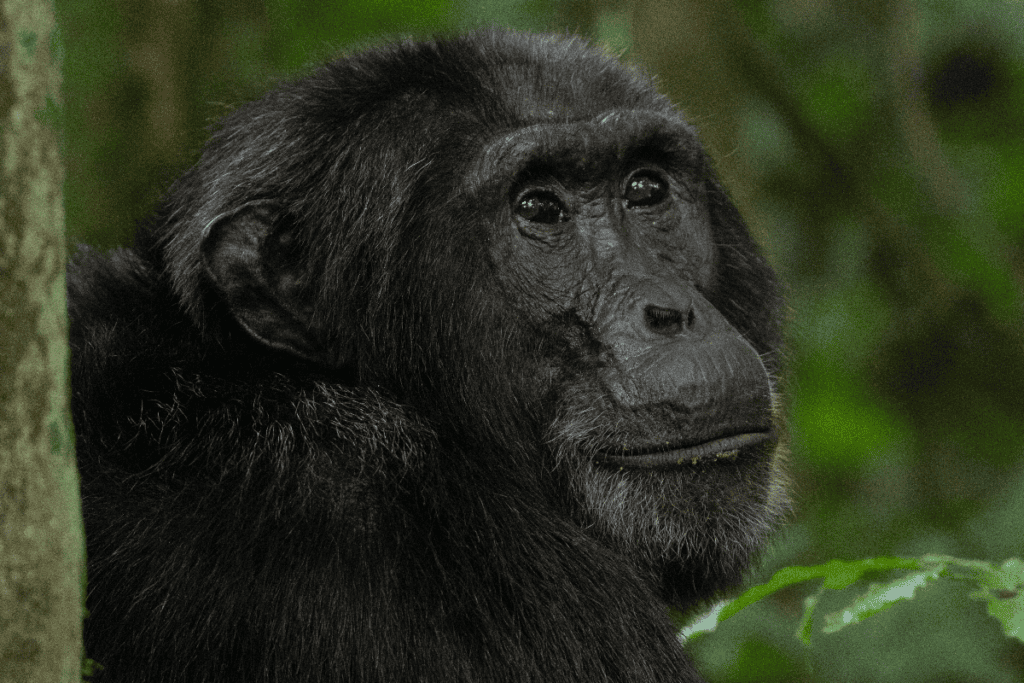
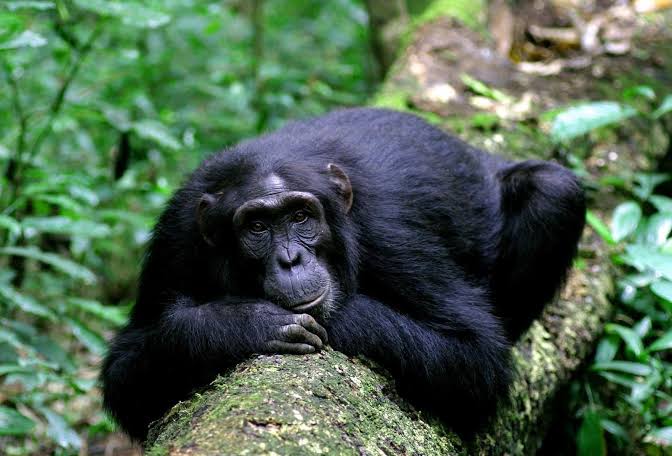
Kyambura’s chimpanzee community numbers no more than roughly 20 individuals, genuinely one of the smaller habituated chimp populations found anywhere in Uganda, considerably fewer than Kibale’s roughly 1,500 or even Budongo’s 800-plus.
Despite this modest number, the gorge remains the only location within Queen Elizabeth National Park where chimpanzees can be tracked, earning it the enduring nickname “Valley of the Apes,” and sighting success, while genuinely not guaranteed given the smaller community size, remains a worthwhile pursuit for travelers already in the park for other activities.
Chimpanzee trekking permits at Kyambura cost $100 for foreign non-residents and $80 for foreign residents in 2026, with East African citizens paying UGX 50,000, considerably less than Kibale’s equivalent $250 permit, reflecting both the smaller chimp population and the gorge’s status as a secondary rather than primary chimp-trekking destination.
Only 16 permits are issued daily across two sessions, morning and afternoon, making advance booking genuinely worthwhile despite the more modest permit price.
What a Trek Involves
Trekking begins with a briefing at the visitors’ centre near the gorge entrance, typically around 8:00am for the morning session, before descending into the gorge itself along established forest trails. The total activity, including the descent, time spent with the chimpanzees, and the return climb, takes approximately two to three hours, considerably shorter than a standard Kibale trek, reflecting the gorge’s smaller overall size.
Beyond chimpanzees, trekkers regularly encounter black-and-white colobus monkeys, olive baboon, blue monkey, and vervet monkey, alongside elephant, hyena, buffalo, bushbuck, and, along the river itself, hippo. The forest’s fruit trees and dense understorey support genuinely rich smaller fauna throughout, adding depth to a trek even on days when the chimpanzees themselves prove elusive.
Guided Nature Walks:
Beyond dedicated chimp trekking, Kyambura offers guided nature walks that can be booked either alongside a chimp trek or entirely independently, a genuinely worthwhile option for travelers wanting the gorge’s visual and climatic drama without necessarily needing to secure a chimp permit.
These walks run in morning and afternoon sessions with groups limited to just four people per session, ensuring a genuinely intimate, low-impact experience, and guides use the walk to explain the valley’s formation, its wildlife, and the broader ecological significance of this genuinely unusual landscape feature.
Birding at Kyambura
The gorge’s riparian vegetation supports a genuinely productive birding environment, with species including the papyrus canary, white-winged warbler, blue-headed bee-eater, and multiple forest kingfisher species recorded along the river corridor. Combined with the chimp trekking and nature walk options, this makes Kyambura a worthwhile half-day addition even for travelers whose primary Queen Elizabeth focus lies elsewhere in the park.
Connecting to the Kazinga Channel
A long stretch of lush swamp physically connects Kyambura Gorge to the Kazinga Channel, meaning the booming calls of hippo from the channel itself can sometimes be heard carrying across from the gorge’s own vantage points, a small but genuinely evocative detail linking two of the park’s signature attractions even though they’re typically visited as separate activities.
Combining Kyambura With the Rest of Queen Elizabeth national park
Kyambura Gorge sits roughly 25 kilometres from the Mweya Peninsula, where the Kazinga Channel boat cruise departs, meaning the two activities can genuinely be combined within a single, well-organized day: chimp trekking or a nature walk in the forested gorge during the cooler morning hours, followed by an afternoon game drive on the open Kasenyi Plains or the Kazinga Channel cruise itself.
This combination gives visitors a genuinely varied cross-section of Queen Elizabeth’s habitat diversity, forest, wetland, and savanna, within a single day.
Best Time to Visit
Kyambura is accessible year-round, though the dry seasons, June through September and December through February, offer firmer trail conditions for the descent and climb back out of the gorge, a genuinely steep, occasionally slippery route during the wetter months. Given the gorge’s modest size and shorter overall trekking time compared with Kibale, timing here matters somewhat less than at Uganda’s larger primate destinations.
Frequently Asked Questions
What does the name Kyambura mean?
“I cannot see it” or “it has got lost,” according to local legend, after a great flood swept away villagers’ property and they searched in vain for their belongings.
How many chimpanzees live in Kyambura Gorge?
Roughly 20 individuals, one of Uganda’s smaller habituated chimpanzee communities, considerably fewer than Kibale’s approximately 1,500 or Budongo’s 800-plus.
How much does chimpanzee trekking cost at Kyambura Gorge?
$100 for foreign non-residents and $80 for foreign residents in 2026, with only 16 permits issued daily across morning and afternoon sessions.
How is Kyambura Gorge different from a standard chimp trek at Kibale?
It’s considerably shorter, roughly two to three hours total including descent and return, reflecting the gorge’s smaller overall size, and the smaller chimp population means sighting success, while good, isn’t quite as reliably guaranteed as at Kibale.
Can I visit Kyambura Gorge without a chimp trekking permit?
Yes. Guided nature walks are available separately, run in small groups of up to four people, offering the gorge’s dramatic scenery and general wildlife without requiring a dedicated chimp permit.