What Happens During a Gorilla Encounter? Rules and Behavior
The rules governing your gorilla encounter aren’t there to protect you from gorillas, they’re there to protect gorillas from you. That framing changes everything about how to understand gorilla trekking etiquette. Mountain gorillas share roughly 98 percent of human DNA, making them vulnerable to human diseases, and every regulation traces back to protecting a species that numbered just 254 individuals in 1981.
This guide covers exactly what happens once you find the family, the specific rules, and how to understand gorilla behavior without fear distorting the experience.
The actual experience of a habituated gorilla trek is one of the calmest hours you’ll spend in a wild place. The protocol is clear, the rangers are experienced, and the gorilla family isn’t particularly interested in you.
The Core Rules, By Country
Minimum viewing distance differs slightly between countries: Uganda requires 10 meters, while Rwanda requires 7 meters. Both countries share a strict, non-negotiable one-hour viewing limit once you locate the family, a ban on flash photography, a maximum group size of eight visitors, and a requirement that anyone showing symptoms of illness stay behind at the lodge rather than risk transmitting disease to the gorillas.
These rules apply regardless of how docile or curious a specific gorilla appears in the moment. Rangers enforce them consistently, and violating them, particularly using flash photography, can result in your visit being terminated immediately without refund.
What Actually Happens Once You Find the Family
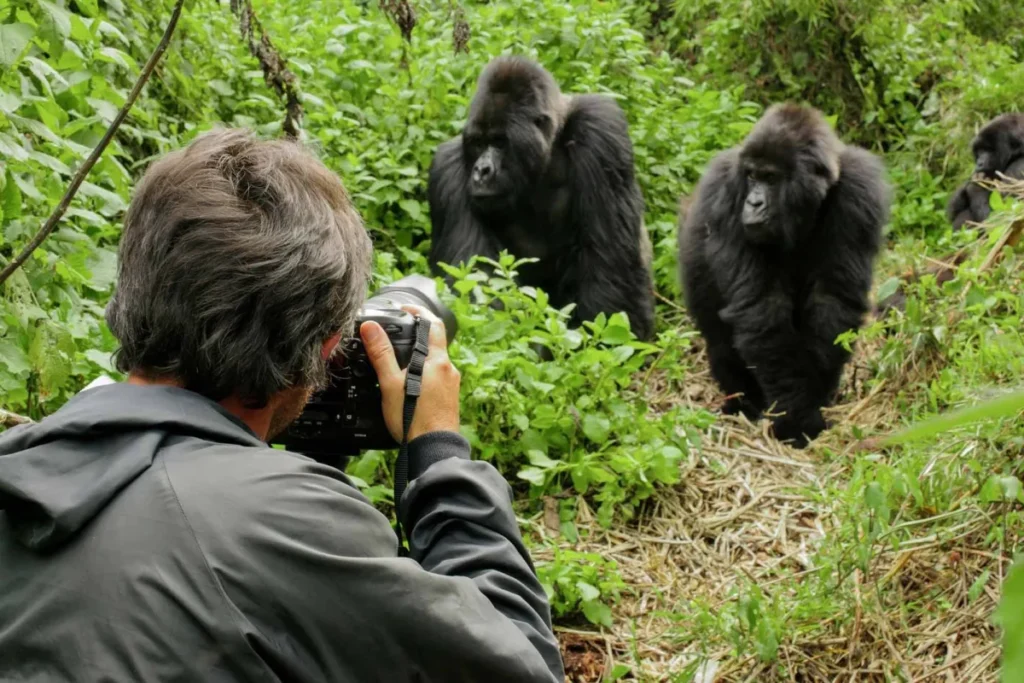
Once trackers locate the family and your group arrives, you’ll spend exactly one hour observing them at the mandated distance. During this hour, you’ll typically witness a cross-section of gorilla family life: mothers nursing infants, juveniles play-wrestling or tumbling through the undergrowth, adults feeding steadily on vegetation, and, occasionally, a silverback delivering a chest-beating display. The overall atmosphere is deliberately quiet and respectful, guides keep the group’s voices low and movements slow throughout.
Understanding a Silverback’s Chest-Beating Display
A chest-beating or short charging display from the dominant silverback is a normal part of gorilla communication, not evidence of aggression. Silverbacks bear primary responsibility for protecting the family group, making them considerably more likely than females, juveniles, or blackbacks to perform these warning displays. The behavior functions as a calculated gesture to control distance and reassert authority, responding to perceived disturbance, rather than a attempt to attack.
These moments, however dramatic they feel in person, often become the most memorable, talked-about part of a trek, and they offer insight into the social structure and communication systems that define mountain gorilla family life.
What to Do If a Gorilla Approaches or Charges
If a gorilla, often a curious juvenile, approaches closer than the mandated distance, your ranger will calmly instruct the group to crouch down and look toward the ground, a submission posture that defuses tension. Staying quiet matters considerably here, since sudden noises can escalate the situation. If a silverback performs a bluff charge, the same protocol applies: avoid direct eye contact, remain still, and follow your ranger’s specific instructions rather than reacting independently.
Documented serious attacks on humans during regulated gorilla trekking are exceedingly rare, with rangers reporting they haven’t had to fire a weapon at a habituated gorilla in living memory. The rifles rangers carry exist for threats like poachers or buffalo, not the habituated gorilla families themselves.
Why the Distance Rule Sometimes Gets Broken, Honestly
It’s worth being honest that research studying real trekking encounters has found the mandated distance rule violated in the significant majority of observed treks, often because gorillas themselves choose to approach closer than the rule specifies, rather than trekkers deliberately closing the gap. When this happens, the responsibility for maintaining appropriate distance and managing the encounter safely falls to your ranger, who will actively reposition the group as needed rather than allowing an extended close encounter to continue unmanaged.
Prohibited Behaviors During the Encounter
Beyond distance and flash photography, visitors are prohibited from eating, drinking, or smoking during the encounter itself, and drone usage is banned in every gorilla trekking park given the noise disturbance and visual threat an unfamiliar flying object can represent to both gorillas and other wildlife. Direct physical contact with the gorillas is never permitted under any circumstances, regardless of how closely a curious individual might approach.
Health Screening Before Your Trek
Rangers conduct a brief health screening before every trek begins, and travelers showing symptoms of a cold, flu, or other contagious illness may be asked to sit out that day’s trek entirely, serious precaution given the disease-transmission risk gorillas face from human illness. Informing your guide honestly about any symptoms, rather than hoping they’ll go unnoticed, protects the gorilla family your group is about to encounter.
The Emotional Experience, Honestly Described
Most travelers describe the hour as silent, respectful, and emotional, often citing it as the closest humans come to encountering another intelligent species in the wild. The combination of the gorillas’ evident intelligence, their expressive faces and social behavior, and the sheer privilege of witnessing this in their natural habitat rather than captivity produces a response many trekkers describe as life-changing, regardless of whether their specific encounter included dramatic silverback displays or simply quiet, peaceful observation.
After the Hour Ends
When your ranger signals the hour has concluded, your group departs the same way you arrived, quietly and without lingering. You’ll receive a certificate of participation back at park headquarters, and most groups return to their lodge for lunch and a period of quiet reflection on what they’ve just witnessed.
Quick-Reference Encounter Rules
| Rule | Detail |
| Minimum distance | 10m (Uganda), 7m (Rwanda) |
| Viewing time | Strictly 1 hour once family is located |
| Group size | Maximum 8 visitors per family |
| Flash photography | Strictly banned; can end your visit |
| Drones | Banned in all gorilla trekking parks |
| If a gorilla approaches | Crouch, look down, stay quiet, follow ranger instructions. |
| Illness policy | Stay behind if showing any symptoms. |
What Rangers Are Watching For Throughout the Hour
Beyond simply enforcing distance and behavior rules, rangers continuously monitor the gorilla family’s own stress indicators throughout your visit, subtle shifts in vocalization, body posture, or feeding patterns that might signal discomfort. If a ranger senses the family is becoming stressed, they may shorten the encounter or reposition the group entirely, a judgment call made in the gorillas’ interest rather than simply following a rigid checklist.
The Role of Trackers Before You Arrive
The calm, controlled encounter you experience owes considerably to work that happens before your group even sets out. Trackers depart at dawn, often hours ahead of trekking groups, following signs from the previous evening’s nest sites to locate the family’s current position. This advance work means your ranger already has a strong sense of where the family is and how they’re behaving that morning, allowing the actual encounter to unfold with calm and predictability rather than a chaotic, uncertain search.
How Encounters Differ Between Individual Gorilla Families
Every habituated family carries its own personality, shaped by its specific dominant silverback and the individual dynamics within the group. Some families are known among rangers for being more relaxed and settled, delivering calm, close observation throughout the hour, while others, particularly younger or more recently habituated groups, may remain somewhat more active and mobile, requiring the group to reposition once or twice during the visit.
Neither type of encounter is objectively better; they are simply different, and rangers who work with specific families daily develop , detailed knowledge of each group’s typical behavior patterns.
What Makes the Habituation Experience Different
For travelers who’ve opted for Uganda’s extended four-hour Habituation Experience rather than the standard hour, the encounter itself unfolds with a different rhythm and purpose. Rather than a fixed, timed observation period, the extended visit involves accompanying researchers actively working through the habituation process itself, observing behavioral research in progress rather than simply a longer version of the standard viewing. This distinction matters for setting the right expectations: the habituation experience rewards patience and a interest in gorilla behavioral science over a purely photographic encounter.
Frequently Asked Questions
What should I do if a silverback charges during the encounter?
Follow your ranger’s instructions immediately: crouch down, look toward the ground in a submission posture, remain still, and avoid direct eye contact. Most charges are bluff displays rather than attacks.
Why is the minimum distance different in Uganda versus Rwanda?
Uganda requires 10 meters, while Rwanda requires 7 meters, reflecting each country’s own specific park authority guidelines, both designed around the same core goal of minimizing disease transmission risk.
What happens if I accidentally use flash photography?
This is taken seriously. Rangers may terminate your visit immediately without refund, since flash can startle gorillas and provoke defensive behavior from silverbacks.
Are gorilla attacks on trekkers common?
No, exceedingly rare. Documented serious attacks during regulated gorilla trekking are exceptionally uncommon, and rangers report not having had to use a firearm against a habituated gorilla in living memory.
Can I bring a drone to photograph the gorillas from above?
No, drones are banned in every gorilla trekking park in both Uganda and Rwanda, given the noise disturbance and potential for provoking panic or aggressive responses in the gorillas.