Dian Fossey Tomb Trail: History & Conservation in Volcanoes National Park
Dian Fossey spent nearly two decades studying mountain gorillas at close range, work that fundamentally reshaped global understanding of the species and directly prevented what many conservationists believe would otherwise have been their extinction.
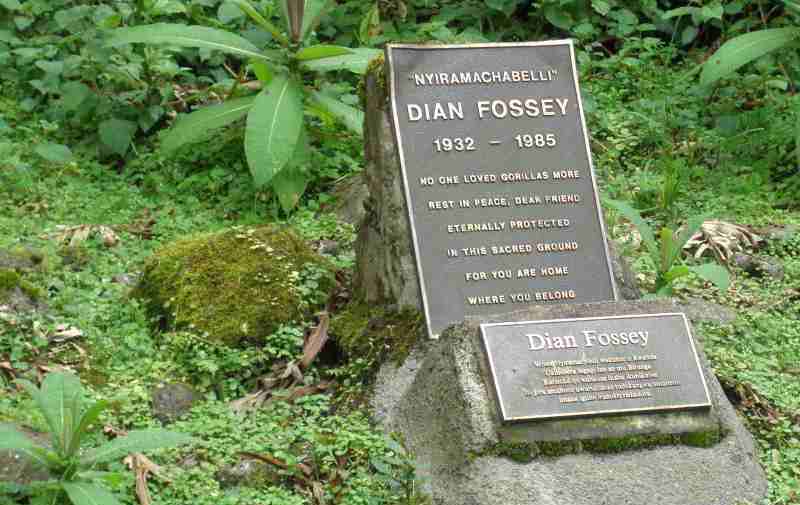
She was murdered in her own cabin on 26 December 1985, a crime that remains officially unsolved to this day, and she was buried at her research station beside Digit, the gorilla whose killing by poachers had pushed her toward the more aggressive anti-poaching stance that many believe ultimately cost her life. This guide covers the hike to her grave in detail and how it honestly compares to standard gorilla trekking.
The trail leads to the former site of the Karisoke Research Centre, positioned between Mount Bisoke and Mount Karisimbi within Volcanoes National Park, the research base Fossey established in 1967 after political instability forced her relocation from an earlier research site in the Democratic Republic of Congo.
Who Dian Fossey Was, and Why She Matters
Born in 1932, Fossey became one of the twentieth century’s most consequential primatologists, spending roughly eighteen years studying mountain gorillas in their natural Virunga habitat, first attempting a base in Congo before relocating to Rwanda in 1967 to establish the Karisoke Research Centre.
She earned a PhD in zoology from Cambridge in 1974, and her work fundamentally established how humans could safely habituate wild gorillas to close observation, learning their body language and gradually winning their acceptance through patient, sustained presence rather than force.
Fossey’s advocacy against poaching grew aggressive over the years, particularly following the killing of Digit, a gorilla she had formed an especially close bond with, and this stance made her real, dangerous enemies among individuals whose interests depended on continued poaching. Most conservationists believe her murder was a direct consequence of this anti-poaching work, though no one has ever been convicted of the crime.

The Grave and the Gorilla Cemetery
Fossey was buried at the Karisoke research site itself, deliberately placed beside Digit’s own grave, and the surrounding cemetery holds roughly twenty further mountain gorillas, animals either killed by poachers or lost to natural causes during her research years and since. Standing at this site, where the boundary between human and animal loss blurs, consistently ranks among visitors’ most emotionally affecting experiences anywhere in Volcanoes National Park, a profound combination of tragedy and conservation triumph.
Permit Cost:
A Dian Fossey tomb hike permit costs $75 for foreign non-residents, $65 for foreign residents in the wider East African region, $60 for foreign residents specifically, $55 for East African Community citizens, and 4,000 Rwandan francs for Rwandan nationals, all-inclusive of park entrance and ranger escort. A portion of this fee channels directly into ongoing gorilla conservation work, meaning the hike itself contributes tangibly to the same cause Fossey dedicated her life to.
The key, honest distinction from standard gorilla trekking: a $1,500 gorilla permit guarantees a full hour with a habituated family, while the Dian Fossey hike is primarily a historical and scenic trek, with any gorilla sighting along the way considered a bonus rather than a guaranteed outcome.
What the Hike Actually Involves
The trek typically takes two to three hours to reach the grave site, with rest stops built in for snacks and water, followed by a somewhat shorter one-to-two-hour descent back to the trailhead. Along the way, hikers pass through Virunga forest terrain, with real opportunities to spot birds, golden monkeys, forest elephants, buffalo, and antelope, alongside sweeping views across the wider park as elevation increases.
At the site itself, visitors see the location where Fossey’s original cabin stood and where she was murdered, before being led to the grave itself, positioned among the broader gorilla cemetery. It’s worth noting that the modern, active Karisoke Research Center, continuing Fossey’s work today, operates from a separate facility outside the park boundary and isn’t included as part of this specific hike.
Why This Makes a Strong Complementary Activity
The Dian Fossey hike works particularly well for travelers who’ve already completed a standard gorilla trek and want a lower-cost, less physically demanding way to spend an additional day in Volcanoes National Park, or for those wanting to understand the conservation history behind the gorilla trekking experience they’re about to have.
Many operators specifically recommend doing this hike the day before a scheduled gorilla trek, giving historical and emotional context that deepens the following day’s encounter with living gorilla families.
Is It Appropriate for Younger Travelers?
The minimum age for this hike matches every other Volcanoes National Park activity, 15 years old, and it’s worth knowing that Fossey’s story, her murder and the broader anti-poaching themes running through her work, can feel heavy for younger visitors. Many travelers report the experience as moving rather than distressing, particularly standing at the grave and gorilla cemetery, but going in with realistic expectations about the emotional weight of the site is worth setting for anyone considering the hike.
Booking
Permits are issued by the Rwanda Development Board and can be booked through their official website or via a licensed tour operator, with some sources indicating permits can occasionally be secured on the day itself directly at the Karisoke area, though booking ahead through a recognized operator remains the more reliable approach.
Best Time to Visit
The site can be visited year-round, though the dry seasons, June through September and December through February, offer the firmest trail conditions consistent with Volcanoes National Park’s other hiking activities.
Reading Fossey’s Own Words
For travelers wanting to deepen their understanding before or after the hike, Fossey’s own memoir, Gorillas in the Mist, published in 1983, offers , first-person insight into her research methods, her relationships with individual gorillas, and the escalating conflict with poachers that defined her final years. The 1988 film adaptation, starring Sigourney Weaver, brought her story to a considerably wider global audience, and several scenes were filmed on location in Rwanda, adding a further cinematic dimension to the site’s history.
The Broader Legacy:
Fossey’s research and advocacy directly shaped the conservation framework that governs gorilla trekking across Rwanda, Uganda, and DR Congo today, strict visitor limits, mandatory ranger escorts, and the broader philosophy that tourism revenue should directly fund protection rather than simply extracting value from the species.
Standing at her grave, understanding this direct throughline from her work to the modern trekking permit system, gives the hike a sense of continuity between past sacrifice and present-day conservation success.
Frequently Asked Questions
How much does the Dian Fossey tomb hike cost?
$75 for foreign non-residents, all-inclusive of park entrance and ranger escort, considerably less than the $1,500 standard gorilla trekking permit.
How long does the hike take?
Roughly two to three hours to reach the grave site, with a somewhat shorter one-to-two-hour descent, making it considerably shorter and less physically demanding than a standard gorilla trek.
Will I see live gorillas on this hike?
Possibly, though it isn’t guaranteed. The hike is primarily historical and scenic, with any gorilla sighting along the way considered a bonus rather than the main purpose of the trek.
What happened to Dian Fossey?
She was murdered in her own cabin on 26 December 1985, a crime that remains officially unsolved, though most believe it was connected to her aggressive anti-poaching advocacy.
Can I visit the modern Karisoke Research Center on this hike?
No. The modern, active research facility continuing Fossey’s work operates from a separate location outside the park boundary and isn’t included in this specific hike to her original grave site.