What to Pack for an African Safari: The Complete Packing Guide
Packing for a safari is less about buying specialist gear and more about avoiding a handful of specific mistakes that catch first-time travellers repeatedly: the wrong colour clothing, luggage that is too heavy or the wrong shape for a light aircraft, and a first aid kit missing the two or three items that actually get used.
This guide covers what genuinely matters and the way you will actually pack, rather than a generic list copied from a general travel checklist.
Should You Buy Special Safari Gear
Mostly no. Ordinary outdoor and travel clothing already in your wardrobe will cover most of a packing list, and the safari-branded clothing sold in specialist shops is priced for the label more than for any genuine performance advantage.
The exceptions worth actually buying are a proper pair of broken-in closed shoes, a good pair of binoculars if you do not already own a pair, and neutral-colored clothing if your current wardrobe leans heavily toward bright colors or pure white.
The color rule matters more than people expect. Neutral tones such as khaki, olive, tan, and grey blend into the bush and do not agitate insects, while bright colors and pure white stand out to animals and show dust and dirt within a single game drive. Blue and black are specifically worth avoiding in tsetse fly areas, including parts of Tanzania, Uganda, and Zambia, since both colors attract the flies noticeably more than neutral tones.
Why Luggage Weight and Shape Matter More Than You Think
This is the single most common planning mistake among first-time safari travellers. Any itinerary that includes a light aircraft transfer, common when moving between parks in Kenya, Tanzania, and parts of Botswana, imposes a strict weight limit, usually fifteen kilograms total including hand luggage, and requires a soft-sided duffel bag rather than a rigid suitcase, since hard cases do not fit the aircraft’s storage holds.
Travellers who arrive with a large hard-shell suitcase on a trip that includes an internal flight are sometimes charged a significant excess baggage fee, and in some cases the bag simply will not fit and needs to be repacked into a borrowed duffel on the spot. Confirm your specific weight limit and bag type with us before you pack, since limits vary by aircraft and airline and are not consistent across the region.
Clothing: What to Actually Bring
| Item | Quantity | Notes |
| Lightweight long-sleeve shirts | 4 to 5 | Neutral colors, protects against sun and insects, and doubles as evening wear |
| Lightweight trousers or safari pants | 3 to 4 | Convertible zip-off styles are useful but not essential. |
| Shorts or a skirt | 1 to 2 | For hot midday hours at camp |
| Fleece or light jacket | 1 | Mornings and evenings are colder than expected, especially at altitude. |
| Warm layer for early drives | 1 | Dawn game drives can be genuinely cold even near the equator. |
| Sleepwear and underwear | As needed | Standard, no special requirement |
| Swimsuit | 1 | Many camps and lodges have pools. |
| Wide brimmed hat | 1 | Sun protection matters more than most travellers expect. |
Laundry service is available at most lodges and camps, often included in the rate, which means packing for four to five days rather than the full length of the trip is usually sufficient even on a two-week safari. Check whether your camp offers same-day or next-day service, since this affects how tightly you can pack.
Footwear
- Closed, comfortable walking shoes for game drives and general camp movement, already broken in before the trip to avoid blisters.
- Sturdy hiking boots with ankle support specifically for gorilla or chimpanzee trekking, since forest terrain is steep, muddy, and uneven.
- Sandals or light shoes for relaxing at camp in the evening.
- Gaiters, useful but not essential, for keeping mud and safari ants out of boots during forest trekking.
Gear for Wildlife Viewing and Photography
Binoculars are worth prioritizing above almost any other gear item. A shared pair between two travellers is workable but noticeably limits how much each person actually sees, and a decent individual pair makes a measurable difference to how much of a game drive you genuinely experience rather than watching secondhand through someone else’s description.
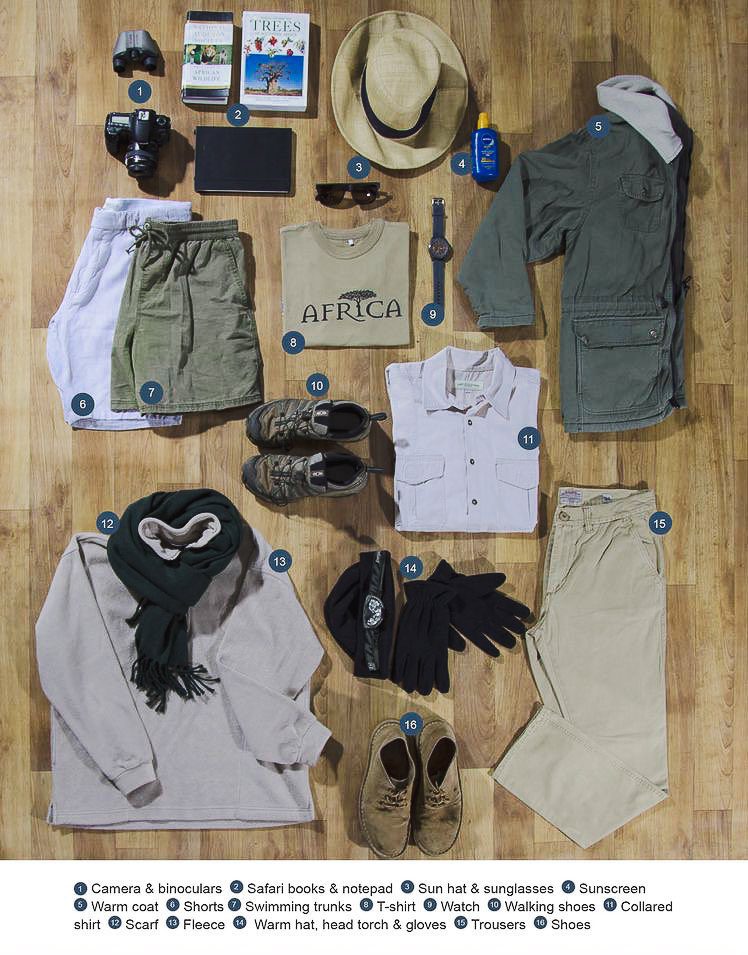
For photography, a camera with at least a moderate zoom lens, ideally 200 mm or longer, captures far more usable wildlife images than a phone camera, which struggles with distance and low light during the golden hour drives when the best sightings often happen. Bring more memory cards and batteries than you think you need, along with a dust-resistant bag or wrap, since dust on unpaved park roads gets into everything. A portable charger or power bank is genuinely useful, since not every camp offers reliable power in guest rooms around the clock.
Health and First Aid Essentials
- Personal prescription medication in original packaging, with a doctor’s note for anything unusual, packed in hand luggage rather than checked bags.
- Malaria prophylaxis if recommended by your travel health clinic, along with a basic insect repellent containing DEET for evenings.
- A compact first aid kit covering blister plasters, antihistamines, rehydration salts, and basic pain relief, since rural pharmacies near parks are not always well stocked.
- Hand sanitizer and a small supply of any specific toiletries you rely on, since remote lodges may not stock your preferred brands.
- Sunscreen with a high SPF, reapplied more often than usual given the equatorial sun and hours spent outdoors.
Documents and Money
Carry your passport with at least six months validity remaining, printed and digital copies of your visa or e-visa approval, proof of yellow fever vaccination if required for your specific route, and travel insurance documents, including an emergency contact number for evacuation cover. Bring a mix of US dollars in good condition, printed after 2013 and free of tears or marks, since some older or damaged notes are refused, along with a card for lodges that accept electronic payment, which is now common at larger properties but not guaranteed at smaller camps.
What to Leave at Home
- Camouflage-patterned clothing, which is restricted or prohibited for civilians in several African countries, including Uganda, Kenya, and Zambia.
- Bright colors and pure white, both of which stand out to wildlife and show dirt quickly.
- Excess luggage beyond what a light aircraft transfer allows, if your itinerary includes one.
- Heavy, nonessential electronics or accessories that add weight without meaningfully improving your experience.
- Strongly scented perfume or cologne, which can attract insects and, in rare cases, wildlife attention around camp.
Adjusting Your Packing List by Season and Region
Dry season travel, roughly June to October, calls for extra dust protection since unpaved park roads throw up considerably more dust when the ground is parched, so a dust cover for cameras and a bandana or light scarf for the face on open vehicle drives are both worth adding. Green season travel, roughly November to May, shifts the priority toward waterproofing, with a compact rain jacket and a dry bag for electronics becoming more important than the dust gear.
Altitude also changes the packing calculation more than most travellers expect. Trips that include Rwanda’s Volcanoes National Park, Uganda’s Bwindi region, or Kilimanjaro’s lower slopes sit at a meaningfully higher and cooler elevation than the classic savannah parks, and mornings there can be genuinely cold rather than just cool. A warmer fleece or light down layer earns its place in the bag specifically for these legs of a multi-region trip, even if the rest of the itinerary is firmly warm weather.
A Simple Packing Checklist by Category
Clothing
- Neutral long-sleeve shirts, trousers, a warm layer, a hat, and swimwear as outlined above.
Footwear
- Broken in walking shoes, trekking boots if applicable, and camp sandals.
Gear
- Binoculars, a camera with spare batteries and memory cards, a power bank, and a dust cover or dry bag.
Health
- Prescription medication, malaria prevention if recommended, insect repellent, sunscreen, and a compact first aid kit.
Documents
- Passport, visa confirmation, vaccination certificate if required, insurance documents, and a mix of cash and card.
Frequently Asked Questions
What is the luggage weight limit for African safaris?
It depends on your specific itinerary. Trips without light aircraft transfers generally follow standard international airline allowances, while any leg on a light aircraft typically caps total luggage, including hand luggage, at around fifteen kilograms per person in a soft-sided duffel bag rather than a hard suitcase.
Do I really need to avoid bright colors and white?
Yes, for practical rather than superstitious reasons. Bright colors and white are more visible to wildlife, show dust and dirt quickly, and, in the case of blue and black specifically, attract tsetse flies in the regions where they are present.
Can I do laundry during a safari to pack lighter?
Yes, most lodges and camps offer laundry service, often included in the room rate, which is why packing for around four to five days of clothing is usually enough even on a longer trip.
Do I need special boots for gorilla trekking?
Sturdy, ankle-supporting hiking boots make a genuine difference on Bwindi or Volcanoes National Park‘s steep, often muddy terrain and are worth packing specifically for that portion of the trip even if your other game drives only require ordinary closed shoes.
Bringing It Together
A well-packed safari bag is less about volume and more about matching a short, practical list to your specific itinerary, particularly around luggage weight if a light aircraft transfer is involved. Neutral clothing, a proper pair of binoculars, broken-in footwear, and a modest first aid kit cover the vast majority of what actually gets used on a trip.
If you would like a packing list tailored to your exact itinerary and the specific parks and transfers involved, send us your route and we will send back a list built around it rather than a generic template.